March 29, 2022
3 mins read

Ukraine-Russia talks to begin in Istanbul

While Russian delegation has settled in the Ciragan Palace Kempinski Hotel, the Ukrainian delegation has checked in the Shangri-La Bosphorus, both very close to each other in the district….reports Asian Lite News

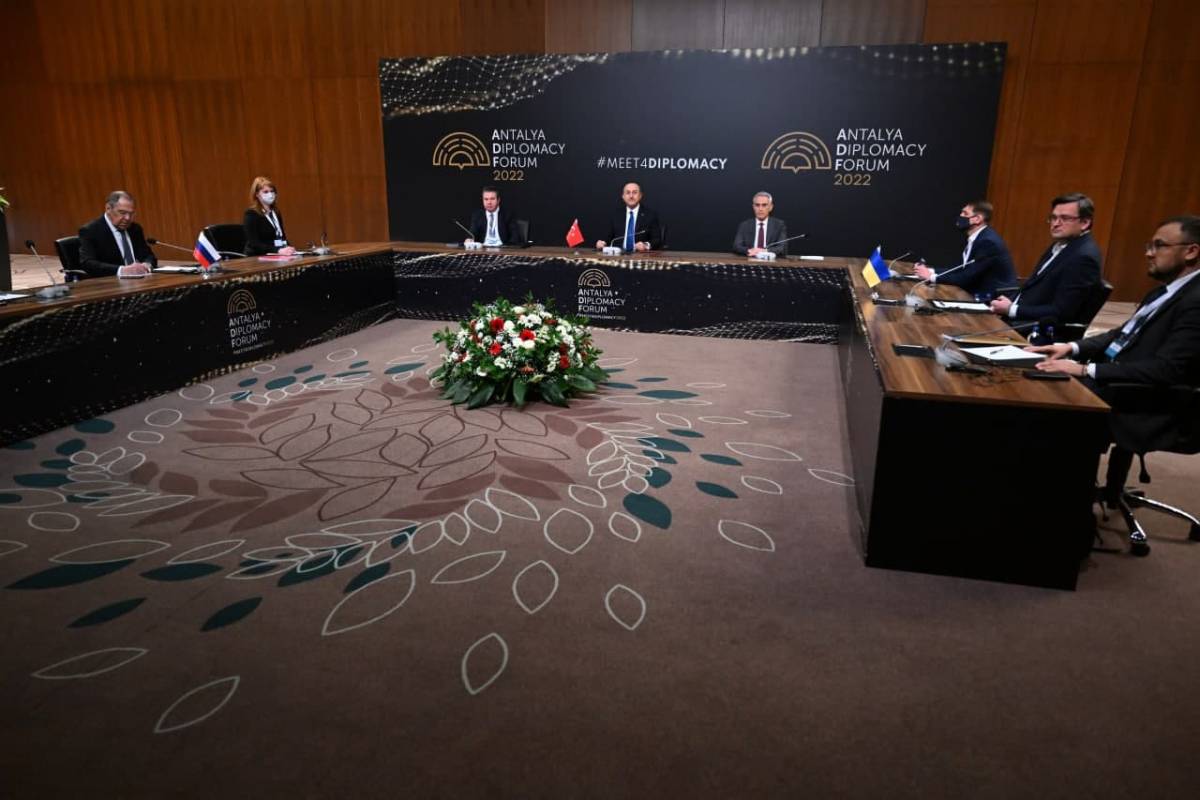
Delegations from Ukraine and Russia have arrived in the Turkish city of Istanbul to begin a new round of peace talks from Tuesday aimed at ending the ongoing war.

The in-person talks slated to begin at 10.30 a.m. (local time, about 1 p.m. IST), will be hosted by Turkish President Recep Tayyip Erdogan at the Dolmabahce Presidential Working Office in Istabul’s Besiktas district, reports Xinhua news agency.

While Russian delegation has settled in the Ciragan Palace Kempinski Hotel, the Ukrainian delegation has checked in the Shangri-La Bosphorus, both very close to each other in the district.

Media reports said the arrival of the Ukrainian delegation had been postponed to evening hours due to the closure of their country’s airspace and some logistical problems.

According to the NTV broadcaster, the Ukrainian delegates had to go to a neighbouring country by road to fly to Istanbul.

“We will have a short meeting with the delegations tomorrow morning,” Erdogan said at a press conference after a cabinet meeting in the Turkish capital Ankara on Monday.
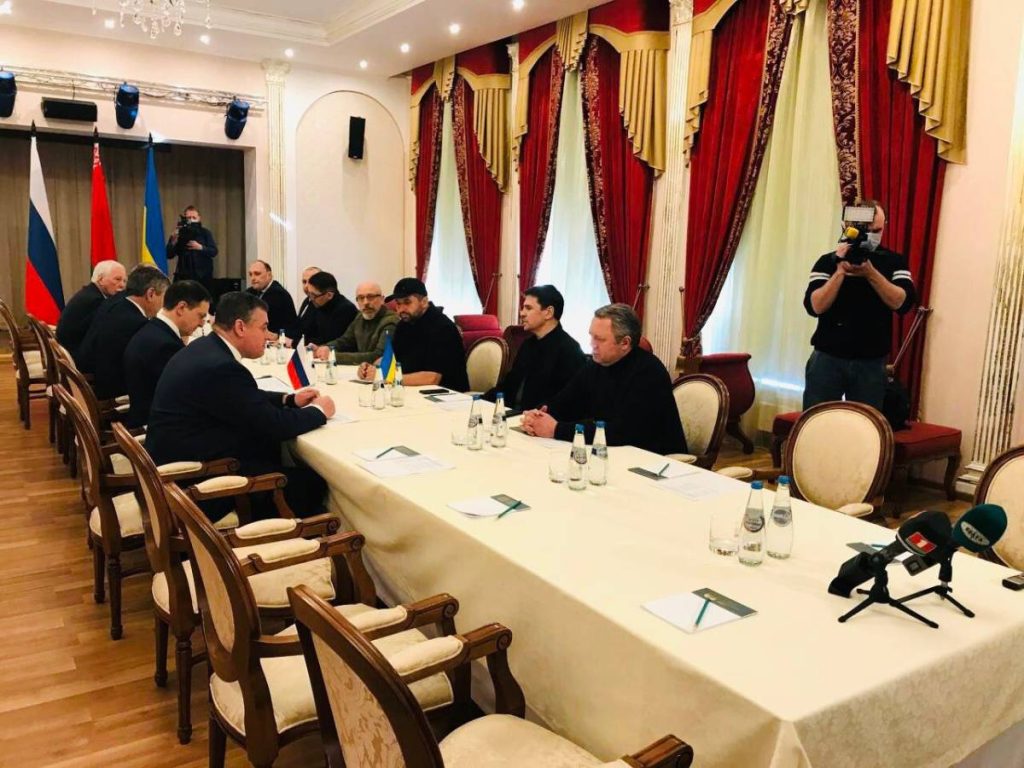
So far, Russia and Ukraine have held three rounds of in-person talks in Belarus, and their fourth session was in a video conference format.

Among other things, Russia is demanding that Ukraine abandon any intention of joining NATO, an issue Ukrainian President Volodymyr Zelensky said he is willing to compromise on.

Other issues expected to be discussed include the fate of separatist-held regions in Ukraine’s east, as well as the status of Crimea, which was formally annexed by Russia in 2014.

Turkey, meanwhile, has increasingly accelerated its diplomatic efforts in the international arena, reiterating its policy that it is ready to play a mediator role for lasting peace in the region.

In a phone call on Sunday, Erdogan told his Russian counterpart Vladimir Putin, that a ceasefire and peace between Moscow and Kiev must be achieved as soon as possible, and the humanitarian situation in the region should be improved.

Erdogan repeated that Turkey would continue to contribute in every possible way during this process.

The “phone traffic” that he has been conducting with Putin and Zelensky is progressing in a positive direction, the Turkish leader said on Monday.

Turkey has been exerting significant efforts to resolve the crisis through agreement and dialogue, he said.

Regarding the talks, Ukraine’s Foreign Minister Dmytro Kuleba said that “we are not trading people, land or sovereignty”.

“The minimum programme will be humanitarian questions, and the maximum programme is reaching an agreement on a ceasefire,” the BBC quoted the Minister as saying in a televised address on Monday.

But Ukrainian Interior Ministry adviser Vadym Denysenko said that he doubted there would be any breakthrough.

Meanwhile, Kremlin spokesperson Dmitry Peskov said talks so far had not yielded any substantial progress, but it was important they continued in person. He declined to give more information.

A senior US State Department official cast similar doubt on hopes for progress, saying Putin did not appear ready to make compromises to end the war.
ALSO READ: Ukraine reveals list of alleged Russian spies

Previous Story

Hamdan: WGS 2022 reflects vision of Sheikh Mohammed for innovation-driven future-ready government

Next Story

Russia abducts Ukrainian journalist: Reports

Previous Story

Hamdan: WGS 2022 reflects vision of Sheikh Mohammed for innovation-driven future-ready government

Next Story

Russia abducts Ukrainian journalist: Reports

Latest from -Top News

Pakistan Risks Overstretching Itself in Yemen War

Pakistan’s expanding military role in Saudi Arabia amid the Yemen conflict could strain its defence resources and fragile finances…reports Asian Lite News Desk Pakistan’s military involvement in the war in Yemen may prove unsustainable because of mounting financial pressures and competing security demands, according to a new report. Islamabad’s growing military presence in Saudi Arabia risks stretching its defence resources while exposing the country to greater strategic and economic challenges. An article by Andrew Wilson in One World Outlook describes Pakistan’s involvement as a case of “fiscal and strategic overreach”, arguing that the country lacks the financial flexibility to sustain an expanded military commitment. Pakistan’s external finances depend heavily on an International Monetary Fund (IMF) programme, financial support from Gulf countries and remittances from Pakistani workers in the region. The report argues that deeper military involvement in the conflict could place additional pressure on these sources of financial stability. It also warns that deploying troops and military equipment abroad could weaken Pakistan’s capacity to address security challenges along its eastern border and deal with two domestic insurgencies. The move could also draw Islamabad into a conflict it has sought to approach cautiously. A Reuters report in May, citing Pakistani security and government sources, said Islamabad had deployed around 8,000 troops, a squadron of approximately 16 aircraft, mostly JF-17 fighter jets, two drone squadrons and a Chinese HQ-9 air-defence battery to Saudi Arabia. According to those sources, Riyadh was financing the deployment, with Pakistani personnel operating the equipment. The sources also said a confidential agreement contemplated the possibility of deploying up to 80,000 troops. Islamabad has not confirmed those figures, although it has acknowledged its military presence in Saudi Arabia, including the deployment of fighter jets at King Abdulaziz Air Base from April. The One World Outlook article argues that Saudi financial support can cover allowances and operating expenses but cannot easily replace military equipment needed elsewhere or resolve the political and strategic challenges of participating in the Yemen conflict. Pakistan’s defence budget is another concern. For the 2026-27 financial year, the federal government allocated PKR 3 trillion, or approximately $10.8 billion, to defence services. The allocation represents an 18 per cent increase from the original PKR 2.55 trillion provision and amounts to around 2.1 per cent of projected gross domestic product (GDP). Defence spending accounts for approximately 16 per cent of the federal government’s PKR 18.8 trillion expenditure. Military pensions are budgeted separately at PKR 822 billion, while debt servicing costs stand at approximately PKR 8 trillion, more than two-and-a-half times the defence allocation. The report argues that these competing financial obligations leave little room for additional military expenditure without placing further pressure on public finances. Pakistan’s reliance on IMF assistance also limits its fiscal flexibility. The country must meet the conditions attached to the programme, including a primary budget surplus target of 2 per cent of GDP and continued restraint on development spending. According to the article, these requirements make it difficult for Islamabad to finance an additional military commitment without compromising other budgetary priorities. Pakistan’s economic indicators offer limited reassurance. Economic growth for the 2025-26 financial year is estimated at between 3.6 and 3.7 per cent, while inflation reached approximately 10.3 per cent in September following an energy price shock. Foreign exchange reserves stood at around $21.5 billion at the end of September. Although this marks an improvement from the low levels recorded in 2023, the report notes that the reserves cover only a few months of imports. Financial assistance from Gulf partners remains central to Pakistan’s external stability. The article says Islamabad holds approximately $8 billion in Saudi deposits at its central bank. In July, the State Bank of Pakistan said Riyadh had extended the maturity of $5 billion in deposits to December 2028, easing the country’s immediate external financing requirements. A further $3 billion deposit was also extended in the spring. However, the article argues that these arrangements provide temporary relief rather than long-term financial independence, particularly as regional conflict threatens the stability of the Gulf economies on which Pakistan relies. The report concludes that Pakistan faces a difficult balance between supporting Saudi Arabia militarily and preserving the financial and military resources needed to address its domestic and regional challenges.
Go toTop

Don't Miss

Qatar seeks diplomatic solutions to Russia-Ukraine war

Both top diplomats discussed the latest developments of the crisis

Europe, US affirm solidarity with Navalny on anniversary of poisoning

Scholz said Navalny’s case shows that “freedom and democracy were