December 9, 2022
3 mins read

UK unveils plan to loosen bank rules

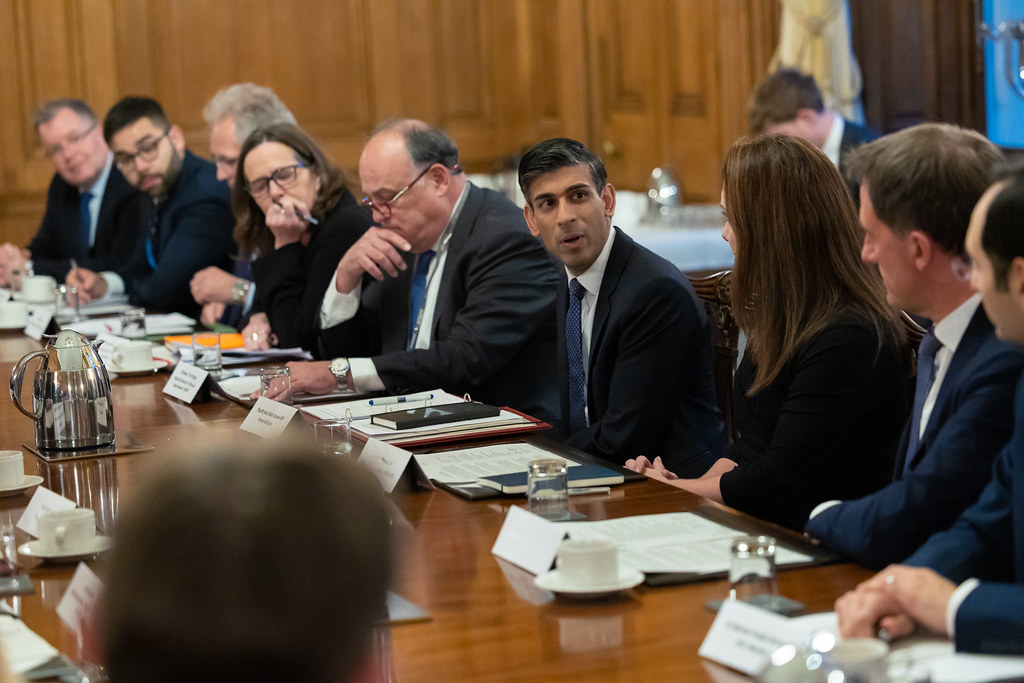
Hunt will announce a review of the system as one of 30 reforms to financial services regulation to be launched in Edinburgh…reports Asian Lite News

Chancellor Jeremy Hunt is to overhaul the “senior managers’ regime” — rules introduced in response to the 2008 financial crisis that “terrified” senior bankers and held them personally responsible for infractions on their watch.

Hunt will announce a review of the system as one of 30 reforms to financial services regulation to be launched in Edinburgh on Friday, according to people briefed on the plan.

The regime has since 2016 forced senior executives at banks, building societies and credit unions to take personal responsibility for infractions if they had not taken “reasonable steps” to prevent them. Penalties range from fines to bans.

New laws were introduced simultaneously which made it a criminal offence, punishable by up to seven years’ imprisonment and unlimited fines, for senior managers of lenders and major investment firms to cause a bank failure.

Ministers have insisted that Hunt’s “Edinburgh Reforms” will not mark a return to the risky practices that contributed to the 2008 crash and that Britain’s regulatory framework will remain rigorous.

One ally of the chancellor said the senior managers’ regime was seen as too onerous and would be reviewed. “We will introduce an agile but proportionate regulatory framework,” he said. “But we will maintain the high standards for which we are known around the world.”

Described by the Bank of England as a “critical element of the post-crisis reform agenda”, the senior managers’ regime was designed to ensure bankers had “nowhere to hide” for failings on their watch, as the public balked at the lack of accountability for collapses that cost taxpayers tens of billions of pounds.

Hunt will say on Friday that the regime will be reviewed by regulators and the government early next year, according to people familiar with the matter.

The Treasury declined to comment.

By the end of 2019, the rules had been expanded from covering the UK’s lenders to more than 47,000 companies across the City of London.

But while the financial services industry lambasted the rules as being a dead hand on recruitment, enforcement has so far been sparse.

In one of the few penalties issued by regulators, Jes Staley, Barclays’ then chief executive, was fined £640,000 in 2018 for trying to uncover the identity of an anonymous whistleblower.

Several of the key proposals in the Edinburgh Reforms will seek to unwind some of the more constraining features of regulations put in place after the 2008 crash, including loosening “ringfencing” rules for banks.

Hunt has already announced the removal of the cap on bankers’ bonuses and will also order a review of Mifid II, EU legislation that sought to strengthen protection for investors and transparency in financial markets.

City executives have long complained about the red tape imposed by post-crash regulations, but they have also since overhauled their businesses to cope with the demands. Such restructuring means that any reforms to regulations could take some time to lead to changes in how banks and corporate brokers operate.

London’s position as the pre-eminent European financial centre has been dented in recent years. London briefly lost its long-time crown of most valuable European stock market to Paris before gains in the pound pushed it narrowly back ahead, while Amsterdam took the title of busiest European share dealing centre.

Leading hedge fund manager Sir Paul Marshall of Marshall Wace recently described the London financial markets as a “Jurassic Park” of old-fashioned companies and investors, and it has struggled to attract the world’s fastest growing companies to list on UK exchanges, often losing out to New York, Shanghai or even Amsterdam.

Labour politicians have criticised the scrapping of the bonus cap and said the UK should not engage in a regulatory race to the bottom, but the government will insist the reforms strike the right balance between stability and innovation.

Others will say that in loosening regulation we risk forgetting the lessons of the financial crisis when excessive risk taking ended in billions in bailouts and a decade of stagnating productivity.

ALSO READ-UK kicks off process to negotiate new trade deal with South Korea

Previous Story

Xi Cements Ties With Saudi Arabia

Next Story

INTERVIEW: Nirupama Rao

Previous Story

Xi Cements Ties With Saudi Arabia

Next Story

INTERVIEW: Nirupama Rao

Latest from -Top News

Pakistan Risks Overstretching Itself in Yemen War

Pakistan’s expanding military role in Saudi Arabia amid the Yemen conflict could strain its defence resources and fragile finances…reports Asian Lite News Desk Pakistan’s military involvement in the war in Yemen may prove unsustainable because of mounting financial pressures and competing security demands, according to a new report. Islamabad’s growing military presence in Saudi Arabia risks stretching its defence resources while exposing the country to greater strategic and economic challenges. An article by Andrew Wilson in One World Outlook describes Pakistan’s involvement as a case of “fiscal and strategic overreach”, arguing that the country lacks the financial flexibility to sustain an expanded military commitment. Pakistan’s external finances depend heavily on an International Monetary Fund (IMF) programme, financial support from Gulf countries and remittances from Pakistani workers in the region. The report argues that deeper military involvement in the conflict could place additional pressure on these sources of financial stability. It also warns that deploying troops and military equipment abroad could weaken Pakistan’s capacity to address security challenges along its eastern border and deal with two domestic insurgencies. The move could also draw Islamabad into a conflict it has sought to approach cautiously. A Reuters report in May, citing Pakistani security and government sources, said Islamabad had deployed around 8,000 troops, a squadron of approximately 16 aircraft, mostly JF-17 fighter jets, two drone squadrons and a Chinese HQ-9 air-defence battery to Saudi Arabia. According to those sources, Riyadh was financing the deployment, with Pakistani personnel operating the equipment. The sources also said a confidential agreement contemplated the possibility of deploying up to 80,000 troops. Islamabad has not confirmed those figures, although it has acknowledged its military presence in Saudi Arabia, including the deployment of fighter jets at King Abdulaziz Air Base from April. The One World Outlook article argues that Saudi financial support can cover allowances and operating expenses but cannot easily replace military equipment needed elsewhere or resolve the political and strategic challenges of participating in the Yemen conflict. Pakistan’s defence budget is another concern. For the 2026-27 financial year, the federal government allocated PKR 3 trillion, or approximately $10.8 billion, to defence services. The allocation represents an 18 per cent increase from the original PKR 2.55 trillion provision and amounts to around 2.1 per cent of projected gross domestic product (GDP). Defence spending accounts for approximately 16 per cent of the federal government’s PKR 18.8 trillion expenditure. Military pensions are budgeted separately at PKR 822 billion, while debt servicing costs stand at approximately PKR 8 trillion, more than two-and-a-half times the defence allocation. The report argues that these competing financial obligations leave little room for additional military expenditure without placing further pressure on public finances. Pakistan’s reliance on IMF assistance also limits its fiscal flexibility. The country must meet the conditions attached to the programme, including a primary budget surplus target of 2 per cent of GDP and continued restraint on development spending. According to the article, these requirements make it difficult for Islamabad to finance an additional military commitment without compromising other budgetary priorities. Pakistan’s economic indicators offer limited reassurance. Economic growth for the 2025-26 financial year is estimated at between 3.6 and 3.7 per cent, while inflation reached approximately 10.3 per cent in September following an energy price shock. Foreign exchange reserves stood at around $21.5 billion at the end of September. Although this marks an improvement from the low levels recorded in 2023, the report notes that the reserves cover only a few months of imports. Financial assistance from Gulf partners remains central to Pakistan’s external stability. The article says Islamabad holds approximately $8 billion in Saudi deposits at its central bank. In July, the State Bank of Pakistan said Riyadh had extended the maturity of $5 billion in deposits to December 2028, easing the country’s immediate external financing requirements. A further $3 billion deposit was also extended in the spring. However, the article argues that these arrangements provide temporary relief rather than long-term financial independence, particularly as regional conflict threatens the stability of the Gulf economies on which Pakistan relies. The report concludes that Pakistan faces a difficult balance between supporting Saudi Arabia militarily and preserving the financial and military resources needed to address its domestic and regional challenges.

UK and Germany Ratify Kensington Treaty

Britain and Germany ratify the Kensington Treaty, agreeing new cooperation on AI, quantum research, defence and security while targeting investment, jobs and Russian hybrid threats…reports Asian Lite News Desk Britain and Germany

Economic tide is turning in Bangladesh

If there is one thing that can bring some comfort to the struggling Bangladeshi economy, it is good relations with India. Bangladesh should remember that Delhi’s backing, through easy supplies of essentials
Go toTop

Don't Miss

Budget maps out return to higher foreign aid spending

That more upbeat assessment also allowed the government to predict

Event to Stem Islamophobia 

Help Raise Awareness of Islamophobia at Brent Council’s Islamophobia Awareness