March 10, 2022
2 mins read

UAE pushes for women’s economic empowerment at UNSC

UAE Minister of Climate Change and Environment Mariam Almheiri chaired the debate which focused on women’s economic empowerment in conflict settings as a key to fostering inclusive dialogue and peace, reports Asian Lite News

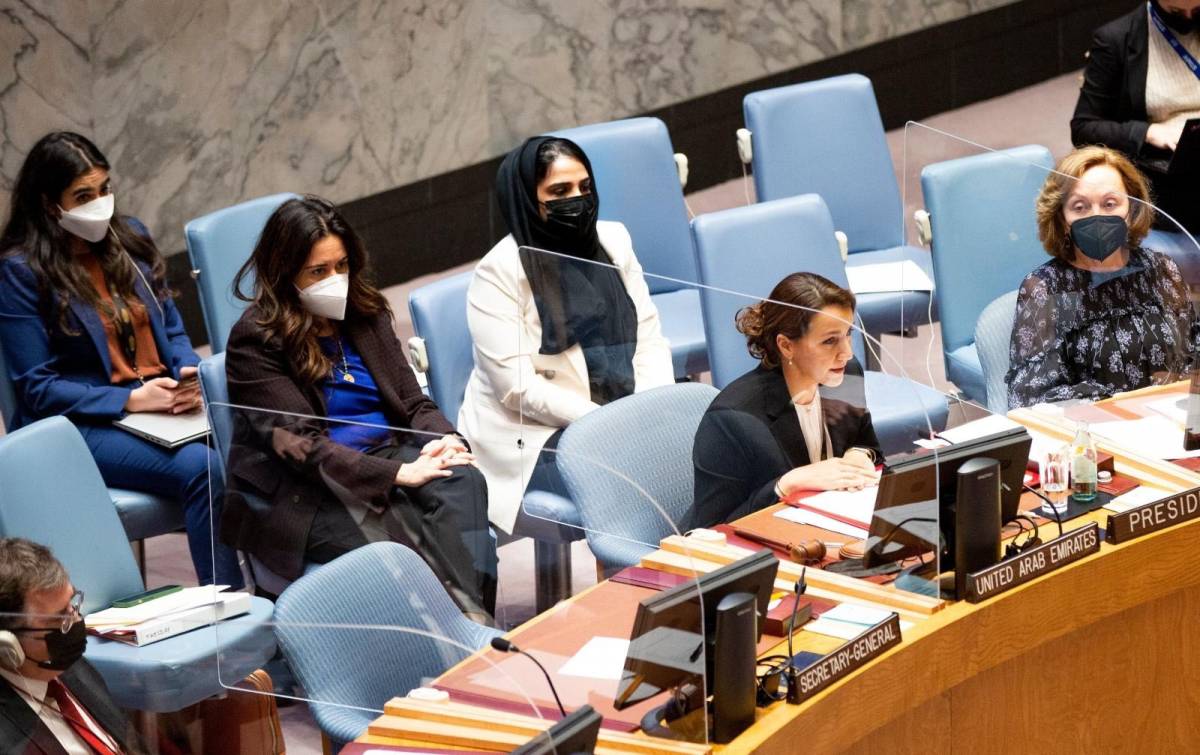
The United Arab Emirates convened the first signature event of its presidency of the United Nations Security Council, a ministerial-level open debate to promote the importance of women’s economic inclusion and public-private partnerships to advance sustainable peace on International Women’s Day.

The debate, which was chaired by Mariam Almheiri, the UAE’s Minister of Climate Change and Environment, focused on women’s economic empowerment in conflict settings as a key to fostering inclusive dialogue and peace.

Lana Nusseibeh, Assistant Minister for Political Affairs and UAE Ambassador and Permanent Representative to the UN, also attended the meeting. UN Women Executive Director Sima Bahous, International Monetary Fund Managing Director Kristalina Georgieva, and Moussokoro Coulibaly, President of the Network of Women Economic Operators in Ségou, Mali, briefed the UN membership at the meeting.

“Women are critical to recovery and relief efforts around the world, yet their inclusion remains undervalued, and their access to opportunities, resources, and markets remains limited,” said Mariam Almheiri. “Women must not only benefit from sustainable post conflict recovery; they must be in the driver’s seat as planners, decisionmakers, and implementers in all sectors of society to ensure sustainable peacebuilding.”

“International Women’s Day is a day for reflection, for renewed hope, and for increased action,” said Sima Bahous, Executive Director of UN Women. “I welcome today’s focus on the role of the private sector and private-public partnerships as an underexplored area for innovation. We have the blueprint and the business case to support women’s economic inclusion.”

ALSO READ: Abu Dhabi’s Forbes 30/50 Summit highlights women’s achievements

“Women bear disproportionately the devastation of wars, and yet women are the best hope for peace,” said Kristalina Georgieva, Managing Director of the International Monetary Fund. “Empowering women and reducing gender inequality in fragile or conflict situations can have powerful economic benefits. The IMF’s analysis shows that improving gender equality can raise economic growth, strengthen resilience, enhance financial stability, and reduce income inequality.”

“We know that without economic development, there is no lasting peace. We also know that investing in women’s empowerment generates social dividends both in the short and the long term,” said Moussokoro Coulibaly, President of the Network of Women Economic Operators in Ségou, Mali. “If you want to build peace and stability in the world, help women participate in economic recovery to make sure that the resulting peace is more inclusive and lasting.”

The Women, Peace, and Security (WPS) agenda is a key priority for the UAE during its two-year term on the UN Security Council. The UAE, Albania, Brazil, and Norway have committed to advancing the implementation of the WPS agenda during their presidencies of the Security Council. This includes women’s full, equal, and meaningful participation in Council meetings and the inclusion of gender perspectives in the Council’s deliberations and outcomes.
Previous Story

Sun Mark Shines At Gulfood

Next Story

Sreesanth announces retirement from domestic cricket

Previous Story

Sun Mark Shines At Gulfood

Next Story

Sreesanth announces retirement from domestic cricket

Latest from -Top News

Pakistan Risks Overstretching Itself in Yemen War

Pakistan’s expanding military role in Saudi Arabia amid the Yemen conflict could strain its defence resources and fragile finances…reports Asian Lite News Desk Pakistan’s military involvement in the war in Yemen may prove unsustainable because of mounting financial pressures and competing security demands, according to a new report. Islamabad’s growing military presence in Saudi Arabia risks stretching its defence resources while exposing the country to greater strategic and economic challenges. An article by Andrew Wilson in One World Outlook describes Pakistan’s involvement as a case of “fiscal and strategic overreach”, arguing that the country lacks the financial flexibility to sustain an expanded military commitment. Pakistan’s external finances depend heavily on an International Monetary Fund (IMF) programme, financial support from Gulf countries and remittances from Pakistani workers in the region. The report argues that deeper military involvement in the conflict could place additional pressure on these sources of financial stability. It also warns that deploying troops and military equipment abroad could weaken Pakistan’s capacity to address security challenges along its eastern border and deal with two domestic insurgencies. The move could also draw Islamabad into a conflict it has sought to approach cautiously. A Reuters report in May, citing Pakistani security and government sources, said Islamabad had deployed around 8,000 troops, a squadron of approximately 16 aircraft, mostly JF-17 fighter jets, two drone squadrons and a Chinese HQ-9 air-defence battery to Saudi Arabia. According to those sources, Riyadh was financing the deployment, with Pakistani personnel operating the equipment. The sources also said a confidential agreement contemplated the possibility of deploying up to 80,000 troops. Islamabad has not confirmed those figures, although it has acknowledged its military presence in Saudi Arabia, including the deployment of fighter jets at King Abdulaziz Air Base from April. The One World Outlook article argues that Saudi financial support can cover allowances and operating expenses but cannot easily replace military equipment needed elsewhere or resolve the political and strategic challenges of participating in the Yemen conflict. Pakistan’s defence budget is another concern. For the 2026-27 financial year, the federal government allocated PKR 3 trillion, or approximately $10.8 billion, to defence services. The allocation represents an 18 per cent increase from the original PKR 2.55 trillion provision and amounts to around 2.1 per cent of projected gross domestic product (GDP). Defence spending accounts for approximately 16 per cent of the federal government’s PKR 18.8 trillion expenditure. Military pensions are budgeted separately at PKR 822 billion, while debt servicing costs stand at approximately PKR 8 trillion, more than two-and-a-half times the defence allocation. The report argues that these competing financial obligations leave little room for additional military expenditure without placing further pressure on public finances. Pakistan’s reliance on IMF assistance also limits its fiscal flexibility. The country must meet the conditions attached to the programme, including a primary budget surplus target of 2 per cent of GDP and continued restraint on development spending. According to the article, these requirements make it difficult for Islamabad to finance an additional military commitment without compromising other budgetary priorities. Pakistan’s economic indicators offer limited reassurance. Economic growth for the 2025-26 financial year is estimated at between 3.6 and 3.7 per cent, while inflation reached approximately 10.3 per cent in September following an energy price shock. Foreign exchange reserves stood at around $21.5 billion at the end of September. Although this marks an improvement from the low levels recorded in 2023, the report notes that the reserves cover only a few months of imports. Financial assistance from Gulf partners remains central to Pakistan’s external stability. The article says Islamabad holds approximately $8 billion in Saudi deposits at its central bank. In July, the State Bank of Pakistan said Riyadh had extended the maturity of $5 billion in deposits to December 2028, easing the country’s immediate external financing requirements. A further $3 billion deposit was also extended in the spring. However, the article argues that these arrangements provide temporary relief rather than long-term financial independence, particularly as regional conflict threatens the stability of the Gulf economies on which Pakistan relies. The report concludes that Pakistan faces a difficult balance between supporting Saudi Arabia militarily and preserving the financial and military resources needed to address its domestic and regional challenges.

UK and Germany Ratify Kensington Treaty

Britain and Germany ratify the Kensington Treaty, agreeing new cooperation on AI, quantum research, defence and security while targeting investment, jobs and Russian hybrid threats…reports Asian Lite News Desk Britain and Germany

Economic tide is turning in Bangladesh

If there is one thing that can bring some comfort to the struggling Bangladeshi economy, it is good relations with India. Bangladesh should remember that Delhi’s backing, through easy supplies of essentials

DP World Lands 15-Year Bangladesh Port Deal

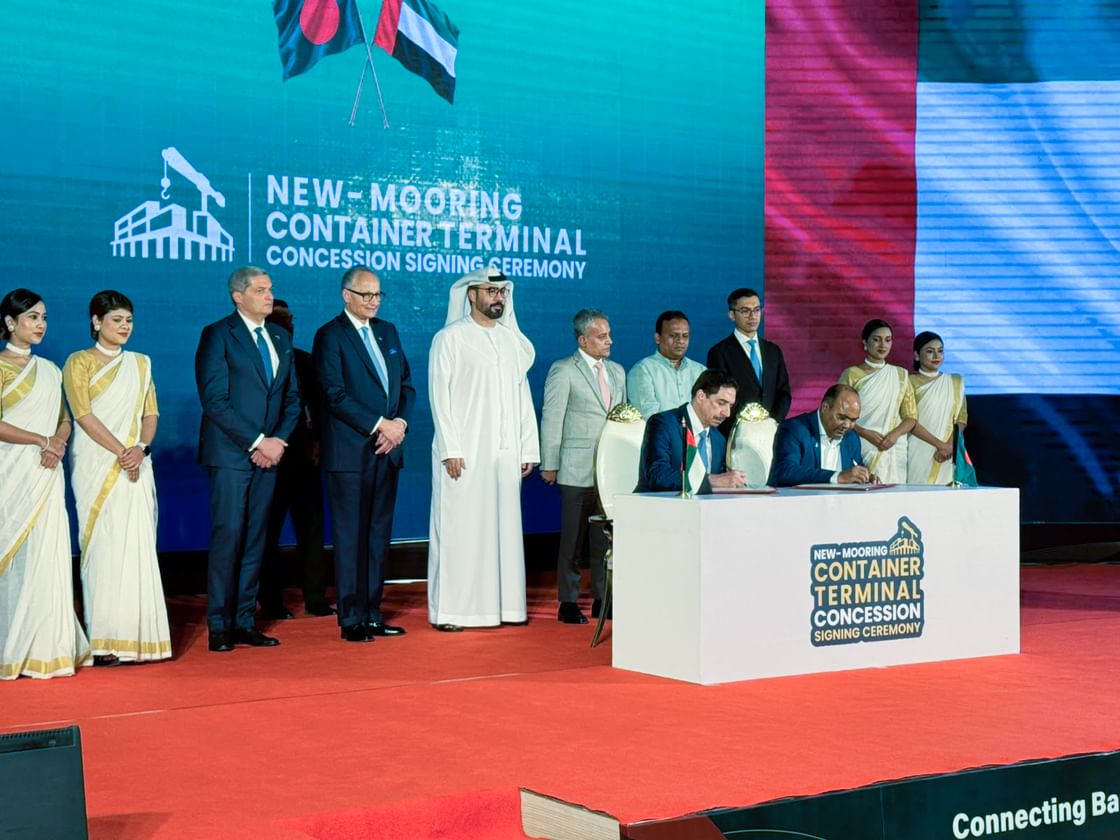
The agreement between the Chittagong Port Authority (CPA) and DP World covers the New Mooring Container Terminal…reports Asian Lite News Desk Bangladesh has signed a 15-year concession agreement with global ports operator
Go toTop

Don't Miss

UAE-Russia non-oil trade records 80% growth

UAE-Russia relations continue to flourish as non-oil trade exchange between

How to break the bias?

With the right guidance, women have a much better opportunity