January 24, 2023
4 mins read

Indian diaspora plans London protest over BBC documentary

The diaspora is agitated as the documentary comes on the heels of weeks of violence in Leicester, the tenth largest city in the UK, a report by Rahul Kumar

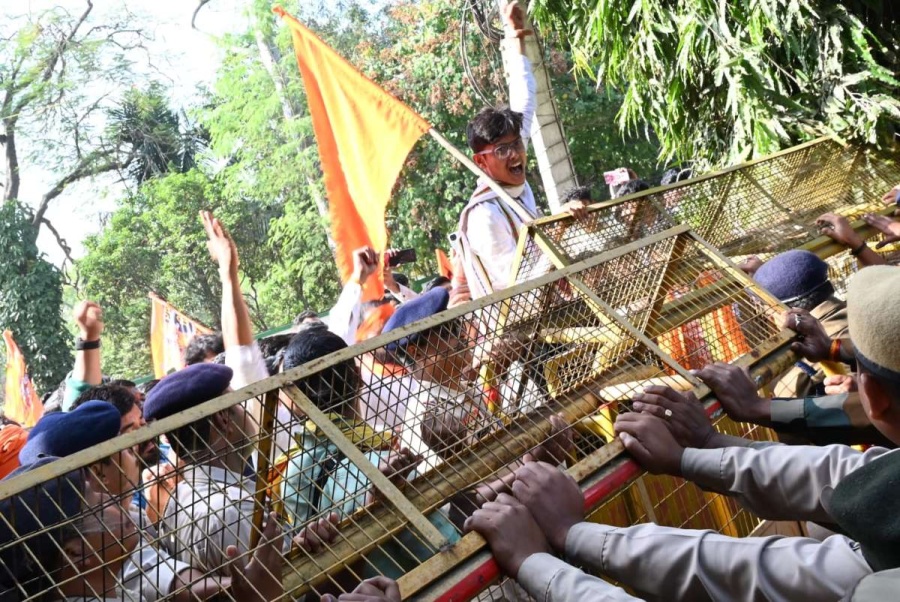
The BBC documentary on Indian Prime Minister Narendra Modi has raised a storm among the diaspora. Feeling insulted by the documentary, the Indian diaspora in the UK is holding a protest against the British broadcaster on Sunday afternoon, January 29.

The British Broadcasting Corporation’s documentary, “India: The Modi Question” has raised a storm not just in India but also among the diaspora. Part one of the documentary, which has already been aired on January 17 puts the blame of the Gujarat riots on Modi, who was the state Chief Minister when the riots took place in 2002. Part two will be aired today-January 24.

Looking at the sensitive nature of the documentary, the Indian government has banned it from being shown in the country. It has also been taken off Youtube for its divisive content and for fear of creating hatred between communities over incidents that took place two decades back. Indian courts have already given their verdicts and sentenced people of both communities for the violence.

Riots broke out in Gujarat after a Muslim mob set fire to a coach of the Sabarmati Express at the Godhara station. Fifty-nine Hindus, including women and children were burnt alive in what is known as the Godhara train burning case.

India Narrative spoke with Indians in the UK about their protest and their grievances against the BBC.

London-based consultant, Adit Kothari, who has been active in the diaspora movement says, the British Indian diaspora is enraged, agitated & frustrated with the BBC’s deliberate attempts to run covert and sometimes overt malicious Anti-India and Anti Hindu agendas. While with the protest, we may see no change within the BBC to organisationally address our concerns� but we have to demonstrate our displeasure at the BBCs attitude.

The diaspora is agitated as the documentary comes on the heels of weeks of anti-Hindu violence in Leicester the tenth largest city in the UK. The communal violence, which took the British society and the local police by surprise, was directed at Hindu symbols and homes by the local Muslim youth. Weeks of attacks on Leicester’s Hindus led to many families moving out of the city due to threats and fear.
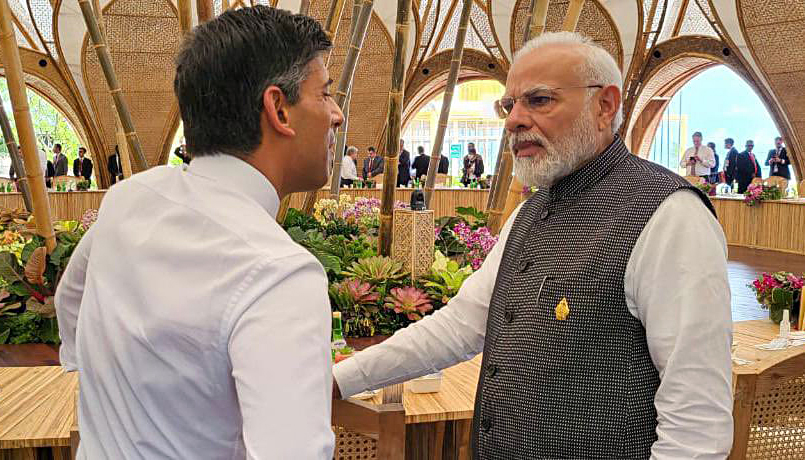
Prime Minister Narendra Modi interacts with his United Kingdom counterpart Rishi Sunak on the first day of the 17th G20 Summit, in Bali on Tuesday. (ANI Photo)

The Leicester violence against the Hindus was fanned by fake social media posts by Muslims. The misinformation on social media targeted Hindus and instigated Muslim youth to attack Hindus. Many of these fake posts were published by the British mainstream media like The Guardian and the BBC without verifying, leading to independent investigations into the Leicester violence which highlighted the spread of fake news against the local Hindu community.

British Hindus feel that the BBC documentary will create a similar situation in which the Hindus can again be targeted because of biased coverage.

Kothari says: It is important to raise awareness not only within the British Hindu and the Indian diaspora but also among other communities in Britain so that they get aware of this nefarious (anti-Hindu) agenda. Giving an example, the Indian activist says that the BBC has once called Holi a filthy festival and Jai Shree Ram a provocative slogan which has hurt our sentiments.

The activist says that the protest against the BBC is to raise awareness about the BBC failures regarding its journalistic standards and the royal charter-which aims to provide impartial, high quality and distinctive journalism, to its viewers.

The BBC documentary has evoked a strong reaction across Indian society.

Lord Rami Ranger, well known British MP in the House of Lords wrote a letter of condemnation to Tim Davie, BBC Director General, saying, among other things, that the timing of the BBC documentary is sinister considering that India and the UK are working for a free trade agreement, India has assumed the presidency of G20 and the UK has an Indian-origin prime minister.

In his letter, Lord Ranger says: The producer has shown a lack of vision, common sense and judgment by producing such an insensitive one-sided documentary.

In India too, dozens of bureaucrats, retired officers and judges have written an open letter dubbing the BBC documentary as delusions of British Imperial resurrection.

Many other individuals have launched petitions on the website change.org asking for an independent investigation into the BBC’s actions. Many smell a conspiracy as the diverse nation of nearly 1.4 billion people goes to elections in 2024, saying that the BBC is trying to queer the pitch against Modi.

A petition against the BBC has also been raised in the British parliament, seeking investigation into the anti-Hindu propaganda and hatred attacks on Hindu community

This will be the UK diaspora’s second protest against the BBC is barely three months. The earlier one was related to the BBC’s Hinduphobic” coverage of the Leicester violence.

(The content is being carried under an arrangement with indianarrative.com)

ALSO READ: Jaishankar hails Vajpayee’s post-Pokhran diplomacy

Newsdesk

Newsdesk

Aravind Rajeev is Deputy News Editor at Asian Lite, mostly covering the Middle East and GCC. He has over eight years of experience as a journalist, with a background in ground-level reporting, crime reporting, as well as international and regional news.

Previous Story

Biden names N.Korean human rights envoy

Next Story

Sisi arrives in India for R-Day celebrations

Previous Story

Biden names N.Korean human rights envoy

Next Story

Sisi arrives in India for R-Day celebrations

Latest from -Top News

US Green Card Freeze Hits Indian IT Giants

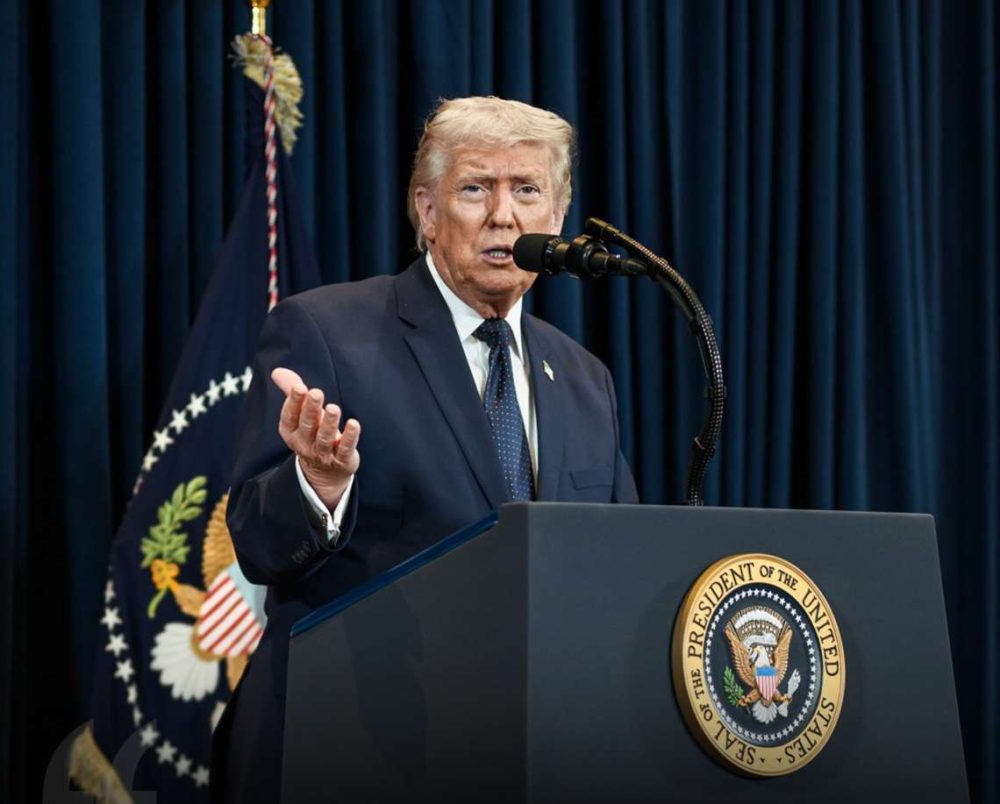
The Trump administration has suspended employment-based green card processing for eight major technology companies, including Infosys, TCS, Wipro and HCL, citing ongoing investigations…reports Asian Lite News Desk The Trump administration has suspended a key employment-based green card process for eight major technology and outsourcing companies, including Indian IT giants Infosys, Tata Consultancy Services, Wipro and HCL, as Vice President JD Vance announced a crackdown on alleged visa fraud. The suspension, announced on Thursday by US Labour Secretary Keith Sonderling at a press conference led by Vance, also covers Cognizant, Capgemini, Microsoft and Adobe. It bars the companies from filing new permanent labour certification applications and halts the processing of pending applications under the programme. Sonderling said the decision followed ongoing criminal and federal investigations into the companies. “Due to ongoing criminal investigations led by the Department of Labour’s Inspector General Anthony DiEsposito, who will get into this shortly, I am hereby suspending from the Permanent Labour Certification Program some of the largest IT outsourcing firms in the world, Cognizant, Infosys, Tata, Wipro, HCL, and Capgemini,” Sonderling said. He added that Microsoft and Adobe were also being suspended because of multiple active federal investigations. “We will not accept or process any pending permanent labour certification applications involving these companies,” he said. The Permanent Labour Certification programme, commonly known as PERM, is a key step in the process through which employers sponsor foreign workers for employment-based permanent residence in the United States. According to figures presented by Sonderling, the eight companies had collectively requested nearly three million foreign workers since 2009. They had received more than 230,000 H-1B visa approvals and over 100,000 permanent labour certifications. The administration did not disclose company-specific findings or provide details of the alleged violations during the press conference. Vance accused employers of using the H-1B visa programme to replace American workers with lower-paid foreign employees. He said the programme was intended to help companies recruit highly skilled workers for positions that could not be filled by American employees. “The H-1B visa program is meant to allow companies to bring in really the best of the best from outside the United States of America for positions that are completely impossible to fill with American workers,” he said. Vance singled out Microsoft, alleging that the company had laid off 6,000 American workers while benefiting from 6,300 H-1B visas and nearly 3,000 green cards. He said the administration wanted companies to change their hiring practices rather than withdraw from the American market. Asked whether the suspension would be temporary or permanent, Vance said, “The suspension of PERM is gonna last as long as it needs to.” He added that the administration had the tools to continue the suspension indefinitely but wanted the companies to improve their conduct. The US Justice Department also announced that it was actively investigating companies suspected of favouring foreign workers over American employees. Attorney General Todd Blanche said the authorities could pursue criminal prosecutions and civil lawsuits as part of the enforcement measures. The decision could have significant implications for Indian technology professionals and outsourcing companies operating in the United States, where Indian firms have long relied on employment-based immigration programmes to deploy skilled workers to American clients. The H-1B visa programme allows US employers to hire foreign workers in qualifying specialised occupations on a temporary basis. PERM, meanwhile, is part of a separate process through which employers seek to sponsor eligible foreign workers for permanent residence. The suspension announced on Thursday specifically concerns permanent labour certification applications involving the eight named companies. It does not, by itself, establish the cancellation of existing H-1B visas or green cards. The impact on individual employees will depend on their immigration status and the stage of their applications. The administration did not provide a detailed timeline for the suspension or specify when processing might resume.

Nepal Floods Cause $1.66 Billion In Damage, Says World Bank

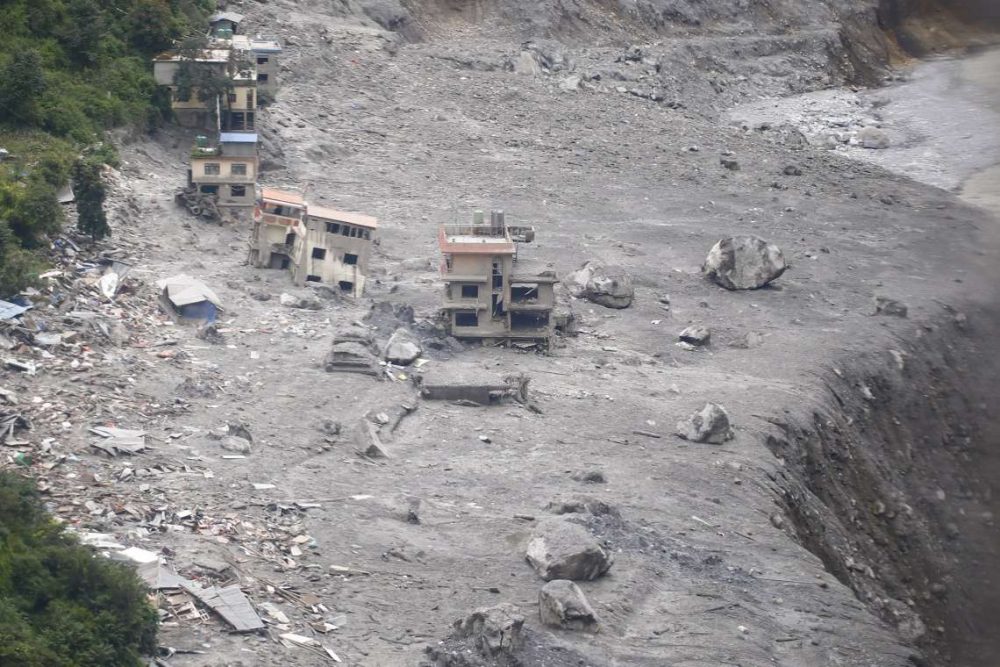
Nepal’s August 2026 floods caused an estimated US$1.66 billion in direct physical damage, with infrastructure accounting for 83 per cent of the total…reports Asian Lite News Desk Nepal’s devastating floods in August 2026 caused an estimated US$1.66 billion in direct physical damage, with infrastructure accounting for 83 per cent of the total, according to a World Bank report. The estimate, included in the World Bank’s Nepal Development Update unveiled this week, is close to the Nepal government’s preliminary Rapid Damage and Needs Assessment (RDNA), which put physical damage at US$1.81 billion. The government’s assessment also estimated losses beyond physical assets at US$883.32 million, taking the total economic effects of the disaster to approximately US$2.7 billion. The World Bank’s Global Rapid Post-Disaster Damage Estimation (GRADE) found that infrastructure suffered the greatest damage, estimated at US$1.38 billion, or 83 per cent of the total. Residential buildings accounted for US$185 million, or 11 per cent, while non-residential buildings sustained damage worth US$101 million, or 6 per cent. The floods along the Bhotekoshi and Trishuli rivers caused extensive damage to hydropower projects, solar energy facilities, electricity transmission infrastructure and transport networks. The energy sector, particularly hydropower, was among the worst affected. The August 2026 floods affected 12 hydropower projects and one solar project, involving 281.1 MW of operational capacity and 395.02 MW of capacity under construction. Damage to transmission lines and substations also disrupted the transmission of 149.6 MW of electricity to the national grid. The total affected capacity reached approximately 430.7 MW, equivalent to 10.6 per cent of Nepal’s installed hydropower and solar capacity at the end of fiscal year 2025-26, which concluded in mid-July. The disaster also severely damaged transport infrastructure along the 82-km Rasuwa trade corridor, which connects Kathmandu with the Rasuwagadhi border point with China. More than 55 km of the corridor was damaged, including 40 km that was completely destroyed. The floods also damaged 37 motorable bridges and 68 suspension bridges. The disaster resulted in significant human losses along the affected corridor and beyond. According to Nepal’s National Disaster Risk Reduction and Management Authority, 1,455 people had been confirmed dead, while 5,285 remained missing following the disaster. The World Bank report found that the physical damage was concentrated in three districts in central Nepal: Rasuwa, Nuwakot and Dhading. Rasuwa was the worst-affected district, accounting for US$1.07 billion, or 64 per cent, of the total direct damage. Nuwakot recorded an estimated US$551 million in damage, while Dhading suffered approximately US$39 million. “The findings highlight the concentration of physical damage in a small number of districts and the disproportionate impact on infrastructure, underscoring the scale of the reconstruction challenge facing the affected areas,” the World Bank said. The global development financier said the floods had demonstrated the scale and complexity of disaster risks in Nepal’s Himalayan environment. The event also showed how a single extreme weather event could trigger cascading impacts across sectors and geographical areas. The report said recovery efforts should extend beyond restoring infrastructure to its pre-disaster condition. While the principle of “Build Back Better” remained relevant, the World Bank stressed that rebuilding infrastructure to higher engineering standards in the same locations might not always be sufficient. “In some cases, simply rebuilding the same infrastructure in the same location to a higher engineering standard may not be sufficient. Nepal may need to build differently — based on a better understanding of risk, more careful decisions about location and design, greater redundancy in critical networks, stronger monitoring and early warning, and a more integrated approach to infrastructure development in the Himalayas,” the report said. The World Bank said Nepal’s recovery strategy should incorporate improved risk assessment, more informed infrastructure planning, stronger monitoring systems and better early warning mechanisms. The report emphasised that reconstruction should not only restore damaged assets but also reduce the impact of future disasters, particularly in the country’s vulnerable Himalayan regions.

Vaccine Delays Fuel Bangladesh Measles Outbreak

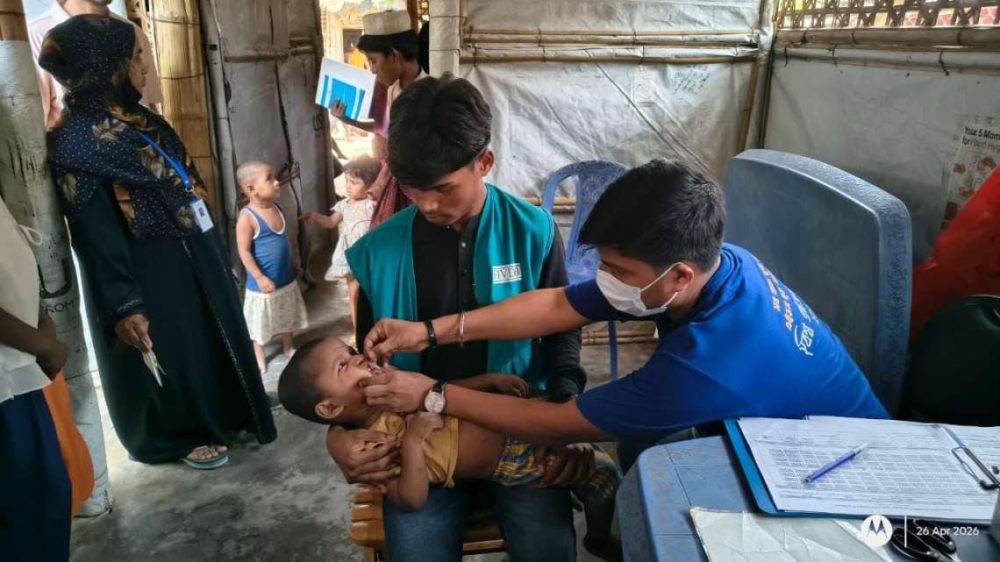
More than 32,000 suspected cases and over 250 deaths have been reported since mid-March, with children making up most of the fatalities….reports Asian Lite News Desk Bangladesh’s measles outbreak has intensified, with
Go toTop

Don't Miss

One killed, 30 injured in Sudan’s street protests

One protestor was killed and 30 others injured during mass

Indian Women’s Forum Offers Help For NRI Brides

IIW (Inspiring Indian Women) curates an online workshop- No more