September 1, 2023
3 mins read

Sunak’s cabinet gets new Indian-origin minister

Like Sunak, UK-born Coutinho grew up in a family connected with the National Health Service (NHS) and was in the field of investment banking before joining politics…reports Asian Lite News

Claire Coutinho, a close aide of British Prime Minister Rishi Sunak, got a big promotion as his new Energy Security and Net Zero Secretary in a mini reshuffle on Thursday.

Coutinho, 38, becomes the second Goan-origin minister after Home Secretary Suella Braverman in the Sunak Cabinet and has a tough brief ahead of her as energy costs have been soaring in the wake of the Russia-Ukraine conflict.

She has committed herself to work on safeguarding energy security and reducing bills for families struggling with a cost-of-living crisis.

In her first Cabinet role, Coutinho replaced Grant Shapps after he was promoted to the post of Defence Secretary following the resignation of Ben Wallace.

“I am delighted to have been appointed Secretary of State for Energy Security and Net Zero. I will work with the Prime Minister to safeguard our energy security, reduce bills for families, and build cleaner, cheaper, homegrown energy,” she tweeted.

Like Sunak, UK-born Coutinho grew up in a family connected with the National Health Service (NHS) and was in the field of investment banking before joining politics.

The pro-Brexiter with a Master’s degree in Maths and Philosophy from Oxford University was elected member of Parliament for East Surrey, south-east England, in 2019 with a promise to serve people.

“I was elected the Member of Parliament for East Surrey in 2019. Growing up, I watched my parents work as GPs (general practitioners) in the NHS, listening to people’s problems and solving them as best they could. It is in that spirit that I hope to serve the people of East Surrey,” reads the London-born politician’s mission statement as a Tory MP.

Sunak’s decision to catapult her into the cabinet – as its youngest member in fact – marks her out instantly as a major figure in Conservative politics, present and future, the BBC reported.

She says she started her career at Merrill Lynch, before leaving the City of London firm for a career in social justice policy.

“I focused on a wide range of issues from education to financial inclusion, to the regeneration of deprived communities including at the Centre for Social Justice. I then spent two years within government as a Special Adviser, including at HM Treasury. My local priorities include fixing our roads, supporting the local economy, and protecting our environment,” she adds in her mission statement.

Having worked as special adviser in the UK Treasury department, Coutinho went on to become an aide to Sunak in his role as Chief Secretary to the Treasury and later Chancellor of the Exchequer.

She backed the British Indian candidate for Prime Minister in his leadership bid last year and was later rewarded with a junior ministerial post in the Department for Education.

“Big thank you to my stellar team who supported me as Minister for Children, Families and Wellbeing. I know my successor, David Johnston, will be champing at the bit to improve the lives of children and families up and down the country,” she tweeted after her promotion.

“From the largest expansion of childcare in history, to our new Freedom of Speech Act, to driving forward reforms in SEND, for foster carers, in children’s social care and for childminders. It has been a privilege to work with so many talented people,” she said.


ALSO READ-Sunak apologises for ‘inadvertent’ code breach

Previous Story

‘UAE Economy To Grow By 3.5% In 2023, 3.9% In 2024’

Next Story

Cloud Costs Concern Indian Firms in Gen AI Era

Previous Story

‘UAE Economy To Grow By 3.5% In 2023, 3.9% In 2024’

Next Story

Cloud Costs Concern Indian Firms in Gen AI Era

Latest from -Top News

US Green Card Freeze Hits Indian IT Giants

The Trump administration has suspended employment-based green card processing for eight major technology companies, including Infosys, TCS, Wipro and HCL, citing ongoing investigations…reports Asian Lite News Desk The Trump administration has suspended a key employment-based green card process for eight major technology and outsourcing companies, including Indian IT giants Infosys, Tata Consultancy Services, Wipro and HCL, as Vice President JD Vance announced a crackdown on alleged visa fraud. The suspension, announced on Thursday by US Labour Secretary Keith Sonderling at a press conference led by Vance, also covers Cognizant, Capgemini, Microsoft and Adobe. It bars the companies from filing new permanent labour certification applications and halts the processing of pending applications under the programme. Sonderling said the decision followed ongoing criminal and federal investigations into the companies. “Due to ongoing criminal investigations led by the Department of Labour’s Inspector General Anthony DiEsposito, who will get into this shortly, I am hereby suspending from the Permanent Labour Certification Program some of the largest IT outsourcing firms in the world, Cognizant, Infosys, Tata, Wipro, HCL, and Capgemini,” Sonderling said. He added that Microsoft and Adobe were also being suspended because of multiple active federal investigations. “We will not accept or process any pending permanent labour certification applications involving these companies,” he said. The Permanent Labour Certification programme, commonly known as PERM, is a key step in the process through which employers sponsor foreign workers for employment-based permanent residence in the United States. According to figures presented by Sonderling, the eight companies had collectively requested nearly three million foreign workers since 2009. They had received more than 230,000 H-1B visa approvals and over 100,000 permanent labour certifications. The administration did not disclose company-specific findings or provide details of the alleged violations during the press conference. Vance accused employers of using the H-1B visa programme to replace American workers with lower-paid foreign employees. He said the programme was intended to help companies recruit highly skilled workers for positions that could not be filled by American employees. “The H-1B visa program is meant to allow companies to bring in really the best of the best from outside the United States of America for positions that are completely impossible to fill with American workers,” he said. Vance singled out Microsoft, alleging that the company had laid off 6,000 American workers while benefiting from 6,300 H-1B visas and nearly 3,000 green cards. He said the administration wanted companies to change their hiring practices rather than withdraw from the American market. Asked whether the suspension would be temporary or permanent, Vance said, “The suspension of PERM is gonna last as long as it needs to.” He added that the administration had the tools to continue the suspension indefinitely but wanted the companies to improve their conduct. The US Justice Department also announced that it was actively investigating companies suspected of favouring foreign workers over American employees. Attorney General Todd Blanche said the authorities could pursue criminal prosecutions and civil lawsuits as part of the enforcement measures. The decision could have significant implications for Indian technology professionals and outsourcing companies operating in the United States, where Indian firms have long relied on employment-based immigration programmes to deploy skilled workers to American clients. The H-1B visa programme allows US employers to hire foreign workers in qualifying specialised occupations on a temporary basis. PERM, meanwhile, is part of a separate process through which employers seek to sponsor eligible foreign workers for permanent residence. The suspension announced on Thursday specifically concerns permanent labour certification applications involving the eight named companies. It does not, by itself, establish the cancellation of existing H-1B visas or green cards. The impact on individual employees will depend on their immigration status and the stage of their applications. The administration did not provide a detailed timeline for the suspension or specify when processing might resume.

Nepal Floods Cause $1.66 Billion In Damage, Says World Bank

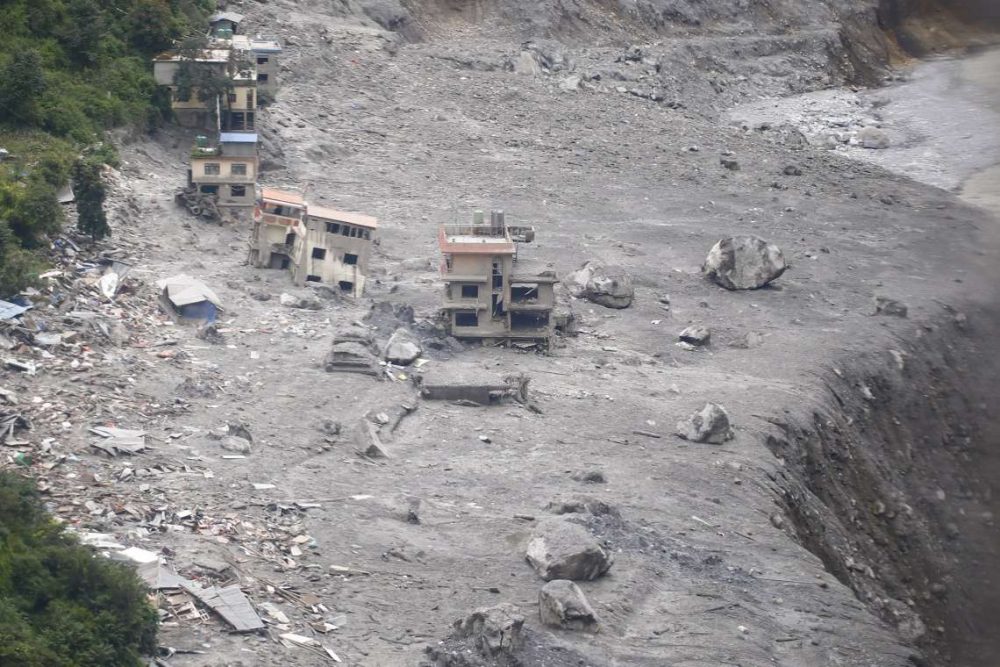
Nepal’s August 2026 floods caused an estimated US$1.66 billion in direct physical damage, with infrastructure accounting for 83 per cent of the total…reports Asian Lite News Desk Nepal’s devastating floods in August 2026 caused an estimated US$1.66 billion in direct physical damage, with infrastructure accounting for 83 per cent of the total, according to a World Bank report. The estimate, included in the World Bank’s Nepal Development Update unveiled this week, is close to the Nepal government’s preliminary Rapid Damage and Needs Assessment (RDNA), which put physical damage at US$1.81 billion. The government’s assessment also estimated losses beyond physical assets at US$883.32 million, taking the total economic effects of the disaster to approximately US$2.7 billion. The World Bank’s Global Rapid Post-Disaster Damage Estimation (GRADE) found that infrastructure suffered the greatest damage, estimated at US$1.38 billion, or 83 per cent of the total. Residential buildings accounted for US$185 million, or 11 per cent, while non-residential buildings sustained damage worth US$101 million, or 6 per cent. The floods along the Bhotekoshi and Trishuli rivers caused extensive damage to hydropower projects, solar energy facilities, electricity transmission infrastructure and transport networks. The energy sector, particularly hydropower, was among the worst affected. The August 2026 floods affected 12 hydropower projects and one solar project, involving 281.1 MW of operational capacity and 395.02 MW of capacity under construction. Damage to transmission lines and substations also disrupted the transmission of 149.6 MW of electricity to the national grid. The total affected capacity reached approximately 430.7 MW, equivalent to 10.6 per cent of Nepal’s installed hydropower and solar capacity at the end of fiscal year 2025-26, which concluded in mid-July. The disaster also severely damaged transport infrastructure along the 82-km Rasuwa trade corridor, which connects Kathmandu with the Rasuwagadhi border point with China. More than 55 km of the corridor was damaged, including 40 km that was completely destroyed. The floods also damaged 37 motorable bridges and 68 suspension bridges. The disaster resulted in significant human losses along the affected corridor and beyond. According to Nepal’s National Disaster Risk Reduction and Management Authority, 1,455 people had been confirmed dead, while 5,285 remained missing following the disaster. The World Bank report found that the physical damage was concentrated in three districts in central Nepal: Rasuwa, Nuwakot and Dhading. Rasuwa was the worst-affected district, accounting for US$1.07 billion, or 64 per cent, of the total direct damage. Nuwakot recorded an estimated US$551 million in damage, while Dhading suffered approximately US$39 million. “The findings highlight the concentration of physical damage in a small number of districts and the disproportionate impact on infrastructure, underscoring the scale of the reconstruction challenge facing the affected areas,” the World Bank said. The global development financier said the floods had demonstrated the scale and complexity of disaster risks in Nepal’s Himalayan environment. The event also showed how a single extreme weather event could trigger cascading impacts across sectors and geographical areas. The report said recovery efforts should extend beyond restoring infrastructure to its pre-disaster condition. While the principle of “Build Back Better” remained relevant, the World Bank stressed that rebuilding infrastructure to higher engineering standards in the same locations might not always be sufficient. “In some cases, simply rebuilding the same infrastructure in the same location to a higher engineering standard may not be sufficient. Nepal may need to build differently — based on a better understanding of risk, more careful decisions about location and design, greater redundancy in critical networks, stronger monitoring and early warning, and a more integrated approach to infrastructure development in the Himalayas,” the report said. The World Bank said Nepal’s recovery strategy should incorporate improved risk assessment, more informed infrastructure planning, stronger monitoring systems and better early warning mechanisms. The report emphasised that reconstruction should not only restore damaged assets but also reduce the impact of future disasters, particularly in the country’s vulnerable Himalayan regions.

Vaccine Delays Fuel Bangladesh Measles Outbreak

More than 32,000 suspected cases and over 250 deaths have been reported since mid-March, with children making up most of the fatalities….reports Asian Lite News Desk Bangladesh’s measles outbreak has intensified, with
Go toTop

Don't Miss

Singapore says ‘We want more’ as Kashmir fruits arrive

Singapore has received its first shipment of cherries and plums

Deuba’s India visit cancelled over Covid surge

Deuba was scheduled to fly to India on Sunday to