September 2, 2023
3 mins read

Delhi Police Conducts G20 Summit Rehearsal

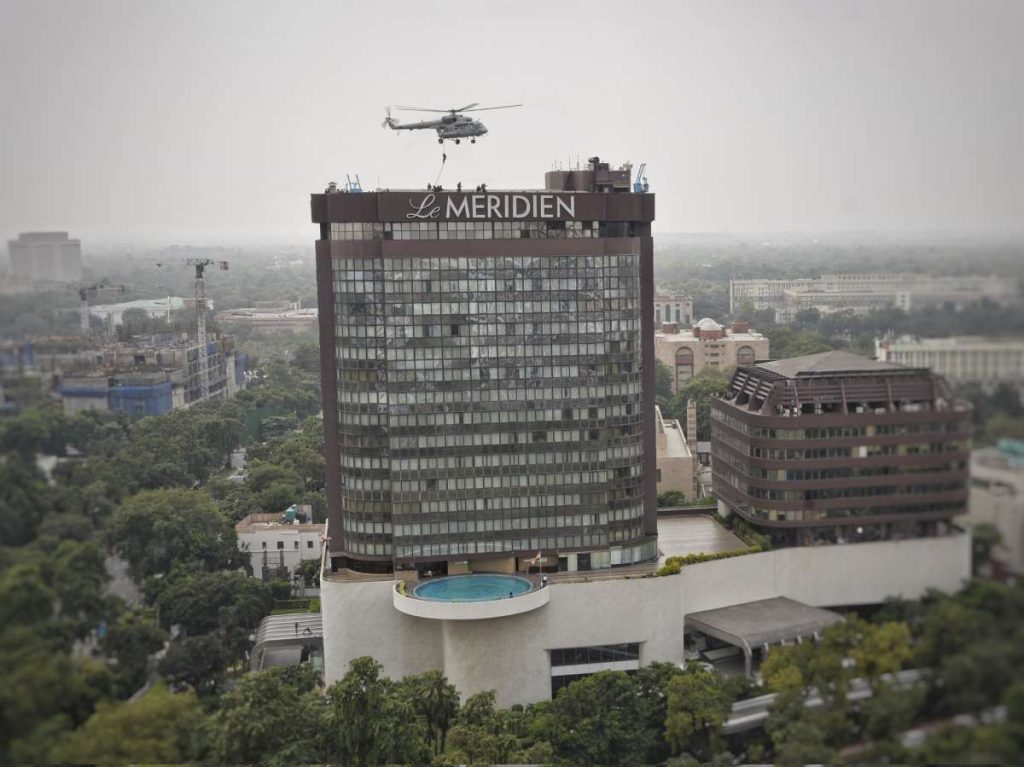
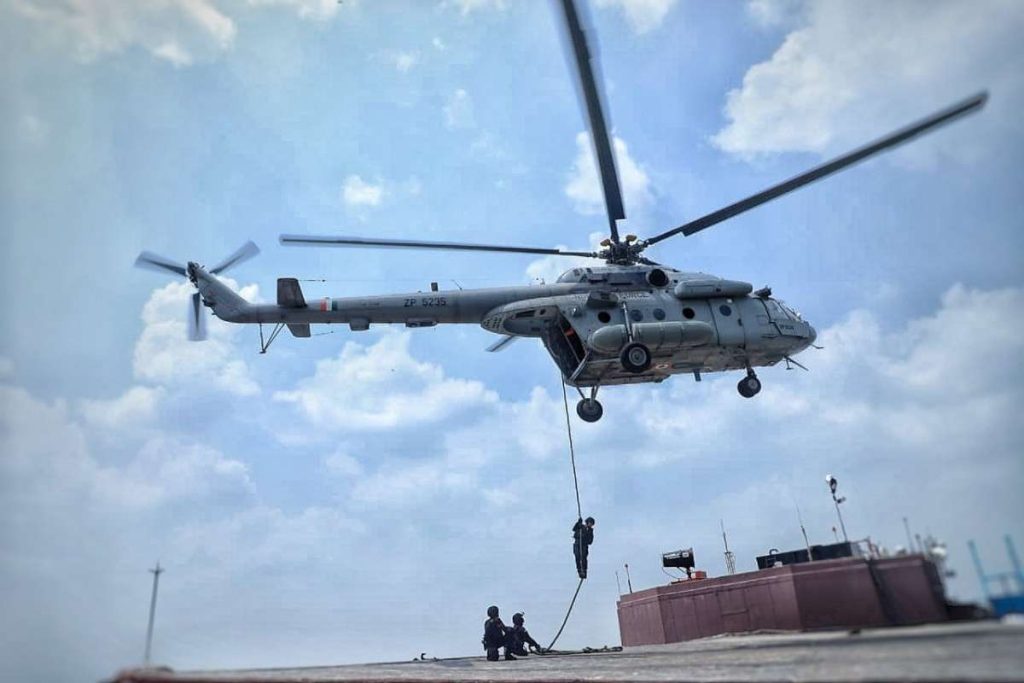
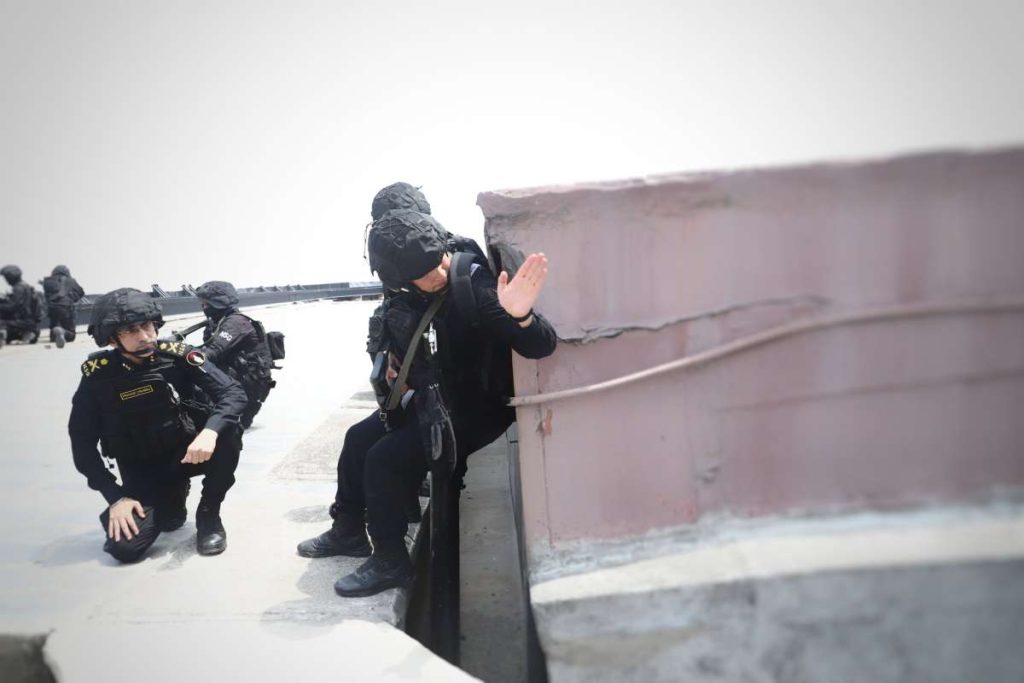
The Bomb Squad of the National Security Guard (NSG) on Saturday conducted an anti-sabotage sweep at different locations in the national capital ahead of the G20 Summit.

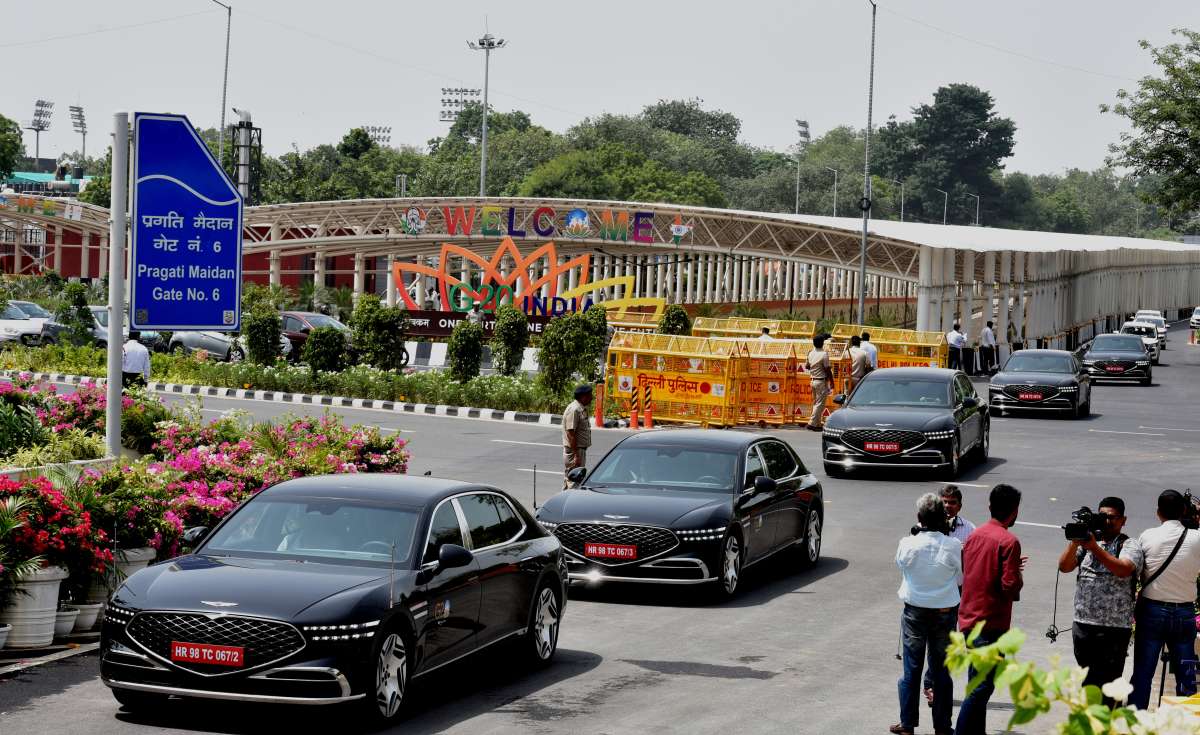
The Delhi Police conducted comprehensive dress rehearsals for the upcoming G20 Summit on Saturday.

They oversaw the procession of caravans from various parts of the national capital towards the New Delhi district.
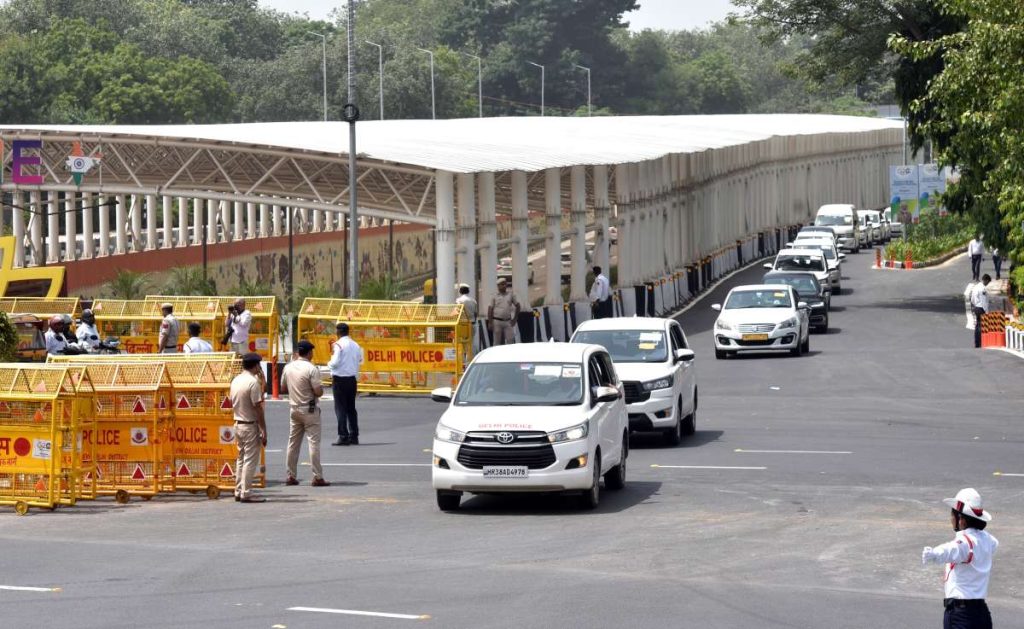
The rehearsal session began at 8:30 a.m and continued till 12 p.m.
Further rehearsals were also scheduled for 4:30 p.m to 6 p.m, and 7 p.m to 11 p.m.

Commuters were strongly encouraged to utilize the metro services due to expected traffic disruptions.

Throughout the carcade rehearsals, traffic restrictions will be in place at several key locations, including Sardar Patel Marg-Panchsheel Marg, Sardar Patel Marg–Kautilya Marg, Gol Methi roundabout, Mansingh Road roundabout, C-Hexagon, Mathura Road, Zakir Hussain Marg-Subramaniam Bharti Marg, Bhairon Marg-Ring Road, Satya Marg/Shantipath roundabout,
Janpath–Kartavyapath, Barakhamba Road red light, Tolstoy Marg, and Vivekanand Marg, among others, according to officials.

The traffic police said that passengers going towards railway stations will be able to use their private vehicles, Auto-rickshaws, taxis for travelling to New Delhi railway station and Old Delhi railway station.

However, in case of road journeys they may face some congestion and consequent delays. Therefore, they are advised to keep sufficient time at hand. For easier and more convenient access to railway stations passengers are advised to make maximum use of Metro services,” they said.

The traffic advisory further advised that passengers going towards the airport are advised to make maximum use of Metro services, especially the Airport Express Line connecting New Delhi Station to Dwarka Sector 21 Station via IGI Airport T3.
“City Bus Services will not be affected at large. However, they may be diverted from certain road stretches in New Delhi District depending upon the real time traffic situation,” it said.

“Motorists are requested to have patience, observe traffic rules & road discipline and follow directions of Traffic Police personnel deployed at all intersections. People are also requested to plan their journey in advance with sufficient time at hand to avoid inconvenience,” it added.

BOMB SQUAD’S ANTI-SABOTAGE CHECKS

The Bomb Squad of the National Security Guard (NSG) on Saturday conducted an anti-sabotage sweep at different locations in the national capital ahead of the G20 Summit.

Earlier, on Saturday, Delhi Traffic Police conducted another full dress rehearsal as part of its preparations for the upcoming G20 Summit in the national capital on September 9 and 10.

The two-day summit will draw leaders and delegates from 40 countries, including the 20 member states.
The carcade rehearsals were carried out in the Pragati Maidan area of the national capital where the global event will be hosted next month, officials said.

Speaking to ANI on Saturday, Special Commissioner Of Delhi Traffic Police, SS Yadav said, “We have shared the travel guidelines with all the media houses. Newspapers have also published our releases and necessary information is also being shared on our social media handles. The focus is to ensure that the impact on the movement of traffic is kept at a minimum.”

The G20 Summit is set to be hosted at the state-of-the-art Bharat Mandapam Convention Centre at Pragati Maidan.
Earlier, on August 23, Delhi traffic police authorities carried out a full-dress rehearsal on selected routes.

Delhi Police, which started its preparations for the G20 Summit in earnest a few months ago, has been training personnel who are to be deployed at various locations ahead of and during the big-ticket summit.

The personnel are also being trained to deal with the fallout of possible hazards, including the use of chemical and biological weapons, and have been asked to focus on their soft skills. (ANI)

ALSO READ: Pakistani-Chinese Lobby Push Propaganda Ahead Of G20 Summit
Newsdesk

Newsdesk

Aravind Rajeev is Deputy News Editor at Asian Lite, mostly covering the Middle East and GCC. He has over eight years of experience as a journalist, with a background in ground-level reporting, crime reporting, as well as international and regional news.

Previous Story

Sri Lanka Fully Aware Of India’s Security Concerns: Envoy

Next Story

Tharman Pledges To Build ‘Future Of Optimism’

Previous Story

Sri Lanka Fully Aware Of India’s Security Concerns: Envoy

Next Story

Tharman Pledges To Build ‘Future Of Optimism’

Latest from -Top News

Pakistan Risks Overstretching Itself in Yemen War

Pakistan’s expanding military role in Saudi Arabia amid the Yemen conflict could strain its defence resources and fragile finances…reports Asian Lite News Desk Pakistan’s military involvement in the war in Yemen may prove unsustainable because of mounting financial pressures and competing security demands, according to a new report. Islamabad’s growing military presence in Saudi Arabia risks stretching its defence resources while exposing the country to greater strategic and economic challenges. An article by Andrew Wilson in One World Outlook describes Pakistan’s involvement as a case of “fiscal and strategic overreach”, arguing that the country lacks the financial flexibility to sustain an expanded military commitment. Pakistan’s external finances depend heavily on an International Monetary Fund (IMF) programme, financial support from Gulf countries and remittances from Pakistani workers in the region. The report argues that deeper military involvement in the conflict could place additional pressure on these sources of financial stability. It also warns that deploying troops and military equipment abroad could weaken Pakistan’s capacity to address security challenges along its eastern border and deal with two domestic insurgencies. The move could also draw Islamabad into a conflict it has sought to approach cautiously. A Reuters report in May, citing Pakistani security and government sources, said Islamabad had deployed around 8,000 troops, a squadron of approximately 16 aircraft, mostly JF-17 fighter jets, two drone squadrons and a Chinese HQ-9 air-defence battery to Saudi Arabia. According to those sources, Riyadh was financing the deployment, with Pakistani personnel operating the equipment. The sources also said a confidential agreement contemplated the possibility of deploying up to 80,000 troops. Islamabad has not confirmed those figures, although it has acknowledged its military presence in Saudi Arabia, including the deployment of fighter jets at King Abdulaziz Air Base from April. The One World Outlook article argues that Saudi financial support can cover allowances and operating expenses but cannot easily replace military equipment needed elsewhere or resolve the political and strategic challenges of participating in the Yemen conflict. Pakistan’s defence budget is another concern. For the 2026-27 financial year, the federal government allocated PKR 3 trillion, or approximately $10.8 billion, to defence services. The allocation represents an 18 per cent increase from the original PKR 2.55 trillion provision and amounts to around 2.1 per cent of projected gross domestic product (GDP). Defence spending accounts for approximately 16 per cent of the federal government’s PKR 18.8 trillion expenditure. Military pensions are budgeted separately at PKR 822 billion, while debt servicing costs stand at approximately PKR 8 trillion, more than two-and-a-half times the defence allocation. The report argues that these competing financial obligations leave little room for additional military expenditure without placing further pressure on public finances. Pakistan’s reliance on IMF assistance also limits its fiscal flexibility. The country must meet the conditions attached to the programme, including a primary budget surplus target of 2 per cent of GDP and continued restraint on development spending. According to the article, these requirements make it difficult for Islamabad to finance an additional military commitment without compromising other budgetary priorities. Pakistan’s economic indicators offer limited reassurance. Economic growth for the 2025-26 financial year is estimated at between 3.6 and 3.7 per cent, while inflation reached approximately 10.3 per cent in September following an energy price shock. Foreign exchange reserves stood at around $21.5 billion at the end of September. Although this marks an improvement from the low levels recorded in 2023, the report notes that the reserves cover only a few months of imports. Financial assistance from Gulf partners remains central to Pakistan’s external stability. The article says Islamabad holds approximately $8 billion in Saudi deposits at its central bank. In July, the State Bank of Pakistan said Riyadh had extended the maturity of $5 billion in deposits to December 2028, easing the country’s immediate external financing requirements. A further $3 billion deposit was also extended in the spring. However, the article argues that these arrangements provide temporary relief rather than long-term financial independence, particularly as regional conflict threatens the stability of the Gulf economies on which Pakistan relies. The report concludes that Pakistan faces a difficult balance between supporting Saudi Arabia militarily and preserving the financial and military resources needed to address its domestic and regional challenges.

UK and Germany Ratify Kensington Treaty

Britain and Germany ratify the Kensington Treaty, agreeing new cooperation on AI, quantum research, defence and security while targeting investment, jobs and Russian hybrid threats…reports Asian Lite News Desk Britain and Germany

Economic tide is turning in Bangladesh

If there is one thing that can bring some comfort to the struggling Bangladeshi economy, it is good relations with India. Bangladesh should remember that Delhi’s backing, through easy supplies of essentials
Go toTop

Don't Miss

India Slams Pakistan’s Kashmir Claims

India criticised Pakistan’s attempt to bring up Jammu and Kashmir

UN Security Council Ineffectiveness Must Be Fixed: India

India Highlights Security Council Ineffectiveness, Calls for UN Reforms…reports Arul