July 12, 2023
5 mins read

‘India could be world’s No.2 economy by 2075’

Goldman Sachs report projects that India’s economy will be worth $52.5 trillion, bigger than US and second only to China…reports Asian Lite News

The GDP of India, powered by its 1.4 billion population, is expected to expand dramatically and the country will become the world’s second-largest economy by 2075, a research by Goldman Sachs has found.

The report projects that India’s economy will be worth $52.5 trillion, bigger than US and second only to China. 

Santanu Sengupta, Goldman Sachs Research’s India economist, has said India’s key to utilise the potential of its growing population is to boost participation within its labour force and training and skilling its talent pool.

“Over the next two decades, the dependency ratio of India will be one of the lowest among regional economies. So that really is the window for India to get it right in terms of setting up manufacturing capacity, continuing to grow services, continuing the growth of infrastructure,” the report quotes Mr Sengupta has saying.

He also pointed out India’s population has one of the best ratios between its working-age population and its number of children and elderly, according to the report.

“India has made more progress in innovation and technology than some may realize. Yes, the country has demographics on its side, but that’s not going to be the only driver of GDP. Innovation and increasing worker productivity are going to be important for the world’s fifth-biggest economy. In technical terms, that means greater output for each unit of labor and capital in India’s economy,” the report said.

“Capital investment is also going to be a significant driver of growth going forward. Driven by favorable demographics, India’s savings rate is likely to increase with falling dependency ratios, rising incomes, and deeper financial sector development, which is likely to make the pool of capital available to drive further investment,” it added.

On this front, the report states, the government “has done the heavy-lifting in the recent past”. “But given healthy balance sheets of private corporates and banks in India, we believe that the conditions are conducive for a private sector capex cycle,” it says.

The report reiterates that India’s large population “is clearly an opportunity, however the challenge is productively using the labor force, by increasing the labor force participation rate”.

“That will mean creating the opportunities for this labor force to get absorbed and simultaneously training and upskilling the labor force,” it says.

The report said that in India, the demographic transition is happening more gradually and over a longer time period than the rest of Asia. This is primarily due to a more gradual decline in death and birth rates in India compared with the rest of Asia, it stated.

The report warned that India’s big opportunity may be lost if its labour force participation does not increase. “The labor force participation rate in India has declined over the last 15 years. If you have more opportunities – especially for women, because the women’s labor force participation rate is significantly lower than men’s – you can shore up your labor force participation rate, which can further increase your potential growth,” the report said.

Meanwhile, the country’s impressive growth experienced in 2022-23, when the world economy was rocked by inflation and restrained by monetary tightening, is a narrative on what works for the Indian economy, and what clearly works is the strength of its domestic demand.

This is the assessment of the annual Economic Review for 2022-23, released by the Finance Ministry.

“Strong balance sheets and digital advancements could lead to better credit decisions allowing India’s financial cycle to sustain for longer periods before encountering the challenge of bad debts. Thus, India appears poised to sustain its growth in a more durable way than before,” the Review stated.

The provisional GDP estimates for 2022-23 released in May were higher than the consensus estimate, it said.

“A strong final quarter performance pushed the GDP growth for the full year to 7.2 per cent, higher than the 7 per cent estimated in February. This upside to the growth estimate takes the growth momentum deep into the current year,” the Review noted.

It further emphasised that several forecasting agencies also share optimism about India’s growth story as they have revised their growth estimates for the current fiscal upwards.

“The latest evidence also does not indicate any slowing of activity in the first two months of the current year. India is the fastest-growing major economy, is now no longer only a statistical fact,” the document informed.
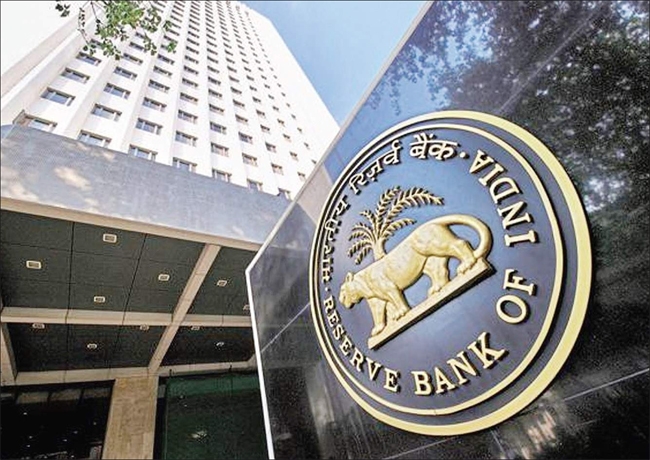
Reserve Bank of India.

The Review said that inflation emerged as the major challenge in 2022-23 for India as it did for the rest of the world following the emergence of the geopolitical conflict and the impact of El Nino.

“The world over, policy measures to mitigate inflation were broadly similar-monetary tightening by the central banks and supply easing by the governments. What, however, worked for India was the country’s inflation breaching the target to a lesser extent as compared to the groups of emerging market economies (EMEs) and advanced economies (AEs). This happened as the average inflation in 2022-23 was lower in India than in the groups of EMEs and AEs, possibly owing to greater supply easing in the country,” it explained.

As a result of this, the RBI did not have to increase the policy rates as much as the central banks of other countries did.

“As the year-end approached, the declining international prices of commodities led to a steep decline in India’s wholesale price inflation. The pass-through to the retail level took some time, but before the year-end, headline inflation in India entered the target range. Core inflation, however, remained sticky but started to decline from March 2023 onwards,” the Review said.

ALSO READ-India targets $300 billion Electronics industry and $1 trillion digital economy by 2026

Previous Story

Bollywood still in Covid-19 hangover?

Next Story

Amit Shah to address inaugural of G20 meet on crime

Previous Story

Bollywood still in Covid-19 hangover?

Next Story

Amit Shah to address inaugural of G20 meet on crime

Latest from -Top News

Pakistan Risks Overstretching Itself in Yemen War

Pakistan’s expanding military role in Saudi Arabia amid the Yemen conflict could strain its defence resources and fragile finances…reports Asian Lite News Desk Pakistan’s military involvement in the war in Yemen may prove unsustainable because of mounting financial pressures and competing security demands, according to a new report. Islamabad’s growing military presence in Saudi Arabia risks stretching its defence resources while exposing the country to greater strategic and economic challenges. An article by Andrew Wilson in One World Outlook describes Pakistan’s involvement as a case of “fiscal and strategic overreach”, arguing that the country lacks the financial flexibility to sustain an expanded military commitment. Pakistan’s external finances depend heavily on an International Monetary Fund (IMF) programme, financial support from Gulf countries and remittances from Pakistani workers in the region. The report argues that deeper military involvement in the conflict could place additional pressure on these sources of financial stability. It also warns that deploying troops and military equipment abroad could weaken Pakistan’s capacity to address security challenges along its eastern border and deal with two domestic insurgencies. The move could also draw Islamabad into a conflict it has sought to approach cautiously. A Reuters report in May, citing Pakistani security and government sources, said Islamabad had deployed around 8,000 troops, a squadron of approximately 16 aircraft, mostly JF-17 fighter jets, two drone squadrons and a Chinese HQ-9 air-defence battery to Saudi Arabia. According to those sources, Riyadh was financing the deployment, with Pakistani personnel operating the equipment. The sources also said a confidential agreement contemplated the possibility of deploying up to 80,000 troops. Islamabad has not confirmed those figures, although it has acknowledged its military presence in Saudi Arabia, including the deployment of fighter jets at King Abdulaziz Air Base from April. The One World Outlook article argues that Saudi financial support can cover allowances and operating expenses but cannot easily replace military equipment needed elsewhere or resolve the political and strategic challenges of participating in the Yemen conflict. Pakistan’s defence budget is another concern. For the 2026-27 financial year, the federal government allocated PKR 3 trillion, or approximately $10.8 billion, to defence services. The allocation represents an 18 per cent increase from the original PKR 2.55 trillion provision and amounts to around 2.1 per cent of projected gross domestic product (GDP). Defence spending accounts for approximately 16 per cent of the federal government’s PKR 18.8 trillion expenditure. Military pensions are budgeted separately at PKR 822 billion, while debt servicing costs stand at approximately PKR 8 trillion, more than two-and-a-half times the defence allocation. The report argues that these competing financial obligations leave little room for additional military expenditure without placing further pressure on public finances. Pakistan’s reliance on IMF assistance also limits its fiscal flexibility. The country must meet the conditions attached to the programme, including a primary budget surplus target of 2 per cent of GDP and continued restraint on development spending. According to the article, these requirements make it difficult for Islamabad to finance an additional military commitment without compromising other budgetary priorities. Pakistan’s economic indicators offer limited reassurance. Economic growth for the 2025-26 financial year is estimated at between 3.6 and 3.7 per cent, while inflation reached approximately 10.3 per cent in September following an energy price shock. Foreign exchange reserves stood at around $21.5 billion at the end of September. Although this marks an improvement from the low levels recorded in 2023, the report notes that the reserves cover only a few months of imports. Financial assistance from Gulf partners remains central to Pakistan’s external stability. The article says Islamabad holds approximately $8 billion in Saudi deposits at its central bank. In July, the State Bank of Pakistan said Riyadh had extended the maturity of $5 billion in deposits to December 2028, easing the country’s immediate external financing requirements. A further $3 billion deposit was also extended in the spring. However, the article argues that these arrangements provide temporary relief rather than long-term financial independence, particularly as regional conflict threatens the stability of the Gulf economies on which Pakistan relies. The report concludes that Pakistan faces a difficult balance between supporting Saudi Arabia militarily and preserving the financial and military resources needed to address its domestic and regional challenges.

UK and Germany Ratify Kensington Treaty

Britain and Germany ratify the Kensington Treaty, agreeing new cooperation on AI, quantum research, defence and security while targeting investment, jobs and Russian hybrid threats…reports Asian Lite News Desk Britain and Germany

Economic tide is turning in Bangladesh

If there is one thing that can bring some comfort to the struggling Bangladeshi economy, it is good relations with India. Bangladesh should remember that Delhi’s backing, through easy supplies of essentials
Go toTop

Don't Miss

Army Chief meets Lankan President, discusses issues of mutual interests

Sri Lanka’s leading role as a partner in security was

BRICS Endorses India’s Stand on Terror

The treaty proposed by India within the UN framework aims