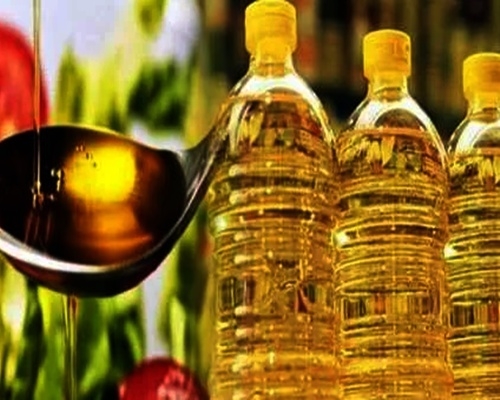
The annual demand for edible oils in India is around 250 lakh tonnes, while domestic production is much lower – barely 111.6 lakh tonnes per annum…writes VIVEK PURI
India has always been a predominantly agricultural economy and even today, around 70 per cent of the population is engaged either directly or indirectly in agriculture.
However, in spite of being the world’s largest producer of millets and the second largest producer of wheat and rice, India faces a chronic shortage of edible oil and is compelled to bridge the demand-supply gap through imports.
Just a couple of decades ago, India’s edible oil imports were around 4 million tonnes a year. This figure has grown exponentially over the decades and now stands at 14.03 million tonnes (oil year ending October 31, 2022). This adds up to an import bill of INR 1.57 lakh crore, which represents an enormous depletion of our precious foreign exchange reserves.
This dependence on imports additionally leads to the onset of severe inflation as demonstrated by recent global shortages. Which caused edible oil prices to become almost unaffordable for common people. The demand-supply gap for edible oils is significantly wide and, therefore, difficult to bridge.
The annual demand for edible oils in India is around 250 lakh tonnes, while domestic production is much lower – barely 111.6 lakh tonnes per annum, according to data published by the Ministry of Consumer Affairs. This creates a gap that varies from 55 to 60 per cent.
It is encouraging to note that the Government of India is proactively formulating policies and adopting measures aimed at rectifying this imbalance. The National Food Security Mission has outlined several action points aimed at increasing production and productivity of oilseed crops.
These include increasing the area under cultivation; developing improved high-yielding varieties of oilseeds; support for agri inputs such as fertilisers and pesticides; mechanisation of key farming operations to improve productivity; and providing support to farmers for post-harvest management of oilseed crops.
On a parallel track, the National Mission on Oilseed and Palm Oil (NMOOP) is also striving to boost the supply side for oilseeds. It is very important for mustard to be promoted within the ambit of the diverse measures being initiated by the Government.
After all, mustard is an ancient Indian oilseed and an integral part of our country’s agricultural and culinary heritage. It is a remunerative and profitable cash crop that contributes to farmers’ incomes. The oil extracted from mustard oilseeds is proven to be healthy from a nutritional perspective; it is also widely used in natural home remedies, skincare, hair care, Ayurveda formulations and body massage.
In order to make any meaningful headway, it is essential for mustard oil to be promoted in a structured manner. To do so, one of the key measures that we have consistently advocated for is the establishment of a mustard oil promotion board to implement the policy decisions taken by the Government, and also to look after the interests of all stakeholders – farmers, manufacturers, marketers and consumers.
Such an institution could also be instrumental in promoting Indian mustard oil across the globe in line with similar activities undertaken quite successfully by bodies such as the Malaysian Palm Oil Board, American Soybean Association and the International Olive Council.
One of the key challenges in bridging the demand-supply gap vis-a-vis edible oils is to find ways to leverage technology, research, scientific innovation and grassroots-level interventions to increase the yield of the mustard crop and bring productivity on a par with Western farming standards – in terms of both yield and quality. A possible solution being considered is the introduction of Genetically Modified (GM) Mustard.
However, there is a discernible difference of opinion among agricultural scientists, ecologists, researchers and policy makers. Until such differences are resolved, it is better in the larger public interest to keep GM Mustard in abeyance. In fact, we too share these concerns.
As manufacturers and marketers of a well-known brand of mustard oil (P Mark Mustard Oil since 1933), our concerns are focused on whether or not the characteristic pungency of mustard oil will be retained in the GM varieties. Traditional Indian consumers are accustomed to this pungency and even use it as a measure of purity and authenticity. Such consumers will be disappointed and dissatisfied if GM mustard oil fails to deliver on taste, aroma and pungency.
The need of the hour is to proactively address the demand-supply gap in the edible oil segment. In this regard, we reiterate that mustard and mustard oil can definitely play a pivotal role in driving India towards self-reliance, import-independence, and national pride.
(The author is the Managing Director, Puri Oil Mills Limited, Promoter of P Mark Mustard Oil. He can be contacted at [email protected])