April 23, 2023
4 mins read

Limited evacuation of foreigners begins in Sudan

Khartoum airport has been repeatedly targeted by shelling and gunfire, making evacuation flights from there impossible…reports Asian Lite News

The US military has evacuated American diplomats and their families from Khartoum, President Joe Biden has said. “Today, on my orders, the United States military conducted an operation to extract US government personnel from Khartoum,” he said in a statement.

Earlier Sudan’s paramilitary army Rapid Support Forces (RSF) said six aircraft were used in Sunday’s early morning mission, and that it had co-ordinated the evacuation with the US.

Several details are still unclear. Exactly how many people were airlifted out of Sudan has not been confirmed. However before Saturday’s operation, CBS News, reported a plan to evacuate about 70 government workers.

Biden confirmed the embassy in Khartoum is now closed: “We are temporarily suspending operations at the US embassy in Sudan.”

He also thanked Djibouti, Ethiopia and Saudi Arabia, saying they had been “critical to the success of our operation”.

The president praised the embassy staff’s “courage and professionalism” and “the unmatched skill of our service members who successfully brought them to safety”.

It is the second evacuation of foreign citizens since violence erupted in Sudan’s capital last week.

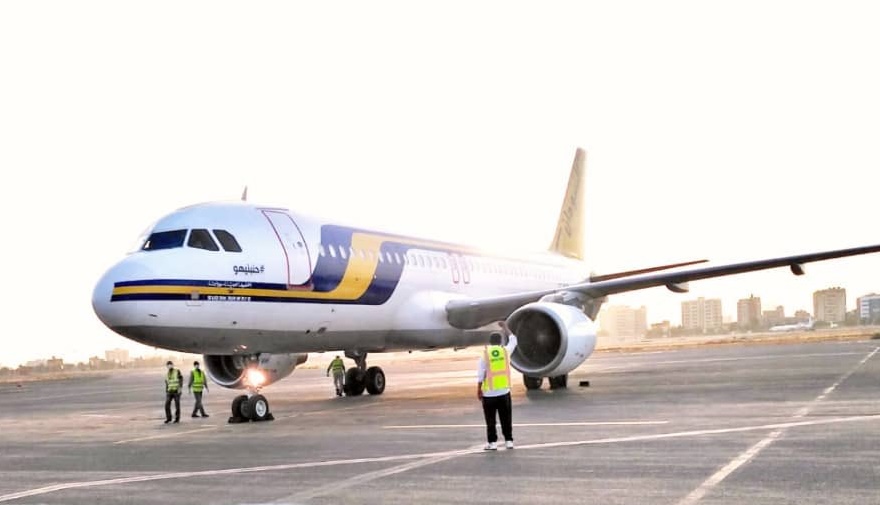
On Saturday, more than 150 citizens, diplomats and international officials were evacuated by sea to the Saudi Arabian port of Jeddah. They were mostly citizens of Gulf countries, as well as Egypt, Pakistan and Canada.

Arabic news service Al Hadath reported that the six US aircraft landed in the embassy compound, and several Twitter users posted that they could hear helicopter activity over the US embassy, however the BBC has been unable to verify this.

Khartoum airport has been repeatedly targeted by shelling and gunfire, making evacuation flights from there impossible.

An unnamed US official said that President Biden had ordered the evacuation on Saturday after receiving a recommendation from his national security team, who saw no end to the fighting.

Biden’s statement said “I am receiving regular reports from my team on their ongoing work to assist Americans in Sudan, to the extent possible. We are also working closely with our allies and partners in this effort.”

He condemned the “tragic violence” in Sudan, saying “it’s unconscionable and it must stop”.

“The belligerent parties must implement an immediate and unconditional ceasefire, allow unhindered humanitarian access, and respect the will of the people of Sudan.”

The UK says it is considering ways to evacuate its staff. A hotline has been set up for those who need urgent help, and UK citizens in Sudan are being urged to tell the Foreign Office where they are.

Any UK evacuation is expected to be very limited and focus on diplomatic staff – not comparable to the mass evacuation from Afghanistan in 2021.

Meanwhile the Canadian government has told its citizens in Sudan to “shelter in a safe place”.

Describing the security situation as “highly volatile”, it told them to keep their phones charged, their doors and windows locked and “consider leaving the country if there’s a safe means to do so”.

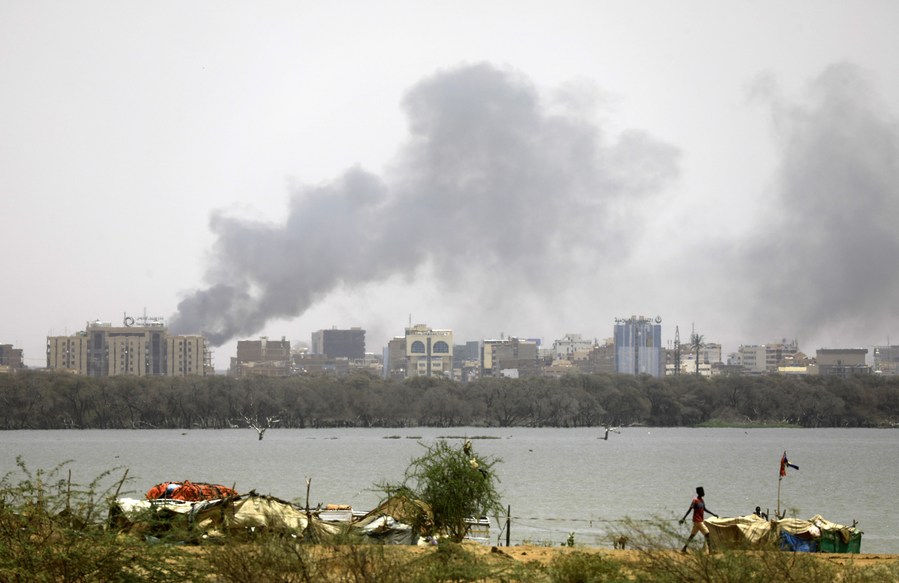
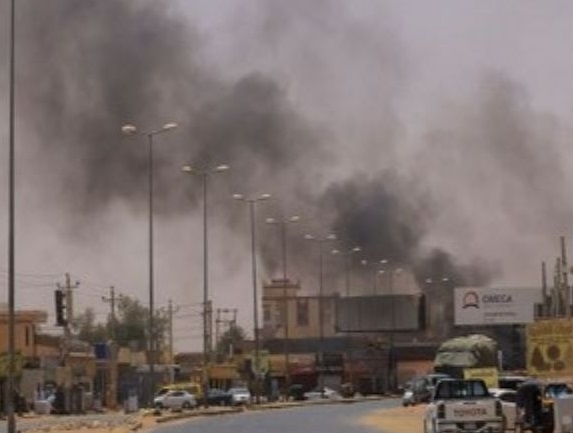
Heavy fighting broke out in Khartoum on 15 April.

At the heart of it is a power struggle between forces loyal to Sudanese army chief Abdel Fatteh al-Burhan and a rival paramilitary faction, the Rapid Support Forces (RSF).

The near-constant shooting and bombardment in Khartoum and elsewhere has cut electricity and safe access to food and water for much of the population.

Several ceasefires that had seemingly been agreed by both sides were ignored, including a three-day pause to mark the Muslim holiday of Eid al-Fitr, which started on Friday.

Prime Minister Rishi Sunak chaired an emergency government Cobra meeting on Saturday to assess the Sudan crisis and more talks are expected on Sunday.

Foreign Secretary James Cleverly has cut short a Pacific tour and is returning to London. Some UK nationals trapped in Sudan have voiced frustration and anxiety over the absence of an airlift.

Briton Iman Abu Garga, visiting Khartoum, said she had registered herself and her two children, as instructed, “and since then – nothing”.

“We have no idea about timescale or timeframe. We have no idea what it’s going to look like. Are we going to be airlifted out of Khartoum airport? Are we going to have to go by road? It’s just utterly frustrating that there is no human contact whatsoever,” she complained.

Another British citizen in Khartoum said she felt “completely abandoned” by the UK government, saying she had not been given “much information at all” about possible evacuation plans.

On Saturday a Sudanese army statement said Gen Burhan had agreed to facilitate and secure foreigners’ evacuation “in the coming hours”.

It said British, US, French and Chinese nationals and diplomats would be evacuated by air on board military transport planes from Khartoum.

The UK government said it was “doing everything possible to support British nationals and diplomatic staff in Khartoum”.

ALSO READ-Shehbaz calls for immediate Covid vaccination of children
Previous Story

US evacuates diplomats from Sudan

Next Story

Pakistan pins hopes on Saudi deal for $2 bn deposits

Previous Story

US evacuates diplomats from Sudan

Next Story

Pakistan pins hopes on Saudi deal for $2 bn deposits

Latest from -Top News

Pakistan Risks Overstretching Itself in Yemen War

Pakistan’s expanding military role in Saudi Arabia amid the Yemen conflict could strain its defence resources and fragile finances…reports Asian Lite News Desk Pakistan’s military involvement in the war in Yemen may prove unsustainable because of mounting financial pressures and competing security demands, according to a new report. Islamabad’s growing military presence in Saudi Arabia risks stretching its defence resources while exposing the country to greater strategic and economic challenges. An article by Andrew Wilson in One World Outlook describes Pakistan’s involvement as a case of “fiscal and strategic overreach”, arguing that the country lacks the financial flexibility to sustain an expanded military commitment. Pakistan’s external finances depend heavily on an International Monetary Fund (IMF) programme, financial support from Gulf countries and remittances from Pakistani workers in the region. The report argues that deeper military involvement in the conflict could place additional pressure on these sources of financial stability. It also warns that deploying troops and military equipment abroad could weaken Pakistan’s capacity to address security challenges along its eastern border and deal with two domestic insurgencies. The move could also draw Islamabad into a conflict it has sought to approach cautiously. A Reuters report in May, citing Pakistani security and government sources, said Islamabad had deployed around 8,000 troops, a squadron of approximately 16 aircraft, mostly JF-17 fighter jets, two drone squadrons and a Chinese HQ-9 air-defence battery to Saudi Arabia. According to those sources, Riyadh was financing the deployment, with Pakistani personnel operating the equipment. The sources also said a confidential agreement contemplated the possibility of deploying up to 80,000 troops. Islamabad has not confirmed those figures, although it has acknowledged its military presence in Saudi Arabia, including the deployment of fighter jets at King Abdulaziz Air Base from April. The One World Outlook article argues that Saudi financial support can cover allowances and operating expenses but cannot easily replace military equipment needed elsewhere or resolve the political and strategic challenges of participating in the Yemen conflict. Pakistan’s defence budget is another concern. For the 2026-27 financial year, the federal government allocated PKR 3 trillion, or approximately $10.8 billion, to defence services. The allocation represents an 18 per cent increase from the original PKR 2.55 trillion provision and amounts to around 2.1 per cent of projected gross domestic product (GDP). Defence spending accounts for approximately 16 per cent of the federal government’s PKR 18.8 trillion expenditure. Military pensions are budgeted separately at PKR 822 billion, while debt servicing costs stand at approximately PKR 8 trillion, more than two-and-a-half times the defence allocation. The report argues that these competing financial obligations leave little room for additional military expenditure without placing further pressure on public finances. Pakistan’s reliance on IMF assistance also limits its fiscal flexibility. The country must meet the conditions attached to the programme, including a primary budget surplus target of 2 per cent of GDP and continued restraint on development spending. According to the article, these requirements make it difficult for Islamabad to finance an additional military commitment without compromising other budgetary priorities. Pakistan’s economic indicators offer limited reassurance. Economic growth for the 2025-26 financial year is estimated at between 3.6 and 3.7 per cent, while inflation reached approximately 10.3 per cent in September following an energy price shock. Foreign exchange reserves stood at around $21.5 billion at the end of September. Although this marks an improvement from the low levels recorded in 2023, the report notes that the reserves cover only a few months of imports. Financial assistance from Gulf partners remains central to Pakistan’s external stability. The article says Islamabad holds approximately $8 billion in Saudi deposits at its central bank. In July, the State Bank of Pakistan said Riyadh had extended the maturity of $5 billion in deposits to December 2028, easing the country’s immediate external financing requirements. A further $3 billion deposit was also extended in the spring. However, the article argues that these arrangements provide temporary relief rather than long-term financial independence, particularly as regional conflict threatens the stability of the Gulf economies on which Pakistan relies. The report concludes that Pakistan faces a difficult balance between supporting Saudi Arabia militarily and preserving the financial and military resources needed to address its domestic and regional challenges.

UK and Germany Ratify Kensington Treaty

Britain and Germany ratify the Kensington Treaty, agreeing new cooperation on AI, quantum research, defence and security while targeting investment, jobs and Russian hybrid threats…reports Asian Lite News Desk Britain and Germany

Economic tide is turning in Bangladesh

If there is one thing that can bring some comfort to the struggling Bangladeshi economy, it is good relations with India. Bangladesh should remember that Delhi’s backing, through easy supplies of essentials
Go toTop

Don't Miss

UNSC demands halt to siege of Sudan city of 1.8 mn people

UN Undersecretary-General for Humanitarian Affairs, Martin Griffiths, has called on

Sudan PM Abdallah Hamok detained

Sudanese Prime Minister Abdallah Hamok has been put under house arrest after