March 27, 2023
4 mins read

Pak exports to Middle East hit a snag, fall by 12%

The exports saw a mixed trend with a rise to Saudi Arabia and Bahrain while a decline to other countries of the region…reports Asian Lite News

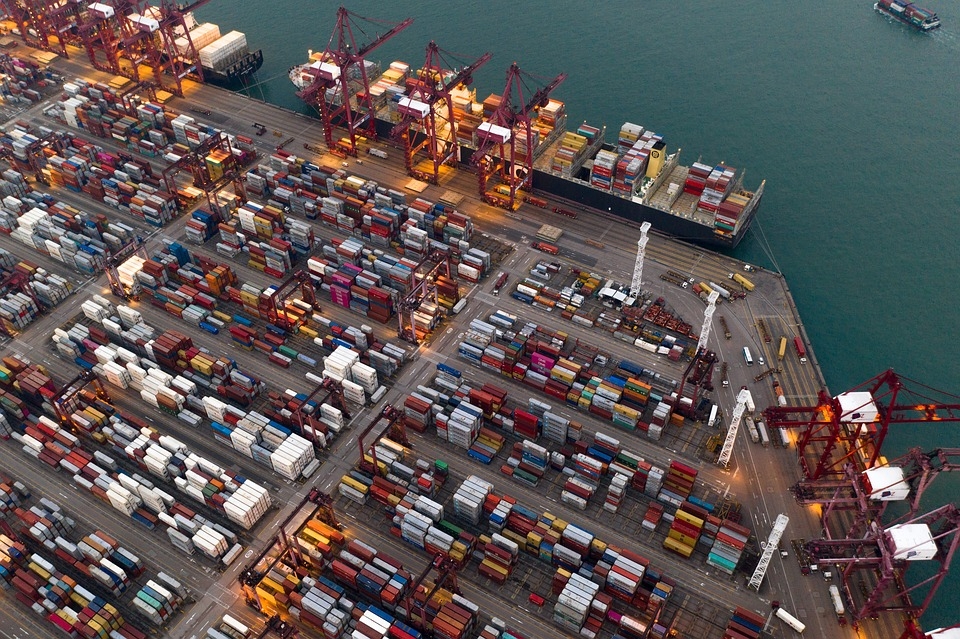
Pakistan’s exports to the Middle East reduced by 11.87 per cent on a year-on-year basis to USD 1.491 billion in the first eight months of FY23 mainly caused by a substantial decline in exports to the United Arab Emirates (UAE), Dawn reported.

Pakistan’s exports to the Middle East saw a mixed trend with a rise to Saudi Arabia and Bahrain while a decline to other countries of the region, Dawn reported citing the data compiled by the State Bank of Pakistan. The UAE has emerged as a leading country for Pakistan’s export of goods as nearly 64 per cent of the total exports to the region only go to the UAE market, as per the Dawn report. However, Pakistan witnessed a decline of 19.91 per cent to USD 0.945 billion in 8MFY23 from USD 1.180 over the corresponding months last year (FY22).

Out of seven UAE states, the bulk of exports worth USD 856.27 million during 8MFY23 against USD 996.32m in the corresponding months last year was destined for Dubai, witnessing a decline of 14 per cent.

Pakistan’s top export products to UAE, include rice, bovine carcasses and half carcasses, men’s/boys’ cotton ensembles, guavas, and mangoes. Similarly, Pakistan’s top sectoral exports to the UAE include cereals, articles of apparel and clothing, meat and edible offal.

Saudi Arabia is the second biggest market for Pakistan’s exports in terms of value. However, the exports witnessed a rise of 15 per cent to USD 300.61m in 8MFY23 from USD 260.26m in the preceding fiscal year, as per the news report.

Pakistan’s exports to Saudi Arabia have stagnated at around USD 500m in the past decade. The data shows no significant growth in market access in comparison to the UAE. Pakistan’s top exports to Saudi Arabia include rice, bovine carcasses and half carcasses, tents, and textile materials.

Meanwhile, Pakistan’s exports to Qatar reduced by 3 per cent and reached USD 119.17 million in 8MFY23 from USD 122.87m during 8MFY22, according to Dawn report Pakistan’s exports to Qatar include rice, bovine carcasses, potatoes, onions, guavas, and mangoes. However, footballs were one of the most exported goods of Pakistan to Qatar during 7MFY23.

PKR 350b circular debt to China

The current outstanding payment on account of circular debt for Chinese Independent Power Producers (IPPs) has jumped to Pakistani Rupees (PKR) 350 billion with increasing demands to clear the backlog, The News International reported.

During a China-Pakistan Economic Corridor (CPEC) review meeting held on Friday, it was announced, “The outstanding backlog of Chinese IPPs stands at Rs350 billion, which is being accounted at the rate of 14 per cent while the remaining 86 per cent is being paid regularly. The CPPAG stated that it will be further improved.” Pakistan’s Planning Minister Ahsan Iqbal chaired the meeting and discussed progress on Special Economic Zones, ML-1, KCR and several new development initiatives to be discussed by the Joint Working Groups (JWGs), as per the news report.

Citing sources, the report said without making any substantial progress towards finalizing the financing plan for the construction of the much-awaited ML-1 project, the CPEC progress review committee was informed that the Chinese side was working on the financial mechanism for this multi-billion-dollar project.

“A Joint Financial Committee meeting on ML-1 is expected during the ongoing month to finalise the terms and kick-start the Package-1 of ML-1,” The News International quoted top official sources as saying in the meeting.

During the meeting, the Chinese side called on Pakistan to share the updated feasibility study of the Karachi Circular Railway (KCR) as the feasibility study conducted in 2017 has become outdated. The Sindh government was asked to share the Karachi Circular Railway updated feasibility study.

Ahsan Iqbal stressed the importance of increasing Pakistan’s exports and directed following up on the PM’s proposal to China to attach its officials to help create Islamabad’s export sector during his visit to China. He said the top priority of the government’s 5Es agenda was to increase exports, and Pakistan could benefit from Chinese expertise in this regard, according to The News International report.

During the meeting, the updated status of Special Economic Zones (SEZs) was also discussed wherein the minister ordered making the SEZs a medium to enhance exports. He said SEZs could develop collaboration and innovation, which could result in the development of new products and services better suited to the demands of international markets, as per the news report.

The meeting also discussed proposals for the upcoming Joint Working Group (JWG), including Advanced Metering Infrastructure (AMI) Solar Projects and identification study of pumped storage hydropower projects. Ahsan ordered the authorities to review all matrix and present progress updates as well as discussed ML-1 and KCR projects. (ANI)

ALSO READ: Pakistan court sentences man to death for blasphemy
Previous Story

Chinese debt burden weighs heavily on Nepal’s economy

Next Story

Taliban deny US claim of growing IS presence in Afghanistan

Previous Story

Chinese debt burden weighs heavily on Nepal’s economy

Next Story

Taliban deny US claim of growing IS presence in Afghanistan

Latest from -Top News

Pakistan Risks Overstretching Itself in Yemen War

Pakistan’s expanding military role in Saudi Arabia amid the Yemen conflict could strain its defence resources and fragile finances…reports Asian Lite News Desk Pakistan’s military involvement in the war in Yemen may prove unsustainable because of mounting financial pressures and competing security demands, according to a new report. Islamabad’s growing military presence in Saudi Arabia risks stretching its defence resources while exposing the country to greater strategic and economic challenges. An article by Andrew Wilson in One World Outlook describes Pakistan’s involvement as a case of “fiscal and strategic overreach”, arguing that the country lacks the financial flexibility to sustain an expanded military commitment. Pakistan’s external finances depend heavily on an International Monetary Fund (IMF) programme, financial support from Gulf countries and remittances from Pakistani workers in the region. The report argues that deeper military involvement in the conflict could place additional pressure on these sources of financial stability. It also warns that deploying troops and military equipment abroad could weaken Pakistan’s capacity to address security challenges along its eastern border and deal with two domestic insurgencies. The move could also draw Islamabad into a conflict it has sought to approach cautiously. A Reuters report in May, citing Pakistani security and government sources, said Islamabad had deployed around 8,000 troops, a squadron of approximately 16 aircraft, mostly JF-17 fighter jets, two drone squadrons and a Chinese HQ-9 air-defence battery to Saudi Arabia. According to those sources, Riyadh was financing the deployment, with Pakistani personnel operating the equipment. The sources also said a confidential agreement contemplated the possibility of deploying up to 80,000 troops. Islamabad has not confirmed those figures, although it has acknowledged its military presence in Saudi Arabia, including the deployment of fighter jets at King Abdulaziz Air Base from April. The One World Outlook article argues that Saudi financial support can cover allowances and operating expenses but cannot easily replace military equipment needed elsewhere or resolve the political and strategic challenges of participating in the Yemen conflict. Pakistan’s defence budget is another concern. For the 2026-27 financial year, the federal government allocated PKR 3 trillion, or approximately $10.8 billion, to defence services. The allocation represents an 18 per cent increase from the original PKR 2.55 trillion provision and amounts to around 2.1 per cent of projected gross domestic product (GDP). Defence spending accounts for approximately 16 per cent of the federal government’s PKR 18.8 trillion expenditure. Military pensions are budgeted separately at PKR 822 billion, while debt servicing costs stand at approximately PKR 8 trillion, more than two-and-a-half times the defence allocation. The report argues that these competing financial obligations leave little room for additional military expenditure without placing further pressure on public finances. Pakistan’s reliance on IMF assistance also limits its fiscal flexibility. The country must meet the conditions attached to the programme, including a primary budget surplus target of 2 per cent of GDP and continued restraint on development spending. According to the article, these requirements make it difficult for Islamabad to finance an additional military commitment without compromising other budgetary priorities. Pakistan’s economic indicators offer limited reassurance. Economic growth for the 2025-26 financial year is estimated at between 3.6 and 3.7 per cent, while inflation reached approximately 10.3 per cent in September following an energy price shock. Foreign exchange reserves stood at around $21.5 billion at the end of September. Although this marks an improvement from the low levels recorded in 2023, the report notes that the reserves cover only a few months of imports. Financial assistance from Gulf partners remains central to Pakistan’s external stability. The article says Islamabad holds approximately $8 billion in Saudi deposits at its central bank. In July, the State Bank of Pakistan said Riyadh had extended the maturity of $5 billion in deposits to December 2028, easing the country’s immediate external financing requirements. A further $3 billion deposit was also extended in the spring. However, the article argues that these arrangements provide temporary relief rather than long-term financial independence, particularly as regional conflict threatens the stability of the Gulf economies on which Pakistan relies. The report concludes that Pakistan faces a difficult balance between supporting Saudi Arabia militarily and preserving the financial and military resources needed to address its domestic and regional challenges.

UK and Germany Ratify Kensington Treaty

Britain and Germany ratify the Kensington Treaty, agreeing new cooperation on AI, quantum research, defence and security while targeting investment, jobs and Russian hybrid threats…reports Asian Lite News Desk Britain and Germany

Economic tide is turning in Bangladesh

If there is one thing that can bring some comfort to the struggling Bangladeshi economy, it is good relations with India. Bangladesh should remember that Delhi’s backing, through easy supplies of essentials
Go toTop

Don't Miss

JUI-F Chief Slams Pakistan’s Ongoing Crackdown Against Afghans

Fazl warned that this heavy-handed approach could lead to several

Baloch senator alleges conspiracy in temple attacks

Senator Danesh Kumar condemned the attack and termed the incident