January 22, 2023
3 mins read

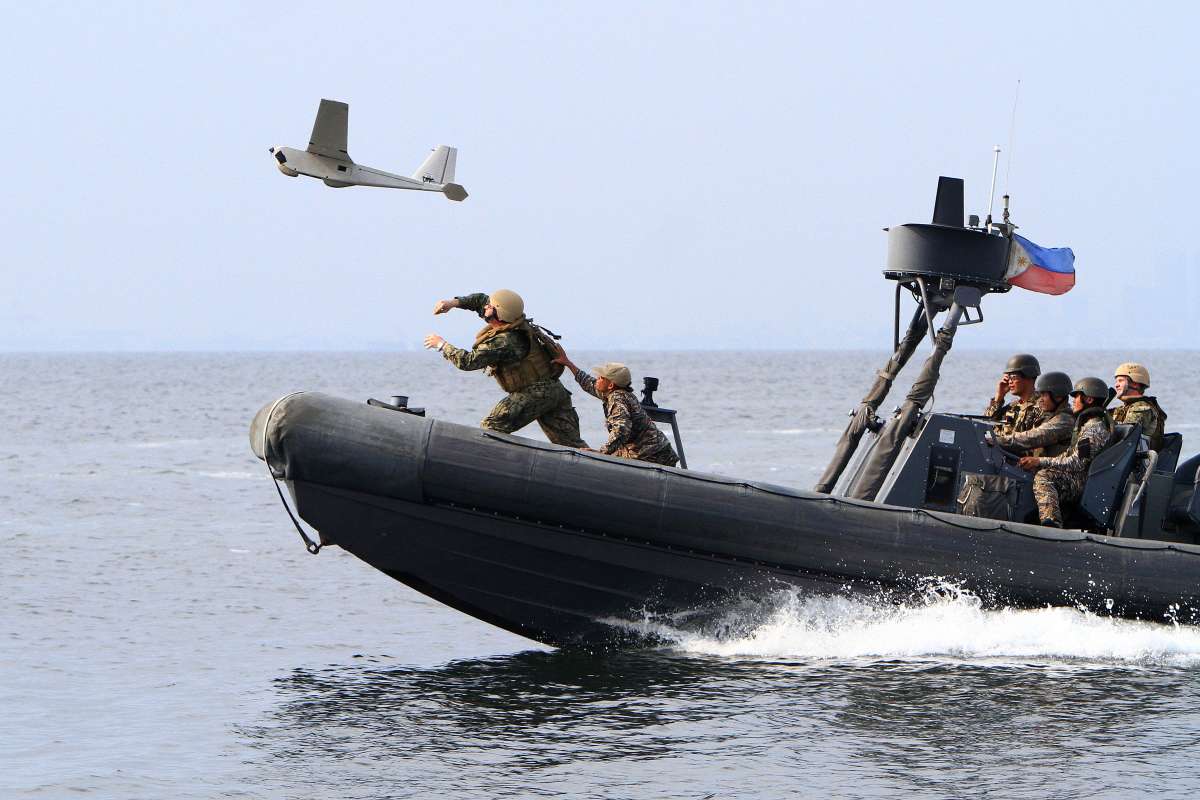
Philippines wary of China’s investments and WPS entry

WPS is believed to hold large reserves of oil and natural gas. …reports Asian Lite News

China is eyeing strategic projects in the Philippines, however, they are wary of China’s “predatory and opaque” investments in the country, reported The HK Post.

During the Philippines President Ferdinand Marcos Jr’s State visit to China from January 3 to 5, 2023, Marcos and Chinese President Xi Jinping agreed to resume talks on joint oil and gas exploration in the non-disputed areas in the resource-rich South China Sea. The Philippines and China also agreed on an arrangement for the establishment of a communication mechanism on maritime issues between the Department of Foreign Affairs of the Philippines and the Ministry of Foreign Affairs of China.

As a result of the bilateral meeting, the Philippines has received a proposal from the Chinese government to have a fishery cooperation agreement in the disputed SCS, reported The HK Post.

According to former National Security Adviser Clarita Carlos, there are many more levels of cooperation that are not known to the public that are happening, viz. between the Philippine Coast Guard and the Chinese Coast Guard adding that the two countries are trying to reach a Modus Vivendi to avoid conflict in the contested SCS.

Sensing a threat to their livelihoods in the wake of Chinese entry into the West Philippine Sea, fisher folk group Pambansang Lakasng Kilusang Mamamalakayang Pilipinas (Pamalakaya) has appealed to the newly appointed National Security Adviser (NSA) Eduardo Ano to lay out security plans to protect the WPS, reported The HK Post.

WPS is believed to hold large reserves of oil and natural gas. Pamalakaya reminded Ano that among the mandates of the NSA is to ensure that the national interests, well-being of the people and institutions, and its sovereignty and territorial integrity are protected and enhanced.

Pamalakaya national spokesman Ronnel Arambulo underlined that the presence of the Chinese Maritime Militia (in the WPS) is the current biggest threat to national security and the newly appointed NSA should prioritize this issue, reported The HK Post.

Meanwhile, on January 10, the Supreme Court of the Philippines declared the Tripartite Agreement for Joint Marine Seismic Undertaking among companies from China, Vietnam and the Philippines, signed during the administration of former president Gloria Macapagal Arroyo, as unconstitutional and void.

Further, following an easing of regulations in November 2022 by the Philippines government to allow 100% foreign ownership in solar and wind projects, nine Chinese energy companies are set to move into the Philippines with a total investment pledge of USD 13.7 billion, reported The HK Post.

Historically, foreign ownership was capped at 40 per cent in key sectors, including energy telecommunications, airlines and shipping. The Chinese energy companies include the State-owned China Energy Group and wind turbine manufacturer Mingyang Wind Power. These nine companies will focus on renewable development, energy storage systems and off-grid power systems.

Besides the USD 13.7 billion investment in energy, Chinese investors have also pledged USD 1.7 billion in agribusiness and USD 7.3 billion in strategic monitoring for electric vehicles and mineral processing, according to a government announcement on January 5, reported The HK Post.

The Philippines must keep in mind that Chinese investments are known to be predatory and opaque in nature, with terms that are heavily skewed against the recipient country.

These investments, though advertised as catalysts for development cooperation, are actually laced with strategic objectives for China, reported The HK Post.

The strict confidentiality clauses that bar the recipient country from even acknowledging the existence of investments create a problem of “hidden debt” for the recipient country. (ANI)


ALSO READ: China excavates resource-rich Balochistan while locals remain poor

Previous Story

China excavates resource-rich Balochistan while locals remain poor

Next Story

Bangladesh’s ties with India will be crucial in post LDC phase

Previous Story

China excavates resource-rich Balochistan while locals remain poor

Next Story

Bangladesh’s ties with India will be crucial in post LDC phase

Latest from -Top News

Pakistan Risks Overstretching Itself in Yemen War

Pakistan’s expanding military role in Saudi Arabia amid the Yemen conflict could strain its defence resources and fragile finances…reports Asian Lite News Desk Pakistan’s military involvement in the war in Yemen may prove unsustainable because of mounting financial pressures and competing security demands, according to a new report. Islamabad’s growing military presence in Saudi Arabia risks stretching its defence resources while exposing the country to greater strategic and economic challenges. An article by Andrew Wilson in One World Outlook describes Pakistan’s involvement as a case of “fiscal and strategic overreach”, arguing that the country lacks the financial flexibility to sustain an expanded military commitment. Pakistan’s external finances depend heavily on an International Monetary Fund (IMF) programme, financial support from Gulf countries and remittances from Pakistani workers in the region. The report argues that deeper military involvement in the conflict could place additional pressure on these sources of financial stability. It also warns that deploying troops and military equipment abroad could weaken Pakistan’s capacity to address security challenges along its eastern border and deal with two domestic insurgencies. The move could also draw Islamabad into a conflict it has sought to approach cautiously. A Reuters report in May, citing Pakistani security and government sources, said Islamabad had deployed around 8,000 troops, a squadron of approximately 16 aircraft, mostly JF-17 fighter jets, two drone squadrons and a Chinese HQ-9 air-defence battery to Saudi Arabia. According to those sources, Riyadh was financing the deployment, with Pakistani personnel operating the equipment. The sources also said a confidential agreement contemplated the possibility of deploying up to 80,000 troops. Islamabad has not confirmed those figures, although it has acknowledged its military presence in Saudi Arabia, including the deployment of fighter jets at King Abdulaziz Air Base from April. The One World Outlook article argues that Saudi financial support can cover allowances and operating expenses but cannot easily replace military equipment needed elsewhere or resolve the political and strategic challenges of participating in the Yemen conflict. Pakistan’s defence budget is another concern. For the 2026-27 financial year, the federal government allocated PKR 3 trillion, or approximately $10.8 billion, to defence services. The allocation represents an 18 per cent increase from the original PKR 2.55 trillion provision and amounts to around 2.1 per cent of projected gross domestic product (GDP). Defence spending accounts for approximately 16 per cent of the federal government’s PKR 18.8 trillion expenditure. Military pensions are budgeted separately at PKR 822 billion, while debt servicing costs stand at approximately PKR 8 trillion, more than two-and-a-half times the defence allocation. The report argues that these competing financial obligations leave little room for additional military expenditure without placing further pressure on public finances. Pakistan’s reliance on IMF assistance also limits its fiscal flexibility. The country must meet the conditions attached to the programme, including a primary budget surplus target of 2 per cent of GDP and continued restraint on development spending. According to the article, these requirements make it difficult for Islamabad to finance an additional military commitment without compromising other budgetary priorities. Pakistan’s economic indicators offer limited reassurance. Economic growth for the 2025-26 financial year is estimated at between 3.6 and 3.7 per cent, while inflation reached approximately 10.3 per cent in September following an energy price shock. Foreign exchange reserves stood at around $21.5 billion at the end of September. Although this marks an improvement from the low levels recorded in 2023, the report notes that the reserves cover only a few months of imports. Financial assistance from Gulf partners remains central to Pakistan’s external stability. The article says Islamabad holds approximately $8 billion in Saudi deposits at its central bank. In July, the State Bank of Pakistan said Riyadh had extended the maturity of $5 billion in deposits to December 2028, easing the country’s immediate external financing requirements. A further $3 billion deposit was also extended in the spring. However, the article argues that these arrangements provide temporary relief rather than long-term financial independence, particularly as regional conflict threatens the stability of the Gulf economies on which Pakistan relies. The report concludes that Pakistan faces a difficult balance between supporting Saudi Arabia militarily and preserving the financial and military resources needed to address its domestic and regional challenges.

UK and Germany Ratify Kensington Treaty

Britain and Germany ratify the Kensington Treaty, agreeing new cooperation on AI, quantum research, defence and security while targeting investment, jobs and Russian hybrid threats…reports Asian Lite News Desk Britain and Germany

Economic tide is turning in Bangladesh

If there is one thing that can bring some comfort to the struggling Bangladeshi economy, it is good relations with India. Bangladesh should remember that Delhi’s backing, through easy supplies of essentials
Go toTop

Don't Miss

China labels Quad a US containment tool

Lin described the Quad as a mechanism the U.S. uses

‘Chinese invasion of Taiwan could cause $1tn economic hit’

US Director of National Intelligence Avril Haines presented what she