February 22, 2023
4 mins read

RBI extends UPI for inbound travellers from G20 nations

Travellers or non-resident Indians visiting India can now experience the convenience of UPI payments at over five crore merchant outlets across India, that accept QR Code-based UPI payments…reports Asian Lite News

The Reserve Bank of India (RBI) announced on Tuesday that it had extended Unified Payments Interface (UPI) for in-bound travellers from G20 nations to make local payments using while they are in India. This facility is made available from today.

RBI said in a release, “To start with, it is available to travelers from G20 countries, at select international airports (Bengaluru, Mumbai and New Delhi).” Eligible travellers would be issued prepaid payment instruments (PPI) wallets linked to UPI for making payments at merchant outlets.

Delegates from G20 countries can also avail this facility at various meeting venues. To begin with, ICICI Bank, IDFC First Bank and two non-bank PPI issuers, Pine Labs Private Limited and Transcorp International Limited will issue UPI linked wallets.

Earlier, on February 8, the apex bank announced a facility to enable all inbound travellers visiting India to make local payments using UPI while they are in India.

Travellers or non-resident Indians visiting India can now experience the convenience of UPI payments at over five crore merchant outlets across India, that accept QR Code-based UPI payments.

Prepaid payment instruments’ examples include smart cards, online accounts, online wallets, stripe cards, paper vouchers, etc. The primary objective of these instruments is to get access to the amount already prepaid. (ANI)

Kashmir gets road upgradation before G20 meet

The Divisional Commissioner of Kashmir, Vijay Kumar Bidhuri, on Tuesday reviewed the status of the degradation work of main roads from the Srinagar Airport to Foreshore Road in the Union Territory and stressed on the officers to speed up developmental work to enhance road facade.

Addressing a meeting, the Divisional Commissioner encouraged the officers to speed up the developmental work to enhance road facade by macadamization [a type of road construction], repairing footpaths, removing debris, landscape development of road medians with green trees, and by removing wires and painting at the flyovers amongst others as an attempt of the preparation to host G20 summit. In the meeting, which was also attended by the CEO of the Srinagar Smart City Ltd, Chief Engineer SSCL, SE R&B, and other officers, Bidhuri also reviewed the beautification of IG road, redevelopment of Convent road and Residency road, besides the upgradation of Ghanta Ghar, Moulana Azad Road, Gupkar Junction and the construction of footpath from Dalgate to Nishat etc.

“On the occasion, he also directed officers to initiate the tendering process of pending undertaken projects so that the work shall be completed in a stipulated time,” an official statement said further directing the concerned R&B officers to mobilise men and machinery to continue working through the night hours to meet deadlines.

Notably, the central government’s conduct of one of the G20 meetings in J-K’s Srinagar in 2023 would advocate for the return of peace and security in the Union Territory.

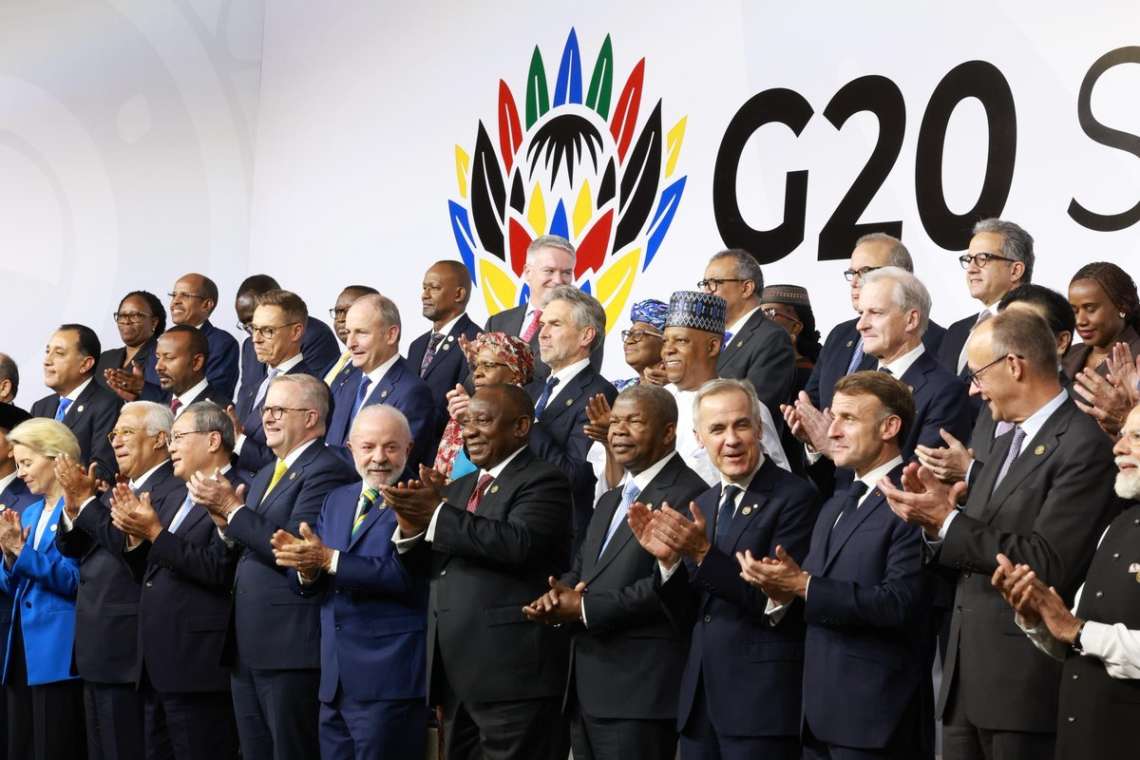
India assumed the G20 presidency on December 1. During its presidency, India will host more than 200 meetings in more than 50 cities across 32 different workstreams. The G20 is an intergovernmental forum of the world’s 20 major developed and developing economies, making it the premier forum for international economic cooperation.

The top event of the G20 leader’s summit is slated to be held in the national capital on September 9 and 10, 2023, while 200 other events will take place in different parts of the country.
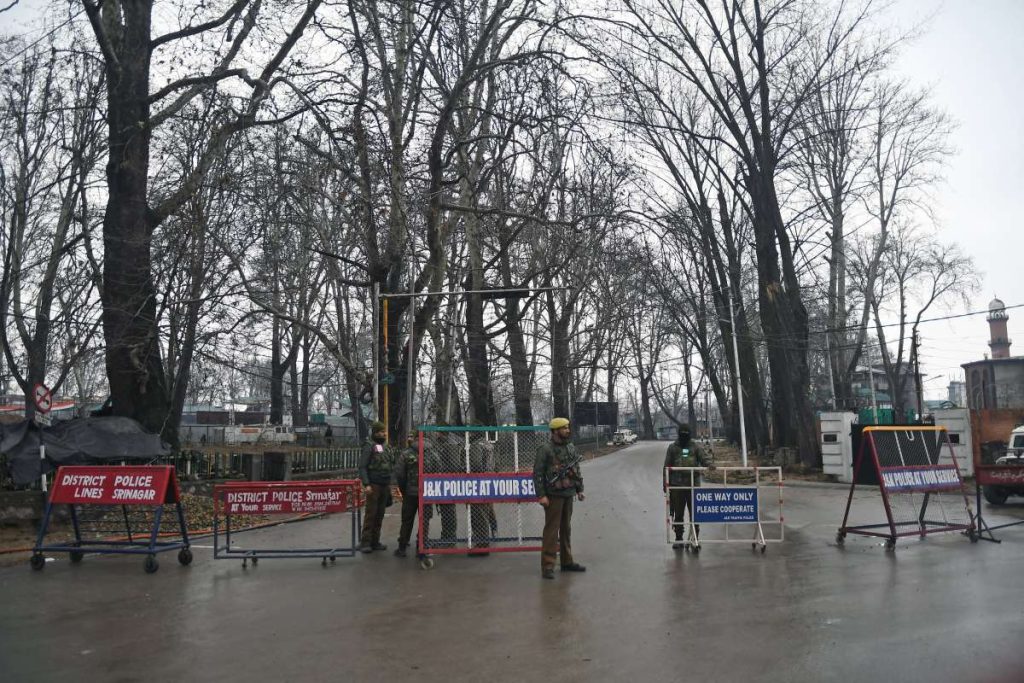
It is pertinent to mention that where the scheduled G20 meeting in Srinagar is a big victory for India, it is a major setback for Pakistan as G20 comprises the world’s largest advanced and emerging economies, representing about two-thirds of the world’s population, 85 per cent of global gross domestic product, 80 per cent of global investment and over 75 per cent of global trade.

Pakistan had reacted sharply to the announcement of the G20 meet in Srinagar, which was eventually ignored by the participants.

The delegates would then visit various tourists destination here, including the Dal Lake, Nishat Bagh, Shalimar Bagh, Pahalgam and Gulmarg, and would also experience the culinary delights of the Himalayan range.

The objective of the meeting is to ensure that the visiting delegates experience the “Real Kashmir” that has emerged as one of the fastest-growing regions of the country in three years.

The Higher Education Department will conduct seminars on G20 in the universities and educational institutions across Jammu & Kashmir to make the students aware of the summit’s importance. (ANI)

ALSO READ-Hope Probe transitioning to new Mars orbit

Previous Story

We are willing to help Russia, Ukraine, says Jaishankar

Next Story

‘Pakistan’s future will be determined by its own actions’

Previous Story

We are willing to help Russia, Ukraine, says Jaishankar

Next Story

‘Pakistan’s future will be determined by its own actions’

Latest from -Top News

Pakistan Risks Overstretching Itself in Yemen War

Pakistan’s expanding military role in Saudi Arabia amid the Yemen conflict could strain its defence resources and fragile finances…reports Asian Lite News Desk Pakistan’s military involvement in the war in Yemen may prove unsustainable because of mounting financial pressures and competing security demands, according to a new report. Islamabad’s growing military presence in Saudi Arabia risks stretching its defence resources while exposing the country to greater strategic and economic challenges. An article by Andrew Wilson in One World Outlook describes Pakistan’s involvement as a case of “fiscal and strategic overreach”, arguing that the country lacks the financial flexibility to sustain an expanded military commitment. Pakistan’s external finances depend heavily on an International Monetary Fund (IMF) programme, financial support from Gulf countries and remittances from Pakistani workers in the region. The report argues that deeper military involvement in the conflict could place additional pressure on these sources of financial stability. It also warns that deploying troops and military equipment abroad could weaken Pakistan’s capacity to address security challenges along its eastern border and deal with two domestic insurgencies. The move could also draw Islamabad into a conflict it has sought to approach cautiously. A Reuters report in May, citing Pakistani security and government sources, said Islamabad had deployed around 8,000 troops, a squadron of approximately 16 aircraft, mostly JF-17 fighter jets, two drone squadrons and a Chinese HQ-9 air-defence battery to Saudi Arabia. According to those sources, Riyadh was financing the deployment, with Pakistani personnel operating the equipment. The sources also said a confidential agreement contemplated the possibility of deploying up to 80,000 troops. Islamabad has not confirmed those figures, although it has acknowledged its military presence in Saudi Arabia, including the deployment of fighter jets at King Abdulaziz Air Base from April. The One World Outlook article argues that Saudi financial support can cover allowances and operating expenses but cannot easily replace military equipment needed elsewhere or resolve the political and strategic challenges of participating in the Yemen conflict. Pakistan’s defence budget is another concern. For the 2026-27 financial year, the federal government allocated PKR 3 trillion, or approximately $10.8 billion, to defence services. The allocation represents an 18 per cent increase from the original PKR 2.55 trillion provision and amounts to around 2.1 per cent of projected gross domestic product (GDP). Defence spending accounts for approximately 16 per cent of the federal government’s PKR 18.8 trillion expenditure. Military pensions are budgeted separately at PKR 822 billion, while debt servicing costs stand at approximately PKR 8 trillion, more than two-and-a-half times the defence allocation. The report argues that these competing financial obligations leave little room for additional military expenditure without placing further pressure on public finances. Pakistan’s reliance on IMF assistance also limits its fiscal flexibility. The country must meet the conditions attached to the programme, including a primary budget surplus target of 2 per cent of GDP and continued restraint on development spending. According to the article, these requirements make it difficult for Islamabad to finance an additional military commitment without compromising other budgetary priorities. Pakistan’s economic indicators offer limited reassurance. Economic growth for the 2025-26 financial year is estimated at between 3.6 and 3.7 per cent, while inflation reached approximately 10.3 per cent in September following an energy price shock. Foreign exchange reserves stood at around $21.5 billion at the end of September. Although this marks an improvement from the low levels recorded in 2023, the report notes that the reserves cover only a few months of imports. Financial assistance from Gulf partners remains central to Pakistan’s external stability. The article says Islamabad holds approximately $8 billion in Saudi deposits at its central bank. In July, the State Bank of Pakistan said Riyadh had extended the maturity of $5 billion in deposits to December 2028, easing the country’s immediate external financing requirements. A further $3 billion deposit was also extended in the spring. However, the article argues that these arrangements provide temporary relief rather than long-term financial independence, particularly as regional conflict threatens the stability of the Gulf economies on which Pakistan relies. The report concludes that Pakistan faces a difficult balance between supporting Saudi Arabia militarily and preserving the financial and military resources needed to address its domestic and regional challenges.
Go toTop

Don't Miss

G20 nations discuss disaster risk reduction

Member NDMA Lt Gen (Retd) Syed Ata Hasnain said that

Musk Sounds AI Power Alarm

Elon Musk has told a G20 gathering that artificial intelligence