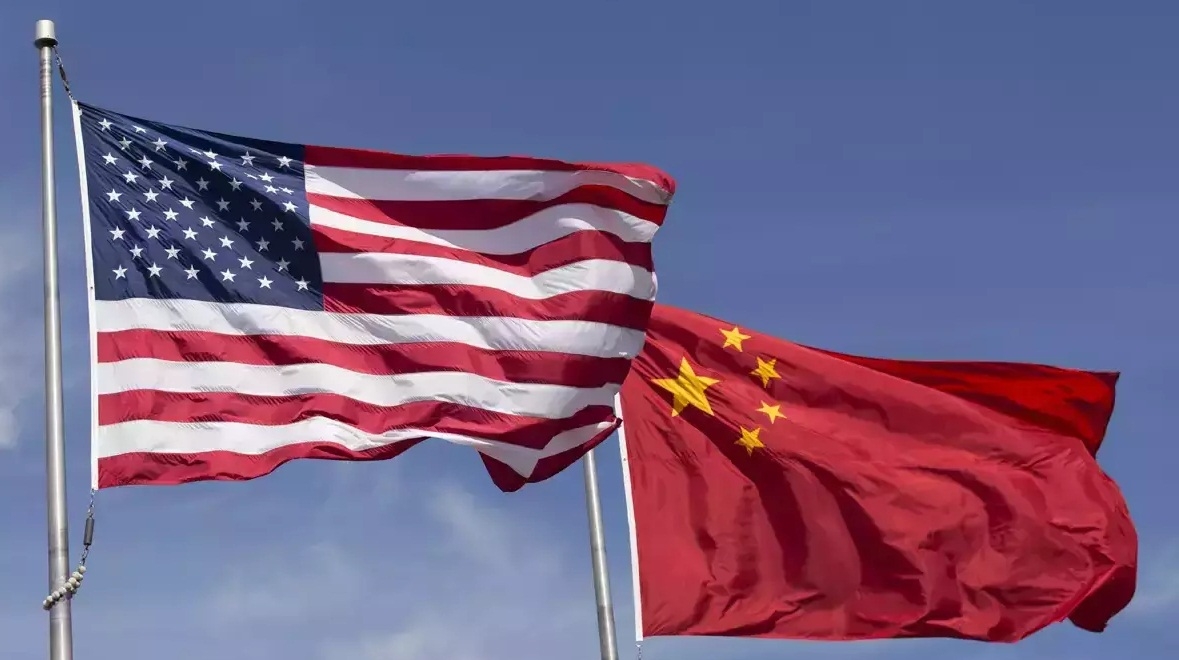
US tariffs on roughly two-thirds of Chinese goods, imposed during the Trump administration, have cut into new orders. …reports Asian Lite News
Through the first five months of this year, US imports from China were down 24 per cent from the same period one year ago, according to the Census Bureau, Washington Post reported, adding that US companies are accelerating efforts to reduce their dependence on Chinese suppliers.
Companies such as HP, Stanley Black & Decker and Lego are among those that have been repositioning their supply lines for American consumers, either to avoid the risk of being pinched between rival superpowers or as part of a longer-term strategy to produce goods closer to customers.
US tariffs on roughly two-thirds of Chinese goods, imposed during the Trump administration, have cut into new orders. Wages for Chinese factory workers have risen, eroding one of the country’s competitive advantages. Chinese President Xi Jinping’s state-centric economic strategy, related crackdowns on private companies and wary approach to the Biden administration have further chilled commercial ties, Washington Post reported.
Chinese products account for roughly 1 out of every 6 dollars Americans spend on imports, down from nearly 1 in 4 before the pandemic, according to Oxford data. Japan also is buying less from China. But European countries such as Germany and France are largely standing pat, according to Washington Post.
Foreign investors, meanwhile, are building fewer new Chinese factories, suggesting that other Asian countries will keep increasing their share of US imports at China’s expense. Annual spending on new or “greenfield” sites in China fell from about USD 100 billion in 2010 to USD 50 billion in 2019 and hit just USD 18 billion last year, according to Oxford data.
One wrinkle in analysing the shifting trade flows is the behaviour of Chinese manufacturers. Some Chinese companies also have moved out of China to dodge US tariffs, while others send their products to third countries for a modest amount of final processing that obscures their Chinese origins, Washington Post reported.
As a result, some products once made by Chinese companies at factories in China now arrive in the United States from Chinese factories in Mexico or Vietnam.
It’s hard to know how much of the USD 54 billion decline in US imports from China this year may be offset by this practice. But for now, there is little sign of a massive Chinese end run. US imports from Mexico are up about USD 10 billion compared with the same period last year; those from Vietnam are down about USD 9 billion. The United States also is buying less from Taiwan, Thailand, Indonesia, Malaysia and Cambodia, Washington Post reported.
The Biden administration has been putting a positive spin on US-China trade, seeking to reassure the Chinese government that the United States wants only to “de-risk” commercial ties by moving critical supply lines to the United States or allied countries — not pursue an economic divorce.
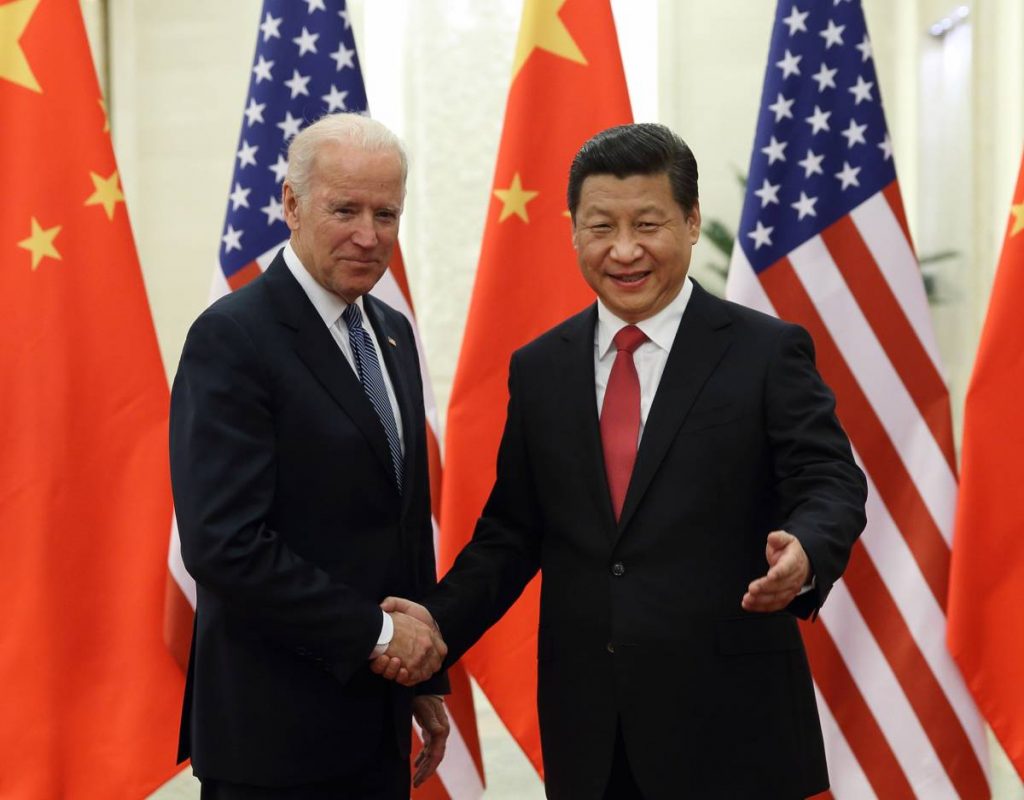
Amid rising national security concerns, the administration has restricted exports to China of the most advanced semiconductors and plans soon to announce new limits on US investment in Chinese technology sectors.
During a trip to Beijing in July, Treasury Secretary Janet L. Yellen said “record” high US-China trade last year demonstrated that “there is ample room for our firms to engage in trade and investment.”
But even before this year’s drop in US purchases of Chinese goods, trade between the two countries was shrinking in real, or inflation-adjusted, terms. Accounting for rising prices, last year’s USD 690 billion two-way trade was 7 per cent lower than the pre-trade war peak in 2018.
The inflation-adjusted value of US imports from China last year was down 12 per cent from five years ago, Washington Post reported.
A senior Treasury official, who spoke on the condition of anonymity to discuss internal deliberations about the secretary’s remarks, said the inflation-adjusted total remained “highly significant and close to an all-time high.”
Earlier this year, Mexico became the United States’ top trading partner, as manufacturers increasingly favoured regional supply networks rather than global ones. Mexico, Canada and China have taken turns occupying the No. 1 spot since the start of the 2018 trade war.
Vietnam and Thailand have emerged as leading alternatives for companies looking to diversify out of China while staying in the neighbourhood. And India is attracting attention from manufacturers such as Apple, which plans to beef up its production of iPhones there.
The electronics industry is leading the push to new manufacturing locations. China’s share of US personal computer imports fell to 45 per cent last year from 61 per cent in 2016, according to S&P Global Market Intelligence. Over the same period, Chinese suppliers’ share of US printer imports fell to 23 per cent from 48 per cent, Washington Post reported.
Decisions made in countless boardrooms — not the White House — are behind the change.
“Governments don’t do reshoring. Companies do reshoring,” said Chris Rogers, head of supply chain research for S&P Global Market Intelligence.
HP Inc. is planning to make more of its business-oriented laptops in Mexico while boosting the production of consumer models in Thailand. In a statement posted on its website last month, HP said it is adding in Mexico “incremental notebook PC production to serve customers throughout the region” and hopes to expand its existing printer manufacturing facility in Corvallis, Ore.
With 12,000 Chinese suppliers and a top research and development centre in Shanghai, the company remains committed to China.
Toymaker Lego also has been reducing shipments from China to the United States. From 2015 to 2017, an annual average of almost 18 per cent of the company’s US products came from China, according to S&P Global. That dropped to just 3 per cent last year.
Mexico, which has long provided more than half of the company’s US-bound shipments, including its most popular items, now accounts for 70 per cent, Washington Post reported.
Still, China remains the world’s factory, accounting for 31 per cent of global manufacturing value-added, compared with 17 per cent for the second-ranked United States.
With modern ports, highways and high-speed rail, along with factory clusters that can rapidly adjust to changing conditions, China retains advantages that no other country can match. Chinese suppliers still dominate markets for goods such as electric vehicle batteries, kitchenware, and aluminium door and window frames, S&P Global said.
Some economists say the drop in Chinese shipments to the United States may not be as dramatic as the Census Bureau data suggests. Chinese government reports show a smaller decline, Washington Post reported.
US and Chinese trade numbers have long disagreed, partly because they differ in their accounting for shipments via Hong Kong. But a bigger gap between the two sets of books opened during the trade war. US companies appear to have underreported their imports from China to escape tariffs imposed by the Trump administration, according to a 2021 Federal Reserve research note.
Smaller Chinese shipments to the United States also reflect conditions in specific industries. Retailers such as Target and Walmart are ordering fewer Chinese goods while they focus on reducing unusually high inventories. (ANI)