June 3, 2023
4 mins read

World leaders condole deaths in Odisha train accident

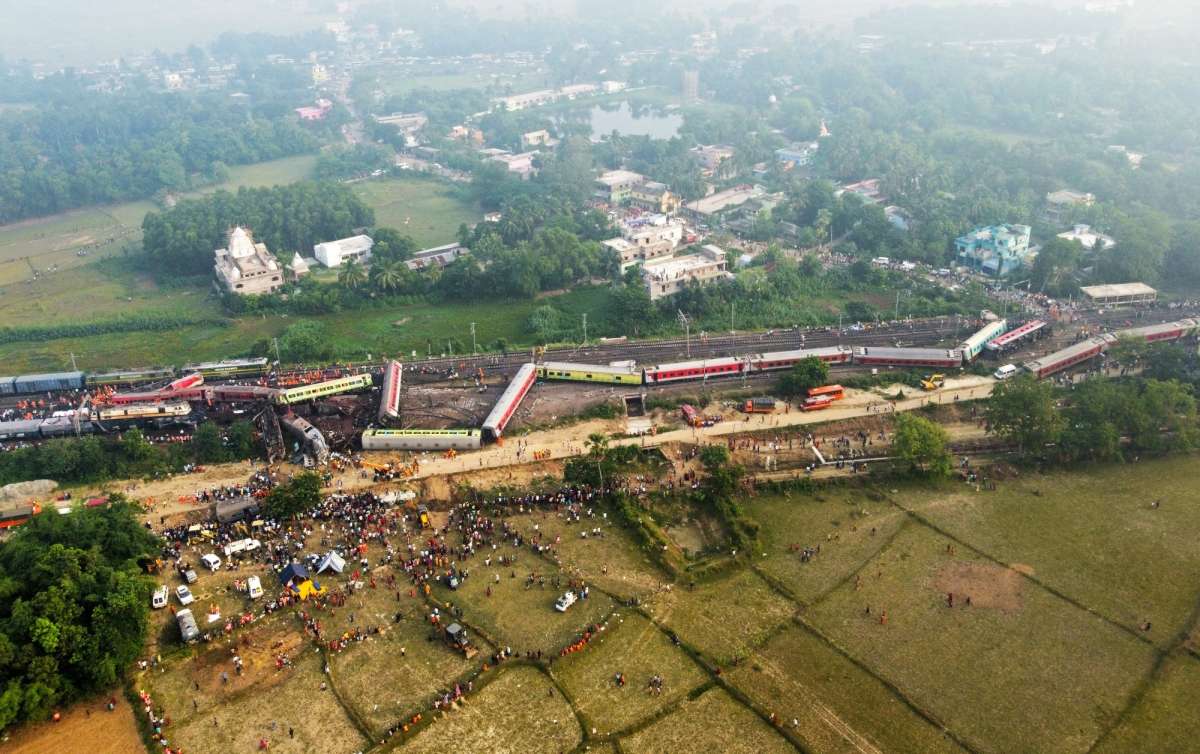
A number of world leaders have expressed grief over the loss of lives in a train accident in Odisha. The death toll in the massive accident of three trains including two express trains rose to 261.

Russian President Vladimir Putin on Saturday expressed grief over the incident and offered condolences to Prime Minister Narendra Modi and President Droupadi Murmu over the train accident in Odisha.

Putin wished speedy recovery to those injured in the train accident that claimed the lives of 261 people. “Vladimir Putin sent his condolences to President of India Droupadi Murmu and Prime Minister Narendra Modi over the deadly train collision in the Indian state of Odisha,” according to the statement released by Kremlin. “We share the grief of those who lost their loved ones in this tragic accident, and wish a speedy recovery for those injured,” the statement said.
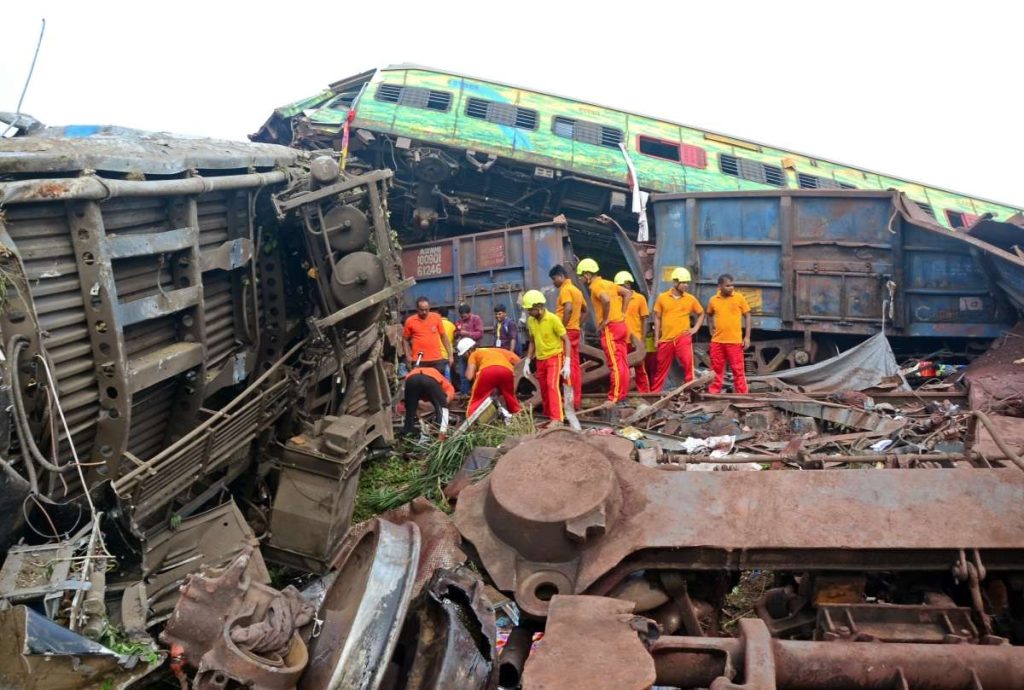
Rescue operation underway at the site where Coromandel Express, Bengaluru-Howrah Express and a goods train met with an accident, in Balasore district, Saturday. (Photo: Biswanath swain/IANS)

Russian Ambassador to India Denis Alipov offered condolences to the families of the train accident victims in Odisha. Alipov tweeted, “Deepest condolences to the families of the victims of the tragic train derailment in Odisha. Speedy recovery to the injured.”

UK Prime Minister Rishi Sunak said: “My thoughts and prayers are with Narendra Modi and with all affected by the tragic events in Odisha. My deepest condolences to the family and friends of those killed, and my heartfelt support and admiration to the survivors and those working tirelessly to respond.”

UK Foreign Secretary James Cleverly offered condolences to the bereaved families. Taking to his official Twitter handle, Cleverly stated that his thoughts are with the survivors and emergency services.

James Cleverly tweeted, “Tragic news of the train crash in India. My heartfelt condolences to the families of the victims. My thoughts are with the survivors and emergency services.”

UK Minister of State for Foreign Commonwealth and Development Affairs Lord Tariq Ahmad expressed grief over the loss of lives in Odisha’s train accident. He stated that his thoughts and prayers are with those affected by the incident.

In a tweet, Lord Tariq Ahmad stated, “Distressing scenes and reports from #OdishaTrainAccident in #India which has already claimed the lives of close to 300 people and with many injured. Our thoughts and prayers are with all those impacted as well as the emergency teams working on this tragic accident.”

Christina Scott, UK’s Deputy High Commissioner to India, offered condolences to all those impacted by the accident. She appreciated the emergency personnel for working tirelessly to help the victims.

Scott in a tweet wrote, “Terrible news of the train accident in Odisha. Heartfelt condolences from all @UKinIndia to all those affected, and appreciation for emergency services personnel working tirelessly throughout the night to help them.”

Meanwhile, Tibetan spiritual the Dalai Lama on Saturday mourned the loss of several lives in the Odisha train tragedy.
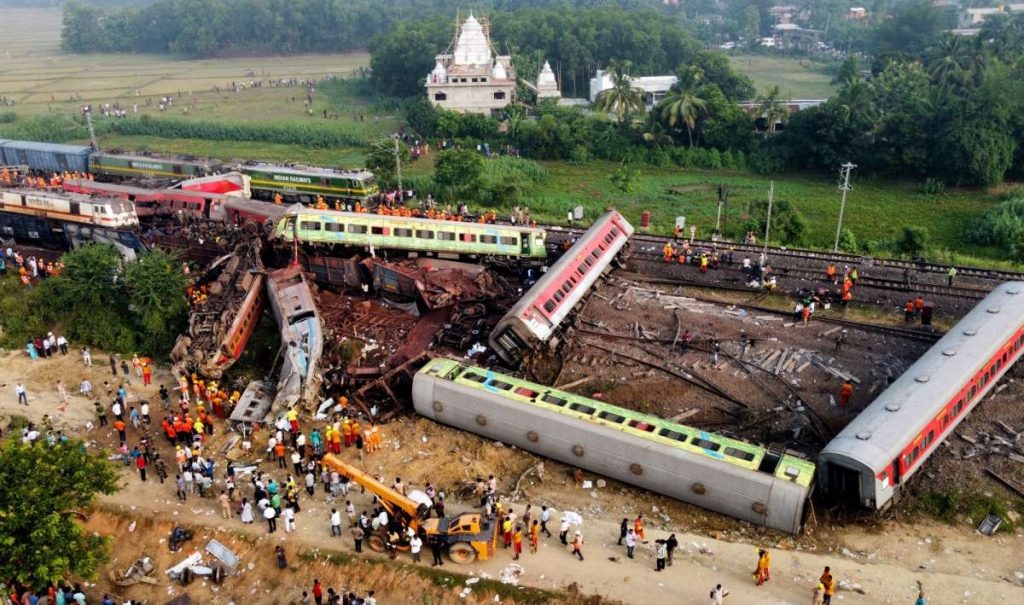
Rescue operation underway at the accident site. (Photo: Biswanath swain/IANS)

In a letter to Odisha Chief Minister Naveen Patnaik, he said, “I offer my condolences to the families of those who have lost loved ones and pray for all those who have been injured and others affected by this tragedy,”

“I very much appreciate that the state government and other agencies, including those of the Central government, are doing their utmost to provide medical treatment and support to the injured and other people affected by this tragic accident.

“As a mark of solidarity with the people of Odisha, the Dalai Lama Trust (DLT) is making a donation towards medical treatment, as well as relief and rescue efforts.

As you know, I have had the opportunity to visit Odisha many times and also had the honour to meet you, as we did in 2017.”

He ended by offering his prayers and good wishes.

Pakistan Prime Minister Shehbaz Sharif said he is deeply saddened by the loss of hundreds of lives in the accident.

“I extend my heartfelt condolences to the bereaved families who lost their loved ones in this tragedy. Prayers for speedy recovery of the injured,” he tweeted.

Canadian Prime Minister Justin Trudeau on Saturday expressed grief over the loss of lives in the triple train accident in Odisha. He offered condolences to the families of victims who lost their lives in the accident.

Taking to his official Twitter handle, Justin Trudeau stated, “The images and reports of the train crash in Odisha, India break my heart. I’m sending my deepest condolences to those who lost loved ones, and I’m keeping the injured in my thoughts. At this difficult time, Canadians are standing with the people of India.”

The UAE expressed its sincere condolences and solidarity with the Republic of India over the victims of a train collision that occurred in the city of Balasore in Odisha state and resulted in hundreds of deaths and injuries.

In a statement, the Ministry of Foreign Affairs expressed its sincere condolences to the Government of India and its people and to the families of the victims of this tragedy, as well as its wishes for a speedy recovery for the injured.
Newsdesk

Newsdesk

Aravind Rajeev is Deputy News Editor at Asian Lite, mostly covering the Middle East and GCC. He has over eight years of experience as a journalist, with a background in ground-level reporting, crime reporting, as well as international and regional news.

Previous Story

India highlights Global South’s concerns at BRICS Summit

Next Story

Questions can wait, rescue & relief immediate task, says Kharge

Previous Story

India highlights Global South’s concerns at BRICS Summit

Next Story

Questions can wait, rescue & relief immediate task, says Kharge

Latest from -Top News

India Funds Hindi News Service at UN

Hindi continues to retain its non-official language status at the United Nations, with India voluntarily funding initiatives to share UN news and information in the language…reports Asian Lite News Desk Hindi continues

Houthis Claim Missile Strike on Riyadh Airport

Yemen’s Houthi group claims a ballistic missile struck Riyadh’s King Khalid International Airport, with Saudi authorities yet to confirm the latest attack…reports Asian Lite News Desk Yemen’s Houthi group has claimed responsibility

US Green Card Freeze Hits Indian IT Giants

The Trump administration has suspended employment-based green card processing for eight major technology companies, including Infosys, TCS, Wipro and HCL, citing ongoing investigations…reports Asian Lite News Desk The Trump administration has suspended a key employment-based green card process for eight major technology and outsourcing companies, including Indian IT giants Infosys, Tata Consultancy Services, Wipro and HCL, as Vice President JD Vance announced a crackdown on alleged visa fraud. The suspension, announced on Thursday by US Labour Secretary Keith Sonderling at a press conference led by Vance, also covers Cognizant, Capgemini, Microsoft and Adobe. It bars the companies from filing new permanent labour certification applications and halts the processing of pending applications under the programme. Sonderling said the decision followed ongoing criminal and federal investigations into the companies. “Due to ongoing criminal investigations led by the Department of Labour’s Inspector General Anthony DiEsposito, who will get into this shortly, I am hereby suspending from the Permanent Labour Certification Program some of the largest IT outsourcing firms in the world, Cognizant, Infosys, Tata, Wipro, HCL, and Capgemini,” Sonderling said. He added that Microsoft and Adobe were also being suspended because of multiple active federal investigations. “We will not accept or process any pending permanent labour certification applications involving these companies,” he said. The Permanent Labour Certification programme, commonly known as PERM, is a key step in the process through which employers sponsor foreign workers for employment-based permanent residence in the United States. According to figures presented by Sonderling, the eight companies had collectively requested nearly three million foreign workers since 2009. They had received more than 230,000 H-1B visa approvals and over 100,000 permanent labour certifications. The administration did not disclose company-specific findings or provide details of the alleged violations during the press conference. Vance accused employers of using the H-1B visa programme to replace American workers with lower-paid foreign employees. He said the programme was intended to help companies recruit highly skilled workers for positions that could not be filled by American employees. “The H-1B visa program is meant to allow companies to bring in really the best of the best from outside the United States of America for positions that are completely impossible to fill with American workers,” he said. Vance singled out Microsoft, alleging that the company had laid off 6,000 American workers while benefiting from 6,300 H-1B visas and nearly 3,000 green cards. He said the administration wanted companies to change their hiring practices rather than withdraw from the American market. Asked whether the suspension would be temporary or permanent, Vance said, “The suspension of PERM is gonna last as long as it needs to.” He added that the administration had the tools to continue the suspension indefinitely but wanted the companies to improve their conduct. The US Justice Department also announced that it was actively investigating companies suspected of favouring foreign workers over American employees. Attorney General Todd Blanche said the authorities could pursue criminal prosecutions and civil lawsuits as part of the enforcement measures. The decision could have significant implications for Indian technology professionals and outsourcing companies operating in the United States, where Indian firms have long relied on employment-based immigration programmes to deploy skilled workers to American clients. The H-1B visa programme allows US employers to hire foreign workers in qualifying specialised occupations on a temporary basis. PERM, meanwhile, is part of a separate process through which employers seek to sponsor eligible foreign workers for permanent residence. The suspension announced on Thursday specifically concerns permanent labour certification applications involving the eight named companies. It does not, by itself, establish the cancellation of existing H-1B visas or green cards. The impact on individual employees will depend on their immigration status and the stage of their applications. The administration did not provide a detailed timeline for the suspension or specify when processing might resume.

Nepal Floods Cause $1.66 Billion In Damage, Says World Bank

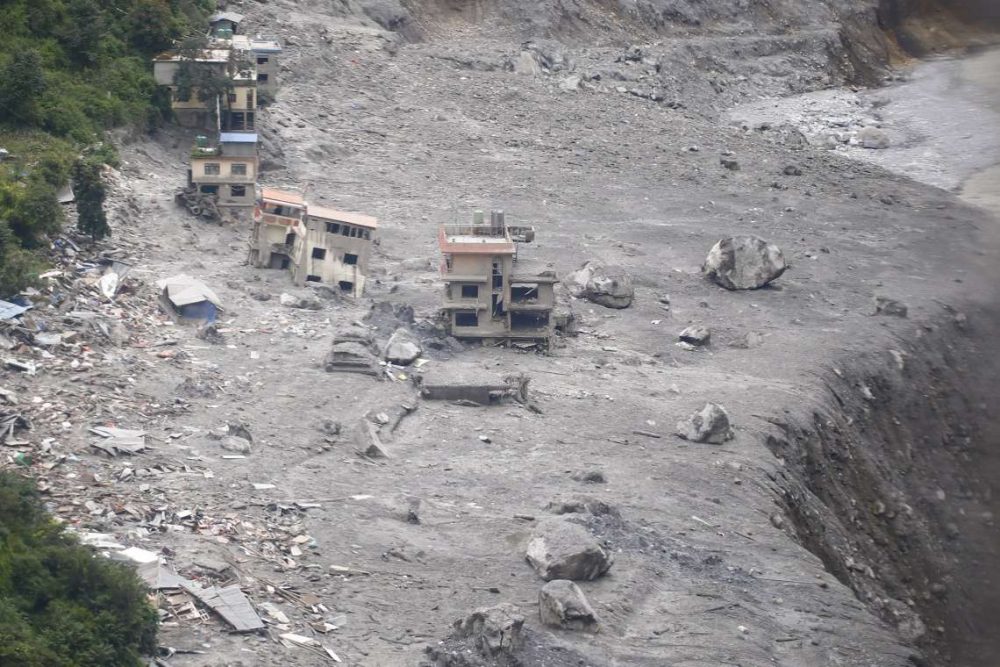
Nepal’s August 2026 floods caused an estimated US$1.66 billion in direct physical damage, with infrastructure accounting for 83 per cent of the total…reports Asian Lite News Desk Nepal’s devastating floods in August 2026 caused an estimated US$1.66 billion in direct physical damage, with infrastructure accounting for 83 per cent of the total, according to a World Bank report. The estimate, included in the World Bank’s Nepal Development Update unveiled this week, is close to the Nepal government’s preliminary Rapid Damage and Needs Assessment (RDNA), which put physical damage at US$1.81 billion. The government’s assessment also estimated losses beyond physical assets at US$883.32 million, taking the total economic effects of the disaster to approximately US$2.7 billion. The World Bank’s Global Rapid Post-Disaster Damage Estimation (GRADE) found that infrastructure suffered the greatest damage, estimated at US$1.38 billion, or 83 per cent of the total. Residential buildings accounted for US$185 million, or 11 per cent, while non-residential buildings sustained damage worth US$101 million, or 6 per cent. The floods along the Bhotekoshi and Trishuli rivers caused extensive damage to hydropower projects, solar energy facilities, electricity transmission infrastructure and transport networks. The energy sector, particularly hydropower, was among the worst affected. The August 2026 floods affected 12 hydropower projects and one solar project, involving 281.1 MW of operational capacity and 395.02 MW of capacity under construction. Damage to transmission lines and substations also disrupted the transmission of 149.6 MW of electricity to the national grid. The total affected capacity reached approximately 430.7 MW, equivalent to 10.6 per cent of Nepal’s installed hydropower and solar capacity at the end of fiscal year 2025-26, which concluded in mid-July. The disaster also severely damaged transport infrastructure along the 82-km Rasuwa trade corridor, which connects Kathmandu with the Rasuwagadhi border point with China. More than 55 km of the corridor was damaged, including 40 km that was completely destroyed. The floods also damaged 37 motorable bridges and 68 suspension bridges. The disaster resulted in significant human losses along the affected corridor and beyond. According to Nepal’s National Disaster Risk Reduction and Management Authority, 1,455 people had been confirmed dead, while 5,285 remained missing following the disaster. The World Bank report found that the physical damage was concentrated in three districts in central Nepal: Rasuwa, Nuwakot and Dhading. Rasuwa was the worst-affected district, accounting for US$1.07 billion, or 64 per cent, of the total direct damage. Nuwakot recorded an estimated US$551 million in damage, while Dhading suffered approximately US$39 million. “The findings highlight the concentration of physical damage in a small number of districts and the disproportionate impact on infrastructure, underscoring the scale of the reconstruction challenge facing the affected areas,” the World Bank said. The global development financier said the floods had demonstrated the scale and complexity of disaster risks in Nepal’s Himalayan environment. The event also showed how a single extreme weather event could trigger cascading impacts across sectors and geographical areas. The report said recovery efforts should extend beyond restoring infrastructure to its pre-disaster condition. While the principle of “Build Back Better” remained relevant, the World Bank stressed that rebuilding infrastructure to higher engineering standards in the same locations might not always be sufficient. “In some cases, simply rebuilding the same infrastructure in the same location to a higher engineering standard may not be sufficient. Nepal may need to build differently — based on a better understanding of risk, more careful decisions about location and design, greater redundancy in critical networks, stronger monitoring and early warning, and a more integrated approach to infrastructure development in the Himalayas,” the report said. The World Bank said Nepal’s recovery strategy should incorporate improved risk assessment, more informed infrastructure planning, stronger monitoring systems and better early warning mechanisms. The report emphasised that reconstruction should not only restore damaged assets but also reduce the impact of future disasters, particularly in the country’s vulnerable Himalayan regions.
Go toTop

Don't Miss

Nepal PM in India

Besides official engagements in New Delhi, the Prime Minister of

India-UK FTA talks may conclude as early as Sept

India has made at least two visits to the UK,