July 12, 2024
2 mins read

Adani’s Vizhinjam Port Puts India in World League

The Vizhinjam International Seaport has created over 5,000 direct jobs and will significantly boost the industry, commerce, transportation, and tourism sectors…reports Asian Lite News

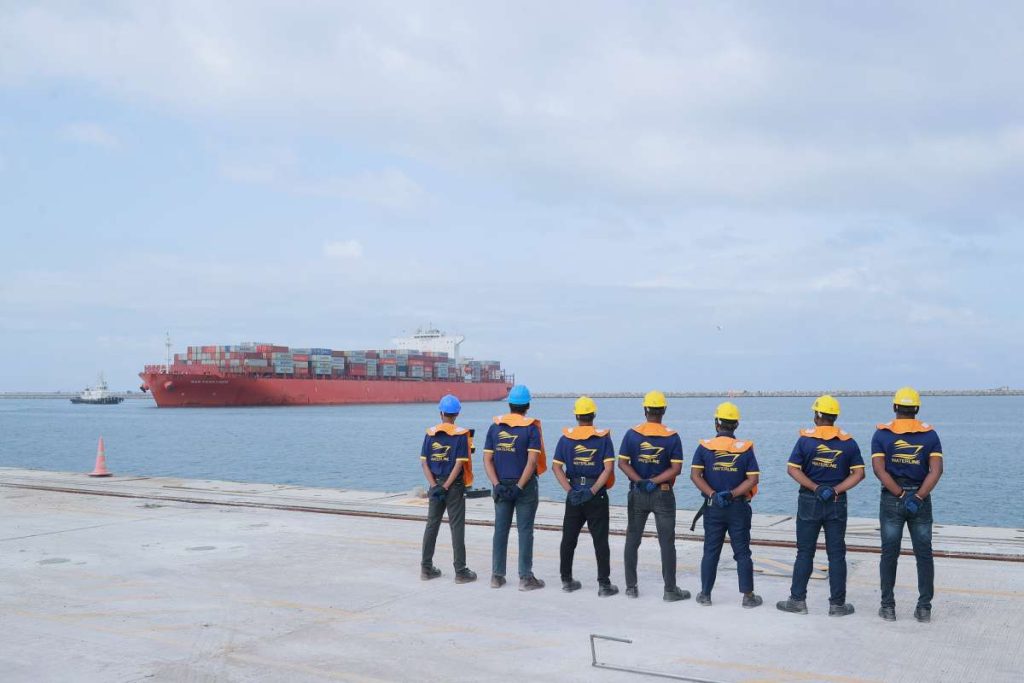
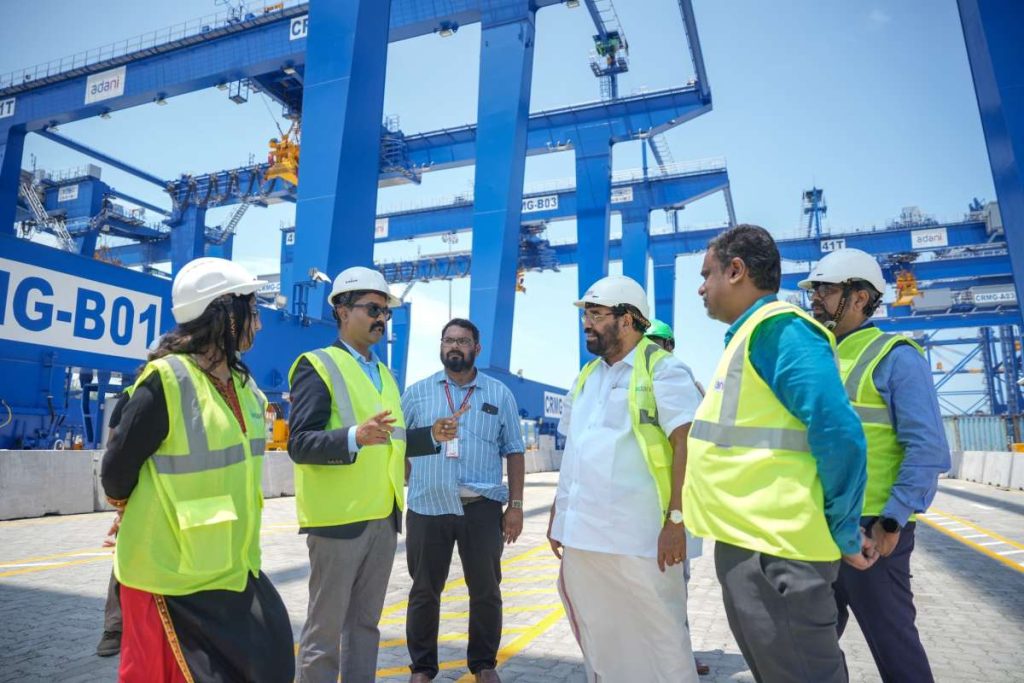
India’s first semi-automated container port, the Vizhinjam International Seaport on Thursday welcomed its first mothership, ‘San Fernando’. The Ship was welcomed by Kerala’s Minister of Ports V N Vasavan and Minister for Food and Civil Supplies G R Anil along with other officials at the port.

The San Fernando, carrying over 1,000 containers, is anchored at the port as part of a trial run ahead of the commencement of commercial operations.

The Vizhinjam International Seaport has been built by Adani Ports and Special Economic Zone Ltd, (APSEZ). The port is built with a total investment of Rs 8,867 crore. The state government of Kerala has contributed about Rs 5,595 crore while the central government contributed Rs 818 crore for the port.
Built on the public-private partnership, Vizhinjam International Port’s construction started in 2016. The project was allotted to APSEZ on December 5, 2015, after the Government of Kerala and Adani Vizhinjam Port Private Ltd. (AVPPL) agreed to a concession agreement on August 17, 2015.

Elated over the arrival of the port’s first containership, the Chief Minister of Kerala, Pinarayi Vijayan said in a post on X (formerly Twitter), “This Friday (July 12), the Vizhinjam International Seaport in Thiruvananthapuram will host a grand celebration to welcome its first mothership, San Fernando, a Maersk Line Vessel. This event signifies a monumental moment in Kerala’s maritime history and stands as a testament to the unwavering commitment of the Left Democratic Front government to the state’s development.”
Vijayan appreciated Adani Group saying, “Adani Group, the builders and operators of the port, deserve appreciation for their efforts in ensuring the completion of this project. Vizhinjam Port exemplifies a successful public-private partnership, highlighting the potential of collaborative development. Join us in celebrating this historic achievement that marks a new era of progress and prosperity for Kerala.”

Last year in October, Karan Adani, Chief Executive Officer of Adani Ports and SEZ Limited (APSEZ) announced that the port would be capable of docking some of the largest container ships in the world and would also emerge as a global bunkering hub, supplying green fuel like hydrogen and ammonia.

While addressing the inaugural ship docking ceremony at Vizhinjam International Seaport, in October last year Karan Adani said the port has the potential to compete with leading global ports like Colombo, Singapore, Port Klang and Jebel Ali.

He termed the project as the most challenging project that APSEZ has ever taken and executed.

“This project was very tough as we had to encounter repeated disruptions from cyclone Ockhi to the super floods of 2018 – a once-in-a-century occurrence, followed by a devastating flood in 2019…the worldwide Covid pandemic unleashed lockdowns and waves of disruption in 2020 and 2021. But we held on,” he had said.

The Vizhinjam International Seaport has created over 5,000 direct jobs and will significantly boost the industry, commerce, transportation, and tourism sectors. (ANI)

ALSO READ: Floral Waste Fuels India’s Circular Economy
Previous Story

Pak moves may destabilise a fragile region

Next Story

Galaxy Z Fold6, Flip6 India Prices Revealed

Previous Story

Pak moves may destabilise a fragile region

Next Story

Galaxy Z Fold6, Flip6 India Prices Revealed

Latest from -Top News

Pakistan Risks Overstretching Itself in Yemen War

Pakistan’s expanding military role in Saudi Arabia amid the Yemen conflict could strain its defence resources and fragile finances…reports Asian Lite News Desk Pakistan’s military involvement in the war in Yemen may prove unsustainable because of mounting financial pressures and competing security demands, according to a new report. Islamabad’s growing military presence in Saudi Arabia risks stretching its defence resources while exposing the country to greater strategic and economic challenges. An article by Andrew Wilson in One World Outlook describes Pakistan’s involvement as a case of “fiscal and strategic overreach”, arguing that the country lacks the financial flexibility to sustain an expanded military commitment. Pakistan’s external finances depend heavily on an International Monetary Fund (IMF) programme, financial support from Gulf countries and remittances from Pakistani workers in the region. The report argues that deeper military involvement in the conflict could place additional pressure on these sources of financial stability. It also warns that deploying troops and military equipment abroad could weaken Pakistan’s capacity to address security challenges along its eastern border and deal with two domestic insurgencies. The move could also draw Islamabad into a conflict it has sought to approach cautiously. A Reuters report in May, citing Pakistani security and government sources, said Islamabad had deployed around 8,000 troops, a squadron of approximately 16 aircraft, mostly JF-17 fighter jets, two drone squadrons and a Chinese HQ-9 air-defence battery to Saudi Arabia. According to those sources, Riyadh was financing the deployment, with Pakistani personnel operating the equipment. The sources also said a confidential agreement contemplated the possibility of deploying up to 80,000 troops. Islamabad has not confirmed those figures, although it has acknowledged its military presence in Saudi Arabia, including the deployment of fighter jets at King Abdulaziz Air Base from April. The One World Outlook article argues that Saudi financial support can cover allowances and operating expenses but cannot easily replace military equipment needed elsewhere or resolve the political and strategic challenges of participating in the Yemen conflict. Pakistan’s defence budget is another concern. For the 2026-27 financial year, the federal government allocated PKR 3 trillion, or approximately $10.8 billion, to defence services. The allocation represents an 18 per cent increase from the original PKR 2.55 trillion provision and amounts to around 2.1 per cent of projected gross domestic product (GDP). Defence spending accounts for approximately 16 per cent of the federal government’s PKR 18.8 trillion expenditure. Military pensions are budgeted separately at PKR 822 billion, while debt servicing costs stand at approximately PKR 8 trillion, more than two-and-a-half times the defence allocation. The report argues that these competing financial obligations leave little room for additional military expenditure without placing further pressure on public finances. Pakistan’s reliance on IMF assistance also limits its fiscal flexibility. The country must meet the conditions attached to the programme, including a primary budget surplus target of 2 per cent of GDP and continued restraint on development spending. According to the article, these requirements make it difficult for Islamabad to finance an additional military commitment without compromising other budgetary priorities. Pakistan’s economic indicators offer limited reassurance. Economic growth for the 2025-26 financial year is estimated at between 3.6 and 3.7 per cent, while inflation reached approximately 10.3 per cent in September following an energy price shock. Foreign exchange reserves stood at around $21.5 billion at the end of September. Although this marks an improvement from the low levels recorded in 2023, the report notes that the reserves cover only a few months of imports. Financial assistance from Gulf partners remains central to Pakistan’s external stability. The article says Islamabad holds approximately $8 billion in Saudi deposits at its central bank. In July, the State Bank of Pakistan said Riyadh had extended the maturity of $5 billion in deposits to December 2028, easing the country’s immediate external financing requirements. A further $3 billion deposit was also extended in the spring. However, the article argues that these arrangements provide temporary relief rather than long-term financial independence, particularly as regional conflict threatens the stability of the Gulf economies on which Pakistan relies. The report concludes that Pakistan faces a difficult balance between supporting Saudi Arabia militarily and preserving the financial and military resources needed to address its domestic and regional challenges.
Go toTop

Don't Miss

Adani’s Mega Bet

Adani said at the previous summit he had announced investments

Adani Cleared in US Case

The US Department of Justice has dropped all criminal charges