April 5, 2024
4 mins read

Europe and US need each other, says Stoltenberg  

Lacking air superiority and faced with formidable Russian defences, Ukraine’s counter-offensive ground to a halt last year and is now at risk of being outgunned on the front line in the east…reports Asian Lite News

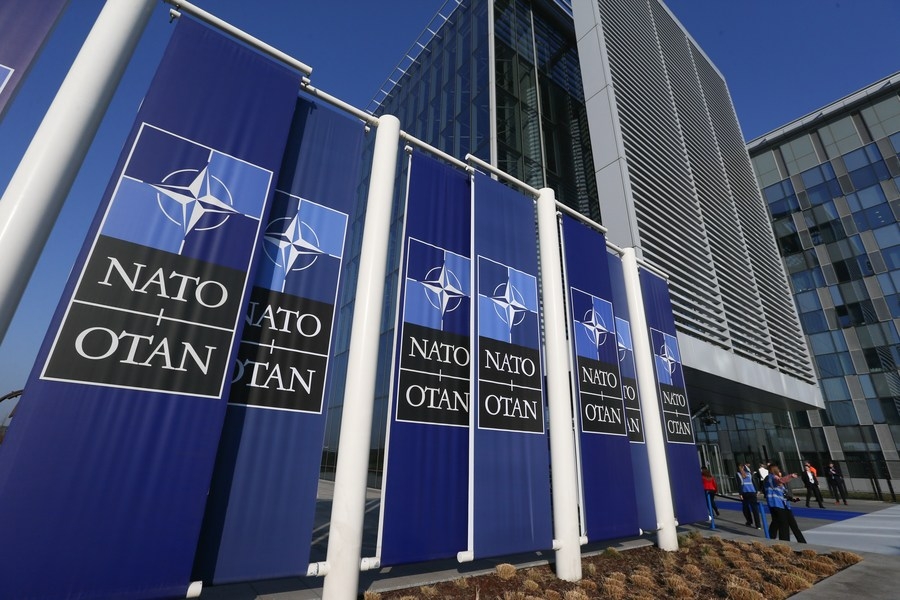
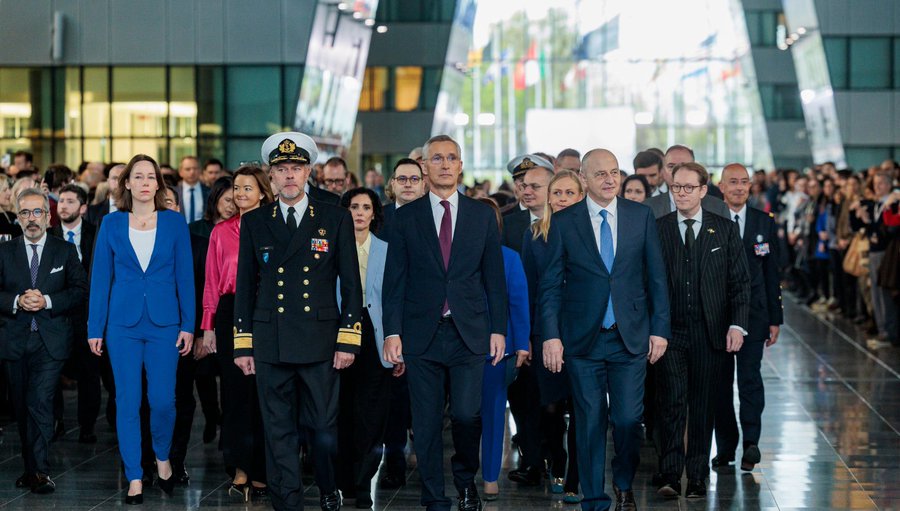
Europe and the US need each other and are “stronger together”, the secretary-general of Nato has said. Jens Stoltenberg was speaking at a ceremony marking the alliance’s 75th anniversary.

While the US provided Europe with security, he said it also needed the militaries, intelligence and diplomatic leverage of its European allies.

“I don’t believe in America alone just as I don’t believe in Europe alone,” Stoltenberg said. “I believe in America and Europe together in Nato, because we are stronger and safer together.”

The Nato chief’s remarks came as the alliance considered a €100bn (£86bn) five-year fund to provide long-term military support for Ukraine, so aid to Kyiv is not jeopardised by political changes either in the US or other Nato states.

A US package worth $60bn (£47bn) has been stalled in Congress for months because of resistance from Republican lawmakers, as well as Republican presidential candidate Donald Trump, who has spoken of ending the war “in one day”.

During his speech, Stoltenberg said Nato must be “doing something right”, as it had grown from 12 countries at its inception to 32. Its newest members Sweden and Finland abandoned their neutrality and joined the alliance as a result of Russia’s full-scale invasion of Ukraine.

Kremlin spokesman Dmitry Peskov said in response to the speech that relations between Russia and Nato had “slid to the level of direct confrontation” as the alliance was already “involved” in the conflict around Ukraine.

Although Nato is a defensive alliance Peskov alleged it “was conceived, configured, created and controlled by the US as a tool of confrontation” and was now a “destabilising element”.

The 32-member alliance has agreed to initiate planning for long-term military support for Ukraine.

Several countries have only backed the initiative in theory. Hungary, which has kept close ties with Russia, has warned it will not back “any Nato proposals proposals that might draw the alliance closer to war or shift it from a defensive to an offensive coalition”.

The Hungarian government has long sought to distance itself from international initiatives to fund Ukraine’s fight against Russia, and for a period blocked a EU plan to provide a €50bn (£43bn) aid package for Ukraine.

Stoltenberg acknowledged the framework of support was yet to be decided, but said Nato foreign ministers had agreed on the principle: “Make no mistake, Ukraine can rely on Nato support now and for the long haul.”

US Secretary of State Antony Blinken told reporters support for Ukraine within the alliance is “rock solid” and that he believes Ukraine will eventually become a member of Nato, Reuters reported.

Ukrainian Foreign Minister Dmytro Kuleba told reporters at Nato headquarters that while he did not want to “spoil [Nato]’s birthday party”, his country needed help in improving its air defences – specifically Patriot missiles.

“Saving Ukrainian lives, saving the Ukrainian economy and saving Ukrainian cities depends on the availability of Patriots and other air defence systems,” Kuleba said.

Lacking air superiority and faced with formidable Russian defences, Ukraine’s counter-offensive ground to a halt last year and is now at risk of being outgunned on the front line in the east.

The US has given Ukraine more financial aid than any other Nato state- more than $44bn (£34bn) since the 2022 invasion, according to the White House in December. However, its aid has now become caught up in a political row months before the presidential election.

Republican candidate Donald Trump has often criticised the level of spending. He has also long complained that the US has shouldered a greater financial burden than the rest of the alliance.

Fewer than two-thirds of Nato members are on course to reach their 2% funding goal.

Highlighting the importance of Nato’s European allies to the US, Stoltenberg noted it was America’s allies that came to its help after the 9/11 attacks in 2001. That was the only occasion that a key principle of the alliance has been invoked, in which an attack on one ally is seen as an attack on all.

Nato allies closest to Russia have stepped up efforts to boost their armed forces.

Norway is increasing its number of conscripted soldiers, while Denmark says it intends to extend conscription to women and increase the duration of service. Latvia and Sweden recently restarted military service, while Lithuania brought it back after Russia’s annexation of Crimea in 2014. Norway is increasing the number of conscripted soldiers, while Denmark says it intends to extend conscription to women and increase the duration of service. Latvia and Sweden recently restarted military service, while Lithuania brought it back after Russ

ALSO READ-Cameron calls for increased NATO spending amid Ukraine conflict

Previous Story

Foreign ministers mark 75 years of NATO

Next Story

Poshmaal Festival Celebrates Kashmiri Pandit Cuisine

Previous Story

Foreign ministers mark 75 years of NATO

Next Story

Poshmaal Festival Celebrates Kashmiri Pandit Cuisine

Latest from -Top News

Pakistan Risks Overstretching Itself in Yemen War

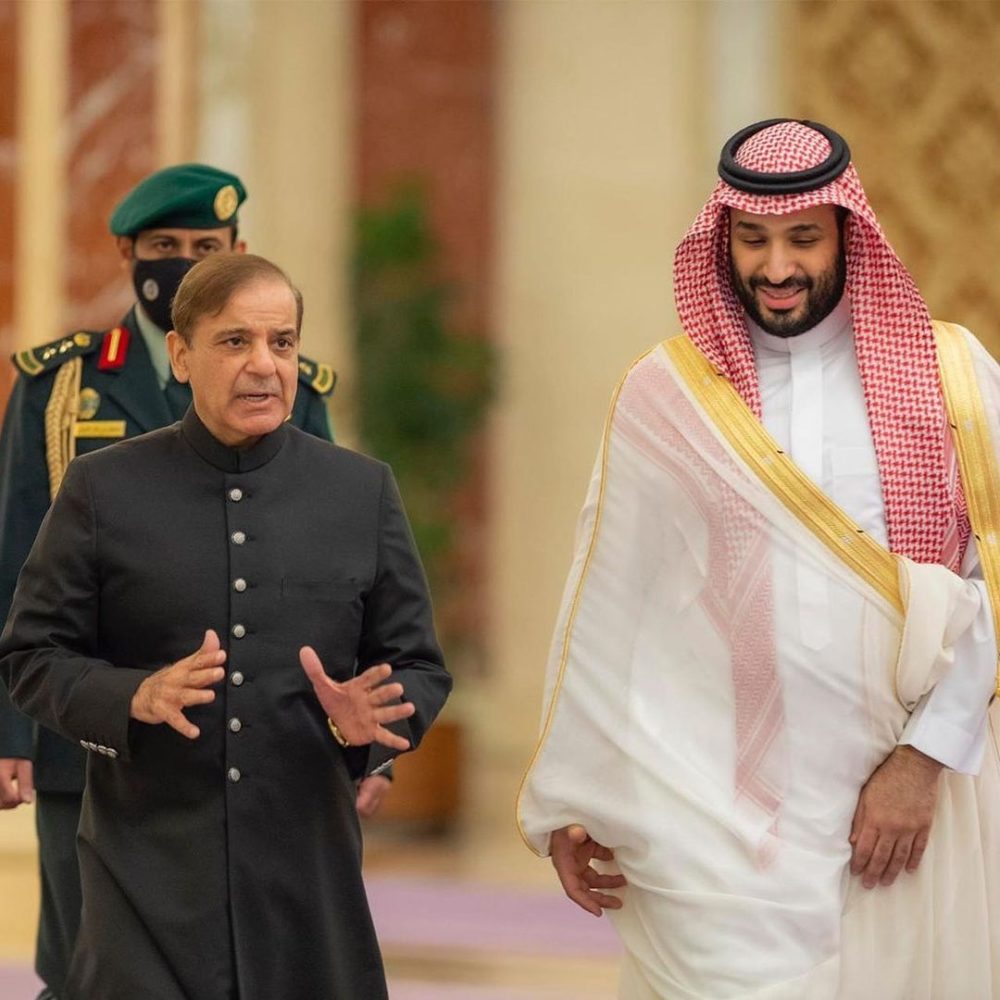
Pakistan’s expanding military role in Saudi Arabia amid the Yemen conflict could strain its defence resources and fragile finances…reports Asian Lite News Desk Pakistan’s military involvement in the war in Yemen may prove unsustainable because of mounting financial pressures and competing security demands, according to a new report. Islamabad’s growing military presence in Saudi Arabia risks stretching its defence resources while exposing the country to greater strategic and economic challenges. An article by Andrew Wilson in One World Outlook describes Pakistan’s involvement as a case of “fiscal and strategic overreach”, arguing that the country lacks the financial flexibility to sustain an expanded military commitment. Pakistan’s external finances depend heavily on an International Monetary Fund (IMF) programme, financial support from Gulf countries and remittances from Pakistani workers in the region. The report argues that deeper military involvement in the conflict could place additional pressure on these sources of financial stability. It also warns that deploying troops and military equipment abroad could weaken Pakistan’s capacity to address security challenges along its eastern border and deal with two domestic insurgencies. The move could also draw Islamabad into a conflict it has sought to approach cautiously. A Reuters report in May, citing Pakistani security and government sources, said Islamabad had deployed around 8,000 troops, a squadron of approximately 16 aircraft, mostly JF-17 fighter jets, two drone squadrons and a Chinese HQ-9 air-defence battery to Saudi Arabia. According to those sources, Riyadh was financing the deployment, with Pakistani personnel operating the equipment. The sources also said a confidential agreement contemplated the possibility of deploying up to 80,000 troops. Islamabad has not confirmed those figures, although it has acknowledged its military presence in Saudi Arabia, including the deployment of fighter jets at King Abdulaziz Air Base from April. The One World Outlook article argues that Saudi financial support can cover allowances and operating expenses but cannot easily replace military equipment needed elsewhere or resolve the political and strategic challenges of participating in the Yemen conflict. Pakistan’s defence budget is another concern. For the 2026-27 financial year, the federal government allocated PKR 3 trillion, or approximately $10.8 billion, to defence services. The allocation represents an 18 per cent increase from the original PKR 2.55 trillion provision and amounts to around 2.1 per cent of projected gross domestic product (GDP). Defence spending accounts for approximately 16 per cent of the federal government’s PKR 18.8 trillion expenditure. Military pensions are budgeted separately at PKR 822 billion, while debt servicing costs stand at approximately PKR 8 trillion, more than two-and-a-half times the defence allocation. The report argues that these competing financial obligations leave little room for additional military expenditure without placing further pressure on public finances. Pakistan’s reliance on IMF assistance also limits its fiscal flexibility. The country must meet the conditions attached to the programme, including a primary budget surplus target of 2 per cent of GDP and continued restraint on development spending. According to the article, these requirements make it difficult for Islamabad to finance an additional military commitment without compromising other budgetary priorities. Pakistan’s economic indicators offer limited reassurance. Economic growth for the 2025-26 financial year is estimated at between 3.6 and 3.7 per cent, while inflation reached approximately 10.3 per cent in September following an energy price shock. Foreign exchange reserves stood at around $21.5 billion at the end of September. Although this marks an improvement from the low levels recorded in 2023, the report notes that the reserves cover only a few months of imports. Financial assistance from Gulf partners remains central to Pakistan’s external stability. The article says Islamabad holds approximately $8 billion in Saudi deposits at its central bank. In July, the State Bank of Pakistan said Riyadh had extended the maturity of $5 billion in deposits to December 2028, easing the country’s immediate external financing requirements. A further $3 billion deposit was also extended in the spring. However, the article argues that these arrangements provide temporary relief rather than long-term financial independence, particularly as regional conflict threatens the stability of the Gulf economies on which Pakistan relies. The report concludes that Pakistan faces a difficult balance between supporting Saudi Arabia militarily and preserving the financial and military resources needed to address its domestic and regional challenges.

UK and Germany Ratify Kensington Treaty

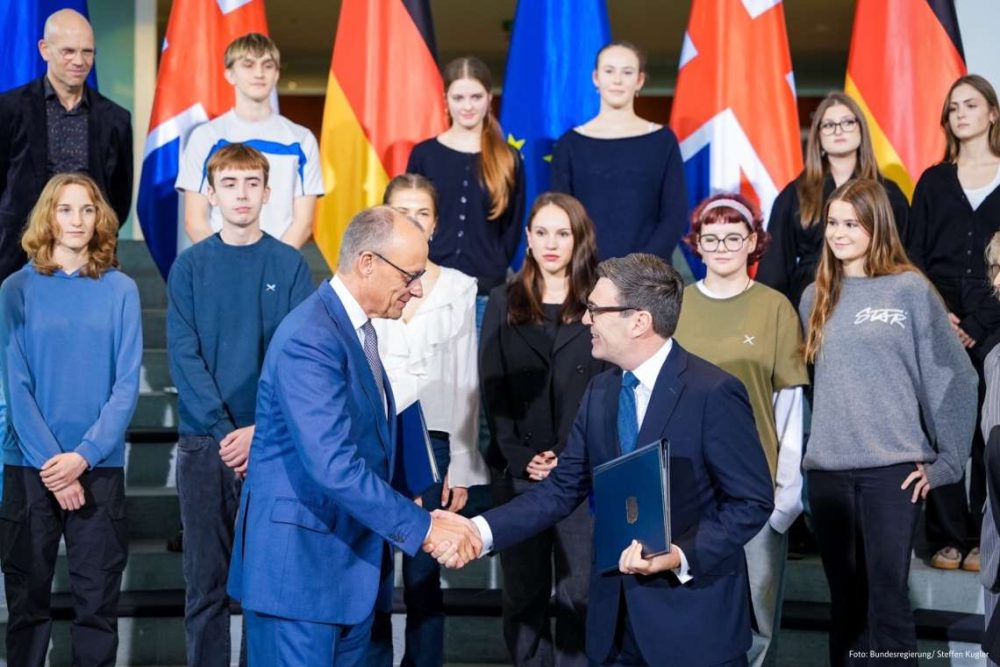
Britain and Germany ratify the Kensington Treaty, agreeing new cooperation on AI, quantum research, defence and security while targeting investment, jobs and Russian hybrid threats…reports Asian Lite News Desk Britain and Germany

Economic tide is turning in Bangladesh

If there is one thing that can bring some comfort to the struggling Bangladeshi economy, it is good relations with India. Bangladesh should remember that Delhi’s backing, through easy supplies of essentials

DP World Lands 15-Year Bangladesh Port Deal

The agreement between the Chittagong Port Authority (CPA) and DP World covers the New Mooring Container Terminal…reports Asian Lite News Desk Bangladesh has signed a 15-year concession agreement with global ports operator
Go toTop

Don't Miss

European Politics at a Crossroads

During the summit, representatives of far-right political parties openly promoted

Macron, Biden discuss ‘diplomatic and deterrence efforts’

Biden and Macron agreed that the two sides will stay