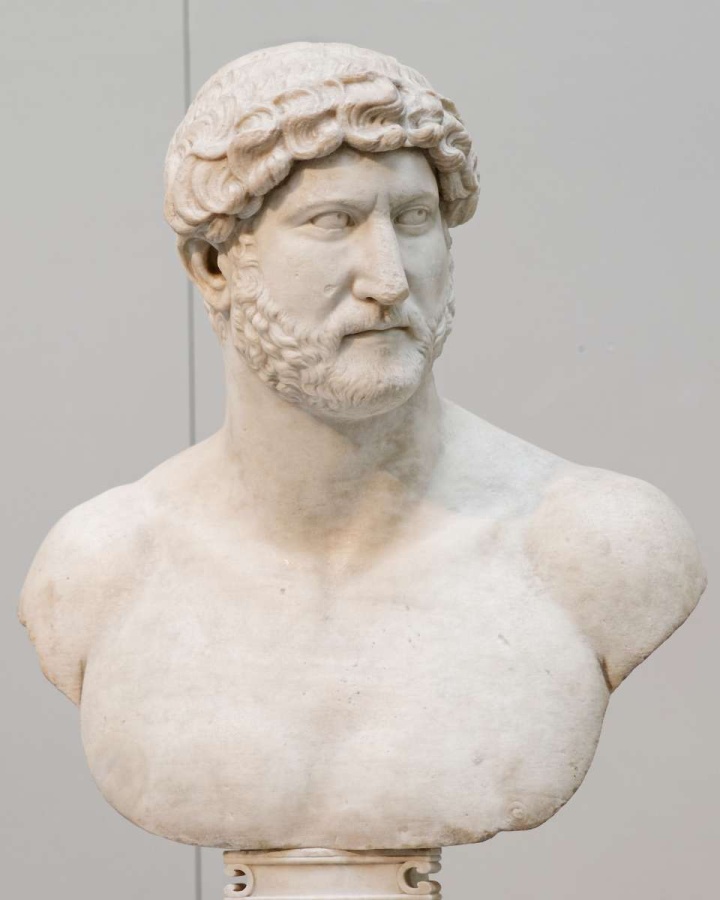
Third-century Roman plate and bust of Emperor Hadrian alleged to have links to man convicted of illegal dealing…reports Asian Lite News
The auction house Bonhams is facing calls to withdraw a Roman antiquity from its forthcoming London auction amid claims that it was looted from Turkey.
A third-century Roman silver plate, decorated with a depiction of a river god, is lot 62 of the 5 December auction and is estimated to sell for between £20,000 and £30,000.
But Dr Christos Tsirogiannis, an affiliated archaeology lecturer at the University of Cambridge and an expert on trafficking networks for looted antiquities, has evidence that Turkish traffickers supplied it in 1992 to Gianfranco Becchina, convicted in Italy in 2011 of dealing illegally in antiquities and twice in Greece in recent years.
Becchina’s archive was seized by the police and shared with Tsirogiannis by the late Paolo Giorgio Ferri, who prosecuted traffickers in looted antiquities in Italy. The documents extend to thousands of images and other material seized from dozens of traffickers.
Those relating to Becchina detail the Roman plate and the traffickers who sold it to him, showing that it was part of a group of Roman silver objects found together, for which he paid $1.6m (£1.3m). They detail payments in instalments and even bank accounts.
Tsirogiannis leads illicit antiquities trafficking research for the Unesco chair on threats to cultural heritage at the Ionian University in Corfu. Over the past 18 years, he has identified more than 1,700 looted antiquities, alerting police forces and playing a significant role in their repatriation.
A spokesperson for Bonhams said it had confirmed the provenance of the object in line with its procedures. In June, Tsirogiannis spoke out when the same Roman plate was offered as lot 57 for sale by Bonhams for an auction in July. He suspected its link to Becchina but had only a poster of it from the dealer’s archive. His subsequent research uncovered documents relating to Turkish traffickers, including photographs of the plate in an unrestored condition in Becchina’s possession.
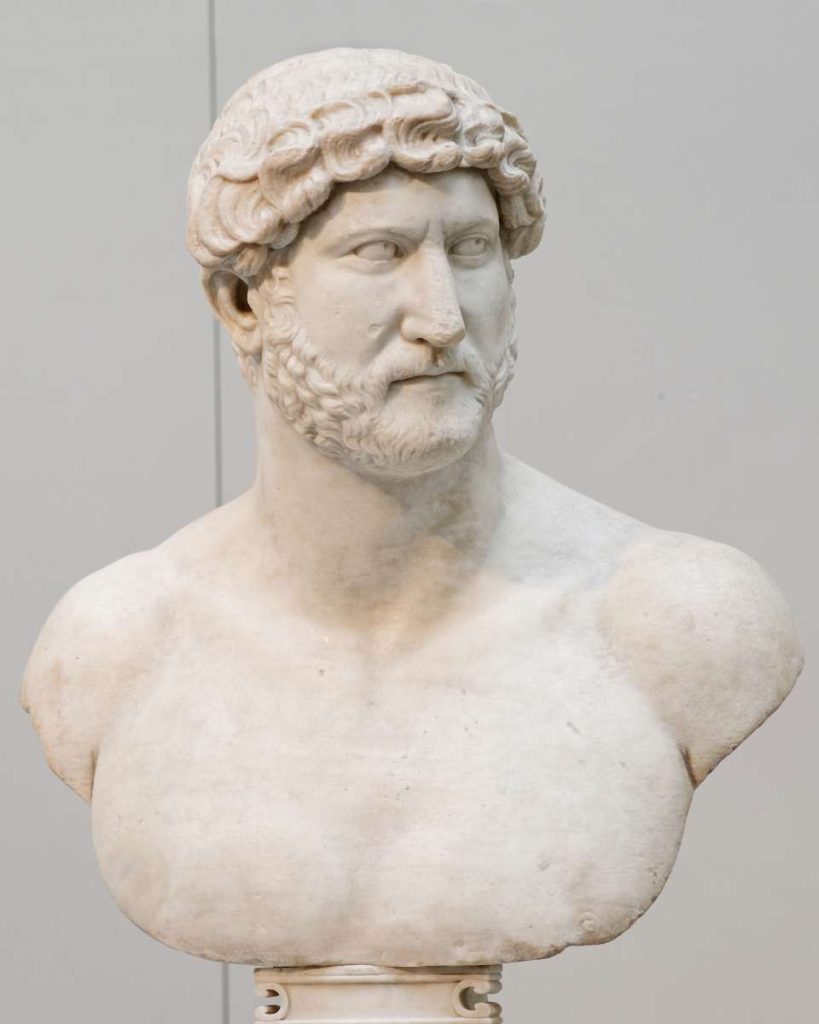
In July, Bonhams announced that it had sold the plate for about £74,000, more than double its estimate. Tsirogiannis has also linked a monumental Roman marble portrait bust of Emperor Hadrian, lot 61 in the same Bonhams auction, to Becchina.
The auction’s provenance or collecting history refers vaguely to the “Swiss art market”. Becchina was based in Basel and his seized archive features the head in one of his letters and in photographs.
Tsirogiannis said: “Bonhams appears not to have conducted basic provenance research, which would involve checking with the relevant authorities on whether particular antiquities may have been looted. The Italian and Greek authorities have the same Becchina documents, but they were strikingly silent after I published my research last July. Its previous appearance in the same auction house just a few months earlier is also not recorded in the provenance.”
Francesca Hickin, the head of antiquities at Bonhams, said: “It would be in our shared interest for the contents of the Becchina archive to be made accessible to auction houses, as this is currently not the case.
“Bonhams has confirmed the provenance for these two items, which is both printed in the sale catalogue and is also in the public domain. The plate was in Bonhams’ antiquities sale in July and was sold, although the buyer failed to pay in the stipulated timeframe and so the plate is now being re-offered in the December sale, at the request of the consignor. We have strict procedures in place to help us ensure that we offer for sale objects that we are legally able to sell. We have had no communication from any law enforcement agency regarding these items.”
Earlier, in a landmark auction Bonhams auction house in London set a new record by selling a lamp known as “The Lamp of Prince Sarghitmish” for approximately $6.5 million. This sale not only made it the most expensive lamp ever sold in the world but also broke the record as the most expensive glass piece ever auctioned. The bidding raised the price of the lamp from its estimated value of between £600,000 and £1,000,000, causing intense competitive bidding in the auction hall and via phones.
The Lamp of Prince Sarghitmish is one of the rarest and most important examples of Islamic glass ever offered at auction. It is creatively decorated with images from the Sultan Sayf al-Din Sarghitmish Mosque and School in the Sayyida Zaynab neighborhood of Cairo. The lamp’s historical and artistic significance, coupled with its exceptional provenance, contributed to its staggering final price.
According to Bonhams, the Sarghitmish lamp first appeared in the 19th century among the possessions of French antique collector Charles-Henri-Auguste Chiffre, who brought it to Paris. Charles-Henri-Auguste Chiffre, born in 1820, was close to the Ottoman Sultan and served as an accredited translator at the Sublime Porte. During his ownership, the lamp was exhibited in some of the most important museums in Paris, including the Louvre, and was photographed in ten art and antique books of that period.
The lamp remained with the Bougous family after Chiffre’s time, and the Nubar family used it as a vase for dried flowers. The last owner of the lamp was the heirs of Arkel Nubar, who sold it through the auction house. This extensive ownership history allowed the lamp to exit Egypt legally, contributing to its increased price and desirability among collectors.
However, the sale has raised significant concerns among Egyptian antiquities experts and officials. Dr. Abdel Rahim Rayhan, an antiquities expert, stated that the sale of this lamp is completely illegal unless ownership documents are provided. He explained that everything exhibited in public auctions is sold with forged papers. “Therefore, Bonhams is required to provide documents to the Egyptian government proving the lamp’s legal exit, as most items sold at these auctions are sold with forged papers to create a modern illegal ownership formula to justify the sale,” Dr. Rayhan asserted.
He emphasized that the Egyptian Ministry of Tourism and Antiquities has the right to demand documents proving its legal exit from Egypt before the Antiquities Protection Law 117 of 1983 and its amendments. Dr. Rayhan explained that if the lamp had exited Egypt at the time when Egypt was an Ottoman province, it would have done so under conditions where Egypt did not have jurisdiction over its antiquities and under French and British colonial circumstances.
Dr. Rayhan referred to the “UNESCO 1970 Convention,” which was signed by 123 countries, including Egypt. The UNESCO 1970 Convention is the convention on combating the illicit trade in artistic artifacts and organizing the mechanism for the return of art pieces obtained illegally to their original countries. By this convention, there is implicit approval from 123 countries not to demand the return of their looted antiquities before the year 1970. “Thus, the convention deprives Egypt of the right to demand the return of these antiquities, even though they are smuggled Egyptian antiquities,” he noted.
ALSO READ: Labour left urges PM to speak up for human rights on Saudi trip