The Taskforce will focus on three critical areas identified as essential to early offshore wind deployment in India..reports Asian Lite News
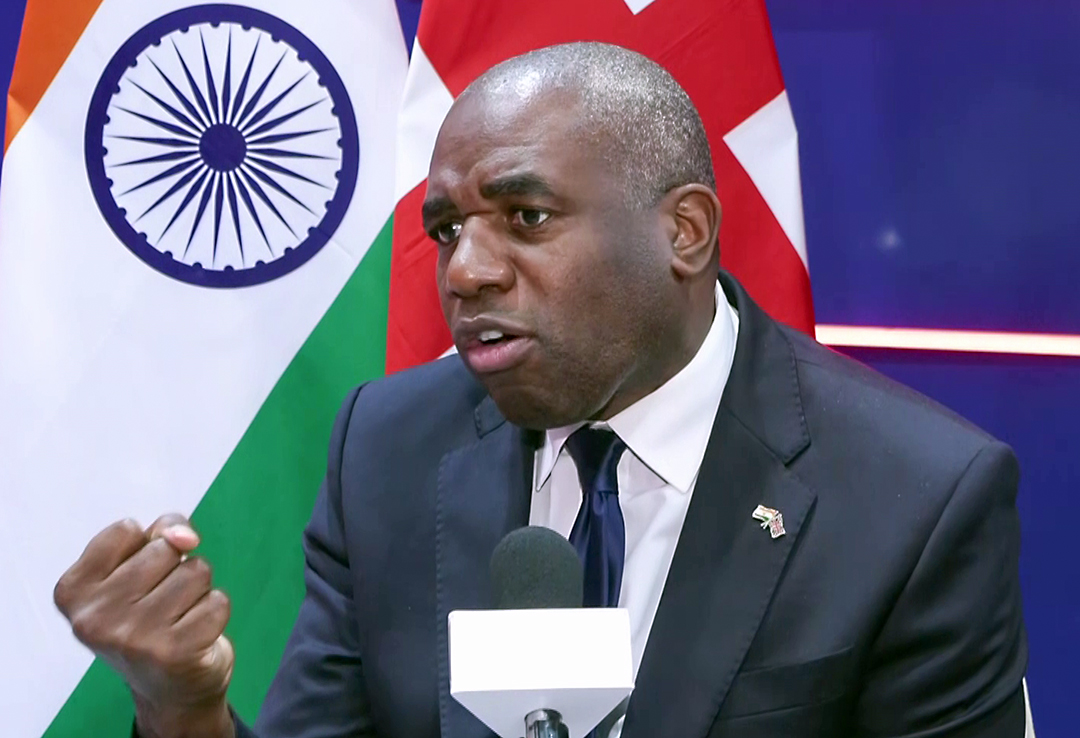
India and the United Kingdom have launched a joint Offshore Wind Taskforce to accelerate project delivery and strengthen supply chains in India’s emerging offshore wind sector. The initiative, unveiled with UK Deputy Prime Minister David Lammy in attendance, represents a coordinated effort to align policy, industry, and financing stakeholders under the India-UK Vision 2035 framework.
Union Minister for New and Renewable Energy Pralhad Joshi formally launched the joint Offshore Wind Taskforce alongside UK Deputy Prime Minister David Lammy and British High Commissioner to India Lindy Cameron, positioning the initiative as a critical pillar of bilateral cooperation on clean energy development. The Taskforce, established under the India-UK Vision 2035 framework and the Fourth Energy Dialogue, aims to translate international experience into locally relevant execution strategies for offshore wind deployment.
Speaking at the launch, the Minister described the initiative as a practical collaboration platform designed to move beyond dialogue and deliver measurable progress. He emphasised that the UK’s experience in scaling offshore wind and building mature supply chains complements India’s growing demand for clean energy and its substantial deployment potential across coastal regions.
The Taskforce will focus on three critical areas identified as essential to early offshore wind deployment in India. The first encompasses market design refinement, including the development of clearer seabed leasing frameworks and revenue visibility mechanisms that would provide developers with greater certainty and commercial bankability for projects.
Infrastructure development constitutes the second pillar of the initiative. This encompasses modernising port infrastructure, strengthening domestic manufacturing capabilities, and establishing specialised marine logistics systems required for offshore wind installation and ongoing maintenance operations. The third area addresses financial structures and risk allocation mechanisms, including blended finance approaches designed to mobilise long-term institutional capital and enhance overall project viability.
India has identified promising offshore wind zones along the Gujarat and Tamil Nadu coastlines as priority development areas. The National Institute of Wind Energy has undertaken preliminary studies, surveys, and grid planning to support initial project rollout across these regions. To facilitate early deployment, the government has introduced a Viability Gap Funding scheme with a total allocation of approximately £675 million, converted from ₹7,453 crore.
The Minister highlighted that offshore wind development presents complex technical, regulatory, and commercial considerations, including the requirement for specialised infrastructure, marine logistics planning, and bankable contracting frameworks that differ substantially from onshore wind operations. He underscored that the sector requires coordinated action across multiple stakeholder groups to achieve successful project delivery and commercialisation.
Beyond immediate offshore wind deployment, the government views the sector as a key enabler for coastal industrial clusters and green hydrogen production capabilities. India is currently leading the Hydrogen Breakthrough Goal under the global Breakthrough Agenda and has achieved competitive pricing benchmarks through the National Green Hydrogen Mission. According to the Minister, declining green hydrogen and green ammonia costs strengthen the strategic case for integrating offshore wind as a reliable source of high-quality renewable power for emerging industrial demand and production processes.
The announcement arrives as India’s non-fossil fuel installed capacity has crossed 272 gigawatts, comprising more than 140 gigawatts of solar generation and approximately 55 gigawatts of wind capacity. Renewable additions during the ongoing financial year include over 35 gigawatts of solar installations and 4.61 gigawatts of wind capacity, demonstrating continued expansion across India’s clean energy portfolio and commitment to renewable energy targets.
The Taskforce represents a substantial deepening of India-UK cooperation on clean energy infrastructure, building upon existing bilateral frameworks and reflecting both nations’ commitment to accelerating the energy transition. Officials indicated that the initiative would establish regular coordination mechanisms between policy makers, industry representatives, and financial institutions to identify and address implementation barriers as projects progress toward commercialisation.
The initiative coincides with broader global momentum toward offshore wind development, with numerous countries seeking to scale capacity and establish manufacturing ecosystems. The partnership with the UK, which operates one of the world’s largest offshore wind industries, positions India to benefit from established expertise whilst developing locally adapted approaches suited to India’s specific coastal conditions, environmental requirements, and industrial context.