January 21, 2024
4 mins read

UK, US To Step Up Fight Against Houthis

The proposals could mark an escalation in the allied effort to end the chaos in the Red Sea, which handled about 12% of global trade before the Houthis began targeting commercial ships…reports Asian Lite News

The US and the UK are exploring ways to step up their campaign against Houthi militants in Yemen without provoking a broader war, with a focus on targeting Iranian resupplies and launching more aggressive pre-emptive strikes, people familiar with the matter said.

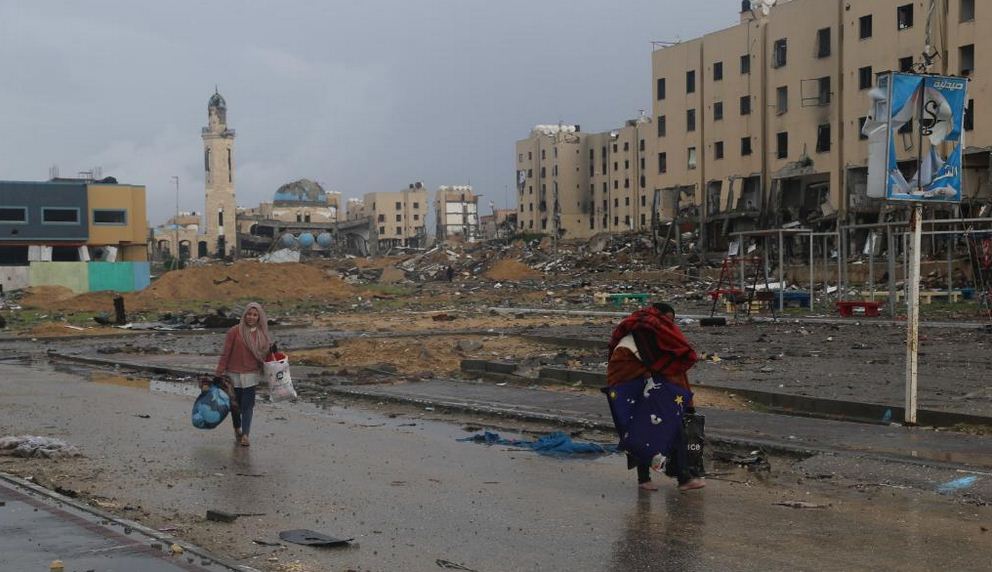
The proposals could mark an escalation in the allied effort to end the chaos in the Red Sea, which handled about 12% of global trade before the Houthis began targeting commercial ships in response to Israel’s bombardment of the Gaza Strip. The Houthi attacks has led to higher insurance costs and provoked fears of fresh inflationary pressure as ships take a longer and costlier route around the southern tip of Africa.

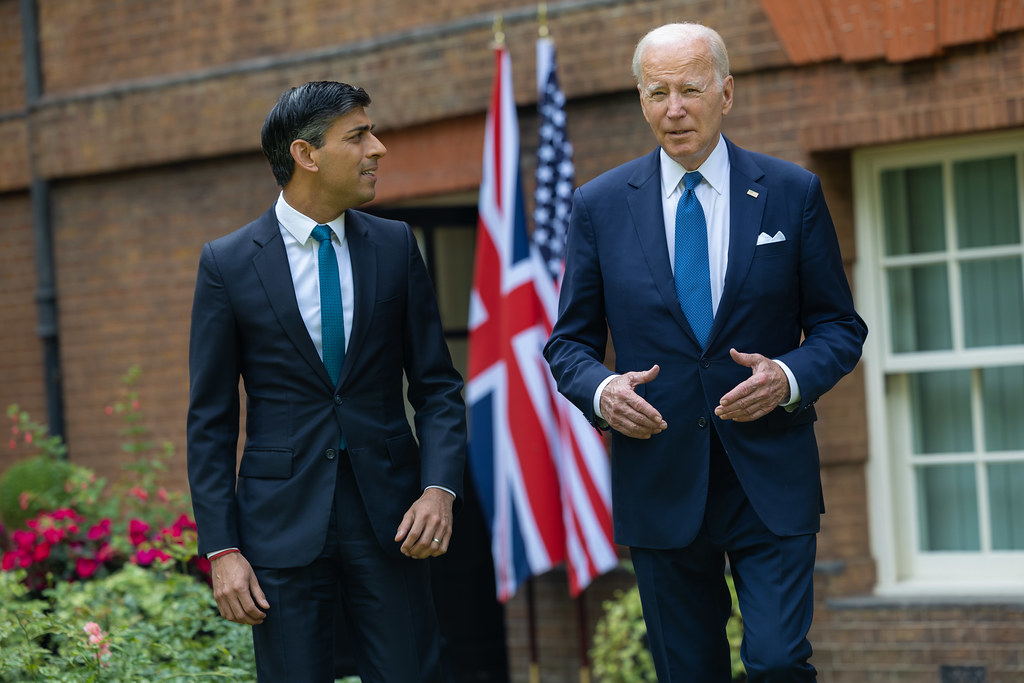
The risk is that more aggressive action will put the US in direct conflict with Iran and provoke the sort of regional conflagration that President Joe Biden says he wants to avoid.

But the considerations stem from a recognition that a series of US and UK strikes against the Houthis so far hasn’t deterred the group or degraded its ability to target commercial shipping. In fact, the Houthis have vowed to step up their attacks in the week since the allies began targeting them.

The people familiar with the matter, who asked not to be identified discussing private deliberations, said the US and UK are examining ways to better disrupt Iranian efforts to resupply the Houthis at sea, especially given that it will be harder to sever land routes. A British official echoed that argument, saying officials are weighing various types of military operations to disrupt Iranian weapons flows to the Houthis.

Advocates for more aggressive action also argue that the time is ripe because of what they see as an emerging Iranian weakness. People familiar with the US stance say that the leadership in Iran may have overextended itself with its support for the Houthis along with launching attacks in Pakistan and Iraq, and may not respond to further escalation.

That’s coupled with a growing fear that the Red Sea turmoil may go on longer than initially expected. Since mid-November, at least 16 ships have suffered direct strikes by Houthi drones or missiles, according to data from intelligence firm Ambrey Analytics.

There’s already some evidence that the US and allies have taken a more aggressive approach. Last week, US forces boarded a dhow in the Arabian Sea and seized Iranian-made missile components bound for the Houthis, the Pentagon said. Two Navy SEALS were lost in that operation.

On Friday, National Security Council spokesman John Kirby said the US had struck three anti-ship cruise missiles that were “sitting on the rails ready to go.” That contrasts with previous strikes against launchers that were believed to pose an immediate threat.

“The Houthis need to stop these attacks – they can make that choice,” Kirby said. “We have choices to make, too. And we have options available to us as well. We’ll continue to explore those options.”

The allies have also had discussions about whether current rules of engagement allow for the sort of aggressive strikes that officials envision. On Thursday, Pentagon spokeswoman Sabrina Singh said the commander of US Central Command, General Michael Kurilla, already has the authority he needs to take defensive action, and another US official said no policy changes are needed.

The people familiar with the US stance said administration officials believe Iran has overplayed its hand and provoked unease in Arab capitals, where leaders fear they could also be targets. Countries in the Middle East and beyond are increasingly concerned about Iran’s actions and are banding together at the United Nations and elsewhere to push back against Tehran and its proxies, a senior State Department official said.

In recent days, Iran has launched missile attacks on sites in Iraq and Pakistan, angering those countries’ governments and increasing the risks of broader regional conflict.

Top Iraqi officials issued rare public criticisms of Iran after Tehran attacked what it said was an Israeli spy base in Iraq with missiles in revenge for the assassination of one of its commanders in Syria.

Addressing the US attacks at the World Economic Forum in Davos, Switzerland, on Tuesday, US National Security Adviser Jake Sullivan said “we are not looking for regional conflict.” But he said “we reserve the right to take further action” because the Houthis can’t be permitted to hijack world trade.

ALSO READ-Thousands march in London for Gaza ‘day of action’

Previous Story

Record Humanitarian Challenges in 2023

Next Story

Tata Steel to shut two loss-making UK units

Previous Story

Record Humanitarian Challenges in 2023

Next Story

Tata Steel to shut two loss-making UK units

Latest from -Top News

Pakistan Risks Overstretching Itself in Yemen War

Pakistan’s expanding military role in Saudi Arabia amid the Yemen conflict could strain its defence resources and fragile finances…reports Asian Lite News Desk Pakistan’s military involvement in the war in Yemen may prove unsustainable because of mounting financial pressures and competing security demands, according to a new report. Islamabad’s growing military presence in Saudi Arabia risks stretching its defence resources while exposing the country to greater strategic and economic challenges. An article by Andrew Wilson in One World Outlook describes Pakistan’s involvement as a case of “fiscal and strategic overreach”, arguing that the country lacks the financial flexibility to sustain an expanded military commitment. Pakistan’s external finances depend heavily on an International Monetary Fund (IMF) programme, financial support from Gulf countries and remittances from Pakistani workers in the region. The report argues that deeper military involvement in the conflict could place additional pressure on these sources of financial stability. It also warns that deploying troops and military equipment abroad could weaken Pakistan’s capacity to address security challenges along its eastern border and deal with two domestic insurgencies. The move could also draw Islamabad into a conflict it has sought to approach cautiously. A Reuters report in May, citing Pakistani security and government sources, said Islamabad had deployed around 8,000 troops, a squadron of approximately 16 aircraft, mostly JF-17 fighter jets, two drone squadrons and a Chinese HQ-9 air-defence battery to Saudi Arabia. According to those sources, Riyadh was financing the deployment, with Pakistani personnel operating the equipment. The sources also said a confidential agreement contemplated the possibility of deploying up to 80,000 troops. Islamabad has not confirmed those figures, although it has acknowledged its military presence in Saudi Arabia, including the deployment of fighter jets at King Abdulaziz Air Base from April. The One World Outlook article argues that Saudi financial support can cover allowances and operating expenses but cannot easily replace military equipment needed elsewhere or resolve the political and strategic challenges of participating in the Yemen conflict. Pakistan’s defence budget is another concern. For the 2026-27 financial year, the federal government allocated PKR 3 trillion, or approximately $10.8 billion, to defence services. The allocation represents an 18 per cent increase from the original PKR 2.55 trillion provision and amounts to around 2.1 per cent of projected gross domestic product (GDP). Defence spending accounts for approximately 16 per cent of the federal government’s PKR 18.8 trillion expenditure. Military pensions are budgeted separately at PKR 822 billion, while debt servicing costs stand at approximately PKR 8 trillion, more than two-and-a-half times the defence allocation. The report argues that these competing financial obligations leave little room for additional military expenditure without placing further pressure on public finances. Pakistan’s reliance on IMF assistance also limits its fiscal flexibility. The country must meet the conditions attached to the programme, including a primary budget surplus target of 2 per cent of GDP and continued restraint on development spending. According to the article, these requirements make it difficult for Islamabad to finance an additional military commitment without compromising other budgetary priorities. Pakistan’s economic indicators offer limited reassurance. Economic growth for the 2025-26 financial year is estimated at between 3.6 and 3.7 per cent, while inflation reached approximately 10.3 per cent in September following an energy price shock. Foreign exchange reserves stood at around $21.5 billion at the end of September. Although this marks an improvement from the low levels recorded in 2023, the report notes that the reserves cover only a few months of imports. Financial assistance from Gulf partners remains central to Pakistan’s external stability. The article says Islamabad holds approximately $8 billion in Saudi deposits at its central bank. In July, the State Bank of Pakistan said Riyadh had extended the maturity of $5 billion in deposits to December 2028, easing the country’s immediate external financing requirements. A further $3 billion deposit was also extended in the spring. However, the article argues that these arrangements provide temporary relief rather than long-term financial independence, particularly as regional conflict threatens the stability of the Gulf economies on which Pakistan relies. The report concludes that Pakistan faces a difficult balance between supporting Saudi Arabia militarily and preserving the financial and military resources needed to address its domestic and regional challenges.

UK and Germany Ratify Kensington Treaty

Britain and Germany ratify the Kensington Treaty, agreeing new cooperation on AI, quantum research, defence and security while targeting investment, jobs and Russian hybrid threats…reports Asian Lite News Desk Britain and Germany

Economic tide is turning in Bangladesh

If there is one thing that can bring some comfort to the struggling Bangladeshi economy, it is good relations with India. Bangladesh should remember that Delhi’s backing, through easy supplies of essentials
Go toTop

Don't Miss

S.Korea, US Start Annual Military Drills

The annual ‘Freedom Shield’ exercise got underway for an 11-day

Severe storms ground over 1,500 US flights

In New York, the JFK International Airport saw 318 canceled