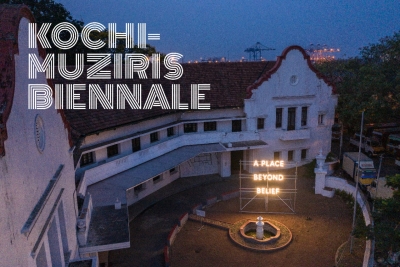
Kochi-Muziris Biennale 2025 is opening with bold performance art, global heavyweights and South Asian depth, transforming Kochi into a living, evolving ecosystem of experimentation, resilience and creative collaboration.
Kochi is bracing for an artistic surge as the sixth edition of the Kochi-Muziris Biennale (KMB) throws open its doors on Friday, 12 December, ushering in nearly four months of installations, performances and experiments across one of India’s most atmospheric heritage landscapes. Running until 31 March 2026, this year’s Biennale arrives with renewed ambition, a broadened footprint, and a curatorial vision that challenges the very idea of what a biennale should be.
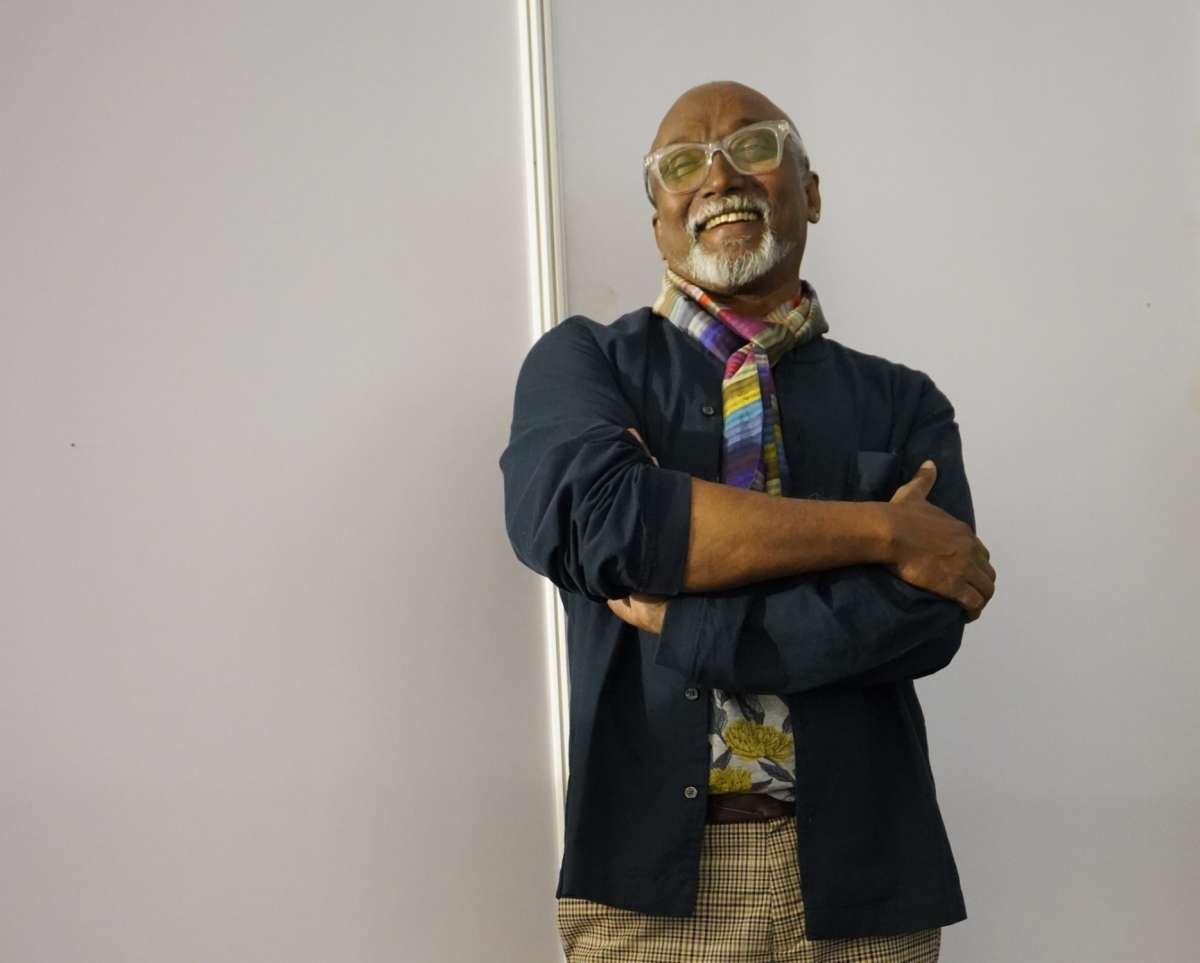
Curated by acclaimed performance artist Nikhil Chopra alongside his Goa-based collective HH Art Spaces, the edition titled ‘For the Time Being’ centres on resilience, collaboration and responding creatively to the lived realities of Kochi’s climate, architecture and communities. The duo has invited 66 artists and collectives to work “nimbly and locally”, making this one of the Biennale’s most process-driven editions yet.
Performance powerhouses
Signalling a bold curatorial direction, Chopra has leaned heavily into performance — his own internationally recognised medium — and secured some of its most iconic figures.
Foremost among them is Marina Abramović, who will present a rare lecture-performance on 10 February, in addition to exhibiting Waterfall (2003), a monumental video installation featuring 108 chanting monks and nuns.

Fellow performance pioneer Tino Sehgal will present three of his renowned “constructed situations”, including the intimate and sensuous Kiss (2003), enacted live by two performers.
South Asian depth
The international roster includes major names like Otobong Nkanga, who has planted a tropical garden that will grow and shift through the Biennale’s duration; and Ibrahim Mahama, currently at the top of the ArtReview Power 100 list, who brings his immersive installation Parliament of Ghosts.
Another highlight will be Adrián Villar Rojas’s evolving Rinascimento series, in which freezer drawers brim with food in various stages of decay — a haunting reflection on time, cycles and consumption.
South Asian artists make up nearly two-thirds of the exhibition. Highlights include a seven-decade survey of Jyotti Bhatt, a new film from Naeem Mohaiemen reflecting on Bangladesh’s 2024 July Revolution, and Bani Abidi’s daily “solidarity lunch” installation created with architect Anupama Kundoo. Emerging voices such as Prabhakar Kamble, Biraaj Dodiya, and Birender Yadav add urgency and texture to the programme, with Yadav’s kiln filled with clay casts of migrant workers’ abandoned personal belongings expected to be one of the most poignant works on site.
The Biennale will not shy away from political tensions either. Kashmiri artist Moonis Ahmad Shah is set to show video works challenging the Indian state’s policies in Kashmir, a bold inclusion amid tightening cultural censorship.
Aspinwall House returns — partially
One of the biggest questions before opening day has been the status of Aspinwall House, the Biennale’s traditional anchor venue. After months of speculation — and memories of the previous edition’s delayed opening — organisers confirm that a substantial section, owned by the Kerala government, will remain the Biennale’s primary site.

However, significant portions remain unavailable due to ongoing negotiations. To compensate, the Biennale has expanded into new venues, most notably Island Warehouse on Willingdon Island, which will be accessible by ferry from Fort Kochi. The shift underscores the organisers’ commitment to reshaping the Biennale as a dispersed, evolving experience rather than a single monumental show.
A Biennale as ecosystem, not spectacle
Chopra’s curatorial note reframes the Biennale as an “ecosystem” — fluid, responsive, and grounded deeply in site. Instead of aspiring to a singular, grand exhibition, this edition embraces an open-ended, collective, process-driven ethos where each artist shares space, resources and time.
This approach aligns with the foundational spirit of the Kochi-Muziris Biennale, launched in 2012 as India’s first major international contemporary art biennale. A project rooted in civic engagement and local histories, it has grown into one of Asia’s most influential artist-led platforms, combining exhibitions with talks, screenings, workshops, residencies and education programmes.
As Kochi prepares to welcome thousands of visitors, the stage is set not just for an exhibition but for a living experiment — one that unfolds “for the time being”, and perhaps reshapes what the future of biennales might look like.