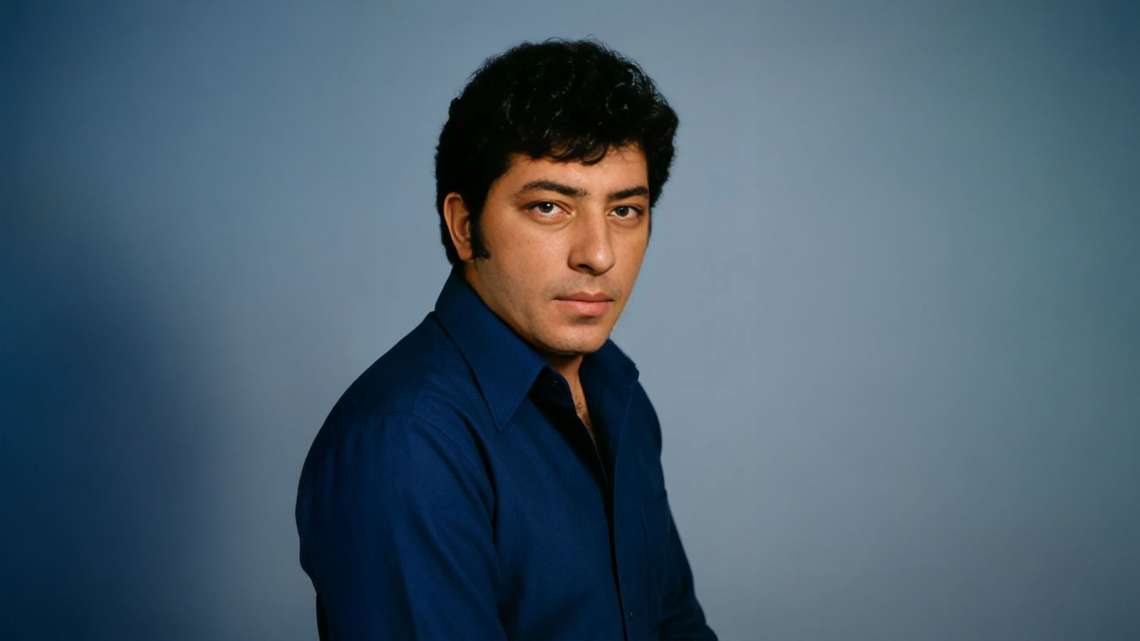
Citing rampant rape cases, the infamous Bhagalpur blinding incident, and countless acts of violence, he questioned why cinema alone should be blamed for representing themes already embedded in society and documented in daily news
In an era where films like Kabir Singh and Animal spark fierce debates on cinematic morality, an old interview of legendary actor Amjad Khan has resurfaced online—offering a perspective that feels remarkably relevant today. As conversations around misogyny, violence and the ethics of portrayal grow louder, Khan’s decades-old reflections provide a grounding reminder of cinema’s relationship with society.
The video, now circulating widely on social media, captures Khan responding to concerns about disturbing subjects in Hindi films. Asked specifically about the depiction of rape in cinema and its potential impact on viewers, the actor offered a counterpoint: that cinema is not the source of society’s ills, but a reflection of them.
“You shouldn’t even read newspapers,” Khan remarked in the clip, his tone firm yet measured. “You shouldn’t even go to social services centres. Because when you go to those centres, you will find far more disturbing stories compared to what our cinema shows.”
His point was simple—reality has always been more brutal, more chaotic, and more unsettling than any frame projected on a screen.
Khan went on to compare modern cinema to literature of the past, noting that storytellers have always responded to the environment around them. “In the past, literature was written based on the environment, culture, and needs of that time. Similarly, today’s cinema is a reflection of today’s environment,” he explained. “It is not the image. It is not the subject. It is not the matter. It is merely an image. Whatever happens is reflected in our films.”
Citing rampant rape cases, the infamous Bhagalpur blinding incident, and countless acts of violence, he questioned why cinema alone should be blamed for representing themes already embedded in society and documented in daily news. To him, filmmakers were not conjuring horrors—they were interpreting them.
Khan broadened his critique further, situating India’s anxieties within a global context. “We are not living in a sick society. The whole world today is going through a very sick period,” he said. From nuclear threats to widespread terrorism, he observed that these crises were shaping collective consciousness across continents. “It is not only Indian cinema. It is the whole world that is going through a crisis.”
The actor pushed back against the notion that banning or sanitising films could heal societal wounds. Cinema, in his view, was not responsible for sparking moral decay, nor could it magically reverse it. Human frailty, he argued, was ancient—long predating films, or even formal storytelling.
“You cannot reduce human weakness,” he said, leaning on biblical history to make his point. “The first murder was the one where Cain killed his brother Abel… Which film was made at that time?” He reminded his audience that violence, jealousy and cruelty were woven into human behaviour long before the arrival of cameras or screens. “In the prehistoric ages, people used to hit each other on the head, kill each other and bury them alive. Which film was made at that time? You cannot put this on films.”
As today’s filmmakers, critics and audiences wrestle with questions of influence and responsibility, Amjad Khan’s words offer a lens both sobering and clarifying. Cinema may magnify society’s truths—but it does not manufacture them.