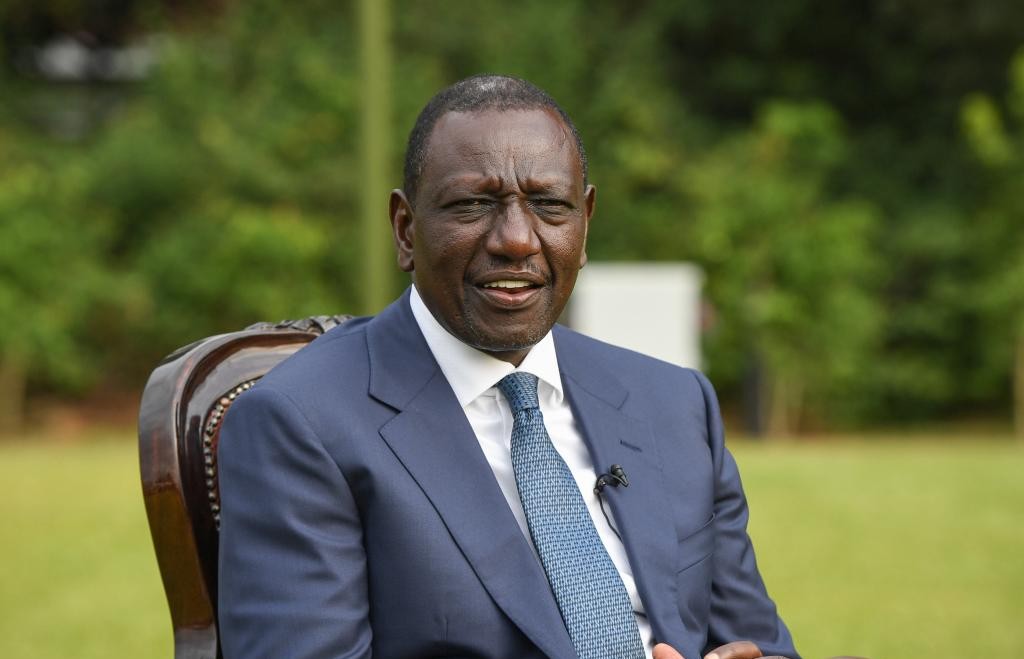
Odinga and Ruto said their pact was not aimed at distributing government positions amongst the two parties, but instead it provided a framework for consultations on issues that affect Kenyans
Kenya’s ruling and main opposition parties have signed an agreement that will see both sides involved in critical government policy making in what critics have described as an attempt to silence opposition.
President William Ruto and main opposition leader Raila Odinga signed the agreement on Friday as their supporters held a march around the capital, Nairobi.
Odinga, leader of the Orange Democratic Movement, said Friday’s pact was not a “new political formation” but an agreement that would “help build the country.” Ruto, who leads the United Democratic Alliance, said leaders had always made “politically correct” decisions and not those that are good for the people of Kenya. He hailed Odinga for always making “difficult decisions” for the interest of other Kenyans.
“So basically there’s no opposition party in parliament in Kenya?” political analyst Nanjala Nyabola posted on X. The opposition Wiper Democratic Party leader Kalonzo Musyoka wrote on X that Friday’s pact was “the biggest betrayal of Kenyans.” It is the fourth time Odinga – a five time election loser – has signed a pact with a ruling president.
Odinga and Ruto said their pact was not aimed at distributing government positions amongst the two parties, but instead it provided a framework for consultations on issues that affect Kenyans. Odinga said it would “help ease tension in our country” and that the opposition had realized that it was not enough to “stand aside and criticize.”
“We commit to hold regular consultations on pressing issues,” Odinga said. The opposition in Kenya has been criticized for being quiet as the government increased taxes and cracked down on young anti-government protesters in June 2024. In February, Odinga ran and lost the African Union chairperson bid to Djibouti’s Mahmoud Ali Youssouf, a move that created uncertainty over Odinga’s political future.
Meanwhile, Ruto has appealed for calm in South Sudan, where an escalating security situation threatens to jeopardise a peace agreement that ended a five-year civil war. Ruto, who spoke to South Sudanese President Salva Kiir and First Vice President Riek Machar on Thursday, called on both leaders to engage in dialogue to foster peace in the country, even as the region works toward stabilising South Sudan under a regional framework.
“I also informed the two leaders that regional consultations are underway to determine the best path forward for the situation in South Sudan,” the presidency said in a statement issued in Nairobi on Thursday evening.
Ruto, who serves as Chairman of the East African Community, made the call following clashes that erupted in Upper Nile State in mid-February between the South Sudan People’s Defence Forces and armed civilian groups known as the White Army. The fighting in Nasir, a strategic town, has escalated tensions this week in Juba, South Sudan’s capital, leading to the arrest of senior government and military officials from the Sudan People’s Liberation Movement/Army-In Opposition (SPLM/A-IO), which is led by Machar.
More than 20 people have been reported killed, and several others injured on the outskirts of Nasir, now deserted, located on the border between South Sudan and Ethiopia. Machar’s spokesperson, Puok Both Baluang, said on Thursday that two ministers and senior military officials allied with Machar were arrested this week, while other senior military officials were placed under house arrest by security forces.
Minister of Information, Communication Technology, and Postal Services Michael Makuei Lueth confirmed the arrests on Wednesday, saying that the officials were detained for being in conflict with the law. He accused the opposition SPLM/A-IO of attacking government positions in Nasir on Tuesday.
Machar, whose political rivalry with Kiir has previously fueled civil war, criticised the removal of some of his allies from government positions in February, saying it threatens the 2018 peace deal between the two sides. The deal, aimed at ending years of civil war, has faced repeated delays and challenges, particularly in unifying armed groups to form a national army.