At least 20 people have died and several others are missing after a passenger boat capsized on Lake Maï-Ndombe in northwestern Congo, prompting renewed scrutiny of the country’s unsafe waterways…reports Asian Lite News
At least 20 people have died and several remain missing after a boat carrying passengers towards Kinshasa capsized on Lake Maï-Ndombe in northwestern Congo, according to accounts from residents and church officials. The incident, which occurred on Thursday evening, has again highlighted the dangers of water transport across the central African nation, where overloaded wooden vessels are often the only available means of long-distance travel.
Local residents reported that the boat went down between the villages of Bobeni and Lobeke at about 8 p.m. on Thursday. The vessel was en route from the town of Kiri to the capital, Kinshasa, when it overturned. Among the passengers was a newly ordained Catholic deacon, the local Diocese said in a statement on Friday. Details of how many people were on board remain unclear, as passenger manifests are rarely kept on such routes.
Emmanuel Bola, a resident of Inongo, told The Associated Press by telephone on Saturday that the vessel had set off on the multi-day journey before encountering trouble on the lake. His account underlined the challenges that communities face when navigating the region’s waterways, particularly at night. The vast lake, bordered by remote forested areas, has limited access for emergency teams, complicating rescue and recovery efforts.
The Congolese government has not issued an official death toll and continues to gather information from the scene. Kevani Nkoso, governor of Maï-Ndombe province, told the AP that “we are awaiting details from the teams deployed to the field to determine the number of people killed and the number of survivors.” Authorities say search teams are still working in the area, though the chances of finding additional survivors diminish with each passing day.
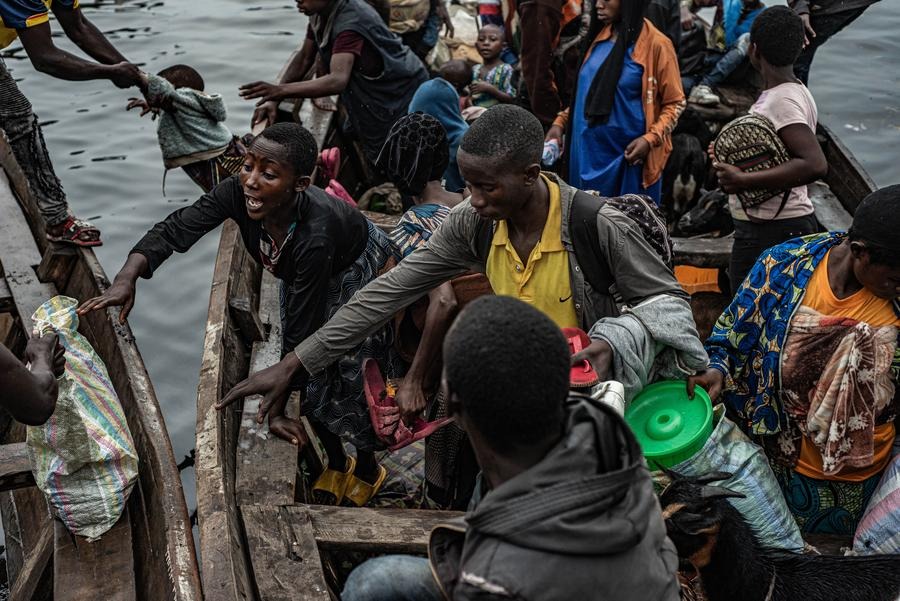
Deadly boat accidents have become increasingly common as Congolese travellers turn to waterways in regions where roads are sparse, poorly maintained or impassable during the rainy season. Cheaper wooden vessels, often operated by small-scale transporters, are heavily used for carrying both passengers and goods. But many of these boats are ageing and vulnerable, making them unfit for the heavy loads they are asked to bear.
Safety equipment is limited, with life jackets rarely available and safety briefings practically non-existent. Overloading is commonplace, with operators and passengers seeking to reduce costs by maximising occupancy. Night-time travel, chosen to avoid the intense daytime heat or to reach markets early, increases risks further. Rescue operations after dark are slow and disorganised, and many victims’ bodies are never recovered from the country’s deep rivers and lakes.
The tragedy on Lake Maï-Ndombe follows a series of recent maritime disasters that have raised concerns about enforcement of safety regulations. Earlier this month, a separate capsizing left 64 people missing. In September, at least 193 people died in two separate accidents in the same northwestern region, with state media attributing those disasters to “improper loading and night navigation.” The repeated incidents have fuelled calls for stronger oversight, improved training for boat operators and investment in safer, more reliable transport infrastructure.
Lake Maï-Ndombe, one of the largest freshwater bodies in the country, is a vital transport link for isolated communities with limited road access. Its role in connecting towns and villages means that boats are often crowded with traders, families and clergy travelling for religious duties. Thursday’s accident has caused deep concern across the region, particularly within the Catholic community touched by the death of the newly ordained deacon.