January 26, 2025
2 mins read

All-women CRPF contingent showcases women’s power

The RPF contingent at the Republic Day Parade showcased vigilance, strength and service, reflecting its critical role in securing Indian Railways and contributing to national progress…reports Asian Lite News

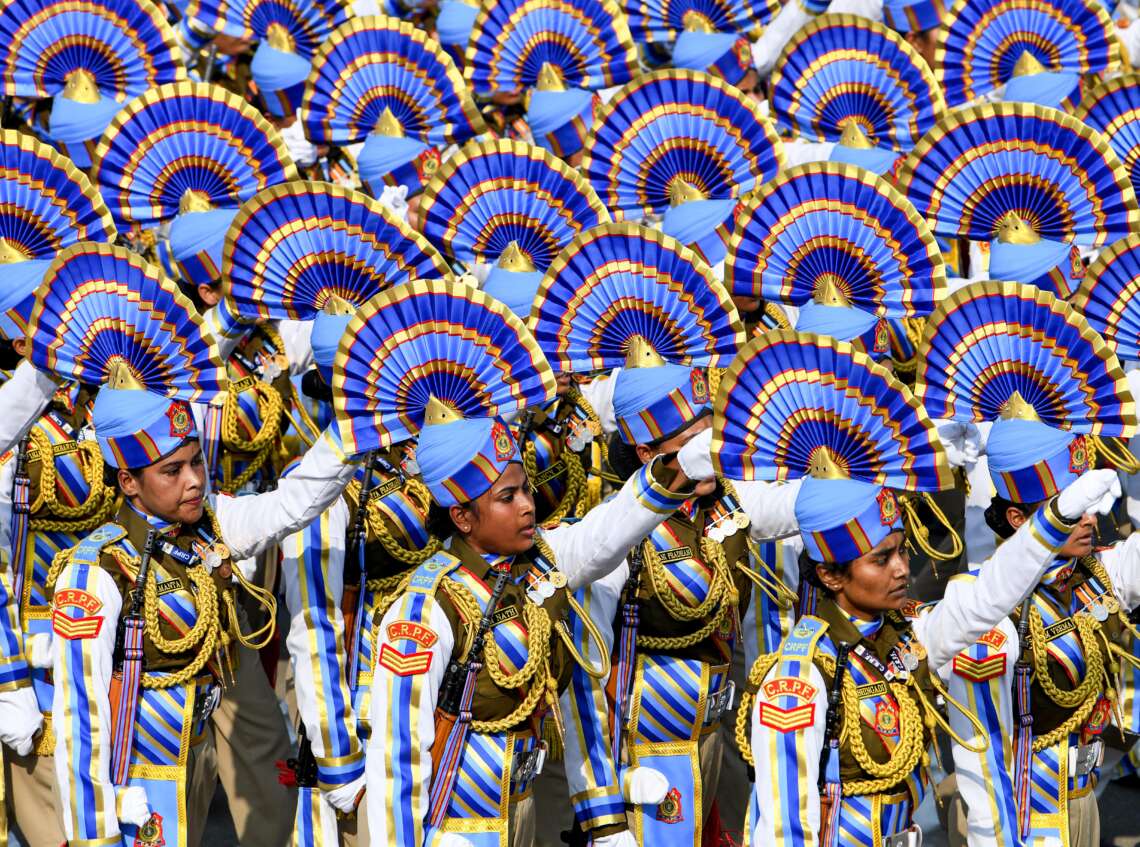
Among the contingents marching down the Kartavya Path on 76th Republic Day celebrations a 148-member all-women marching contingent of Central Reserve Police Force, led by Assistant Commandant Aishwarya Joy M showcased the spirit of ‘Nari Shakti’.

CRPF Mahila Contingent is made up of Women drawn from units deployed in various parts of the country for anti-insurgency, anti-Naxal and Law and Order duties and depicts a mini India as it consists of Mahila personnel from all parts of the Country.

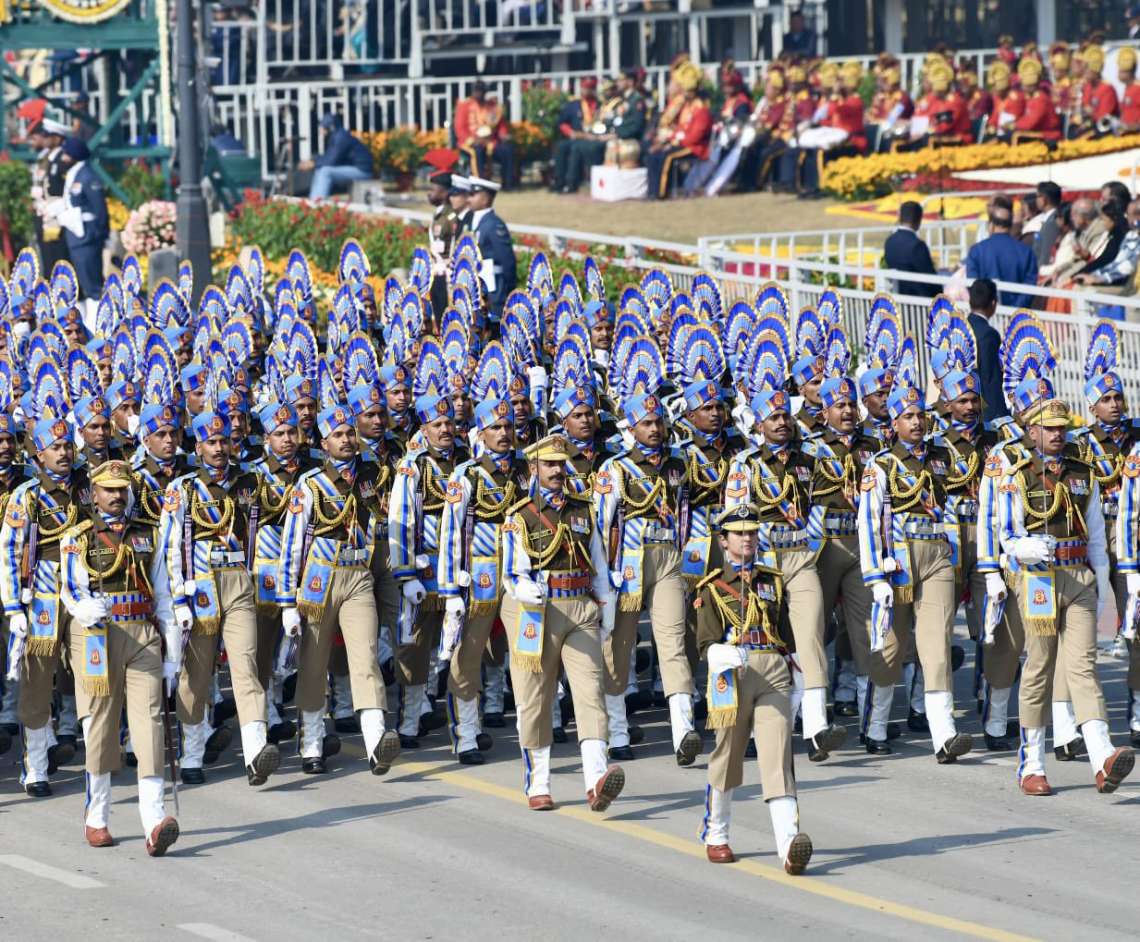
The marching contingent of the Railway Protection Force comprising 92 personnel approached the saluting dais playing the tune ‘Veer Sainik’ led by Divisional Security Commissioner Aditya.

The RPF contingent at the Republic Day Parade showcased vigilance, strength and service, reflecting its critical role in securing Indian Railways and contributing to national progress.

The force has 1087 fallen heroes so far who have sacrificed their lives at the altar of duty. Motto – ‘Seva Hi Sankalp’.

The Delhi Police All Women’s Band also participated in the Republic Day parade for the second time and is being led by Band Master Ruyangunuo Kense. The Delhi Police Brass and Pipe Band comprises four Women sub-inspectors and 64 Women Constables.

Delhi Police marching contingent which is 16 times winner of best-marching contingent was led by Additional Deputy Commissioner of Police Rishi Kumar Singh, IPS.
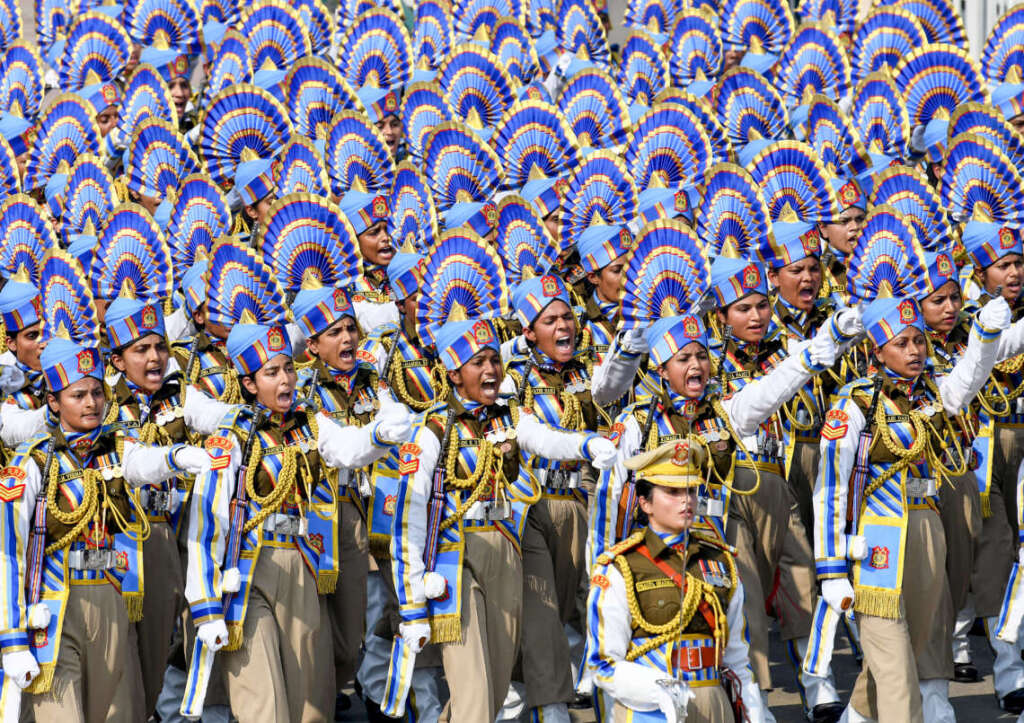
New Delhi, Jan 23 (ANI): All-Women CRPF Marching contingent during full dress rehearsal for Republic Day parade 2025, at Kartavya Path in New Delhi on Thursday. (ANI Photo/Rahul Singh)

Further came the contingent of Border Security Force with troops mounted on beautifully adorned camels in vibrant colours. These regal camels of the BSF or ‘Ships of the Desert’ are dependable companions in the inhospitable terrains of Rajasthan and the Rann of Kutch.

Interestingly, all the personnel in the contingent are more than six feet tall and sport similarly styled moustaches. People left surprised to witness the different dress items that are necessary to ceremonially dress camels and riders of the BSF.

Then came the Camel Mounted Band of the BSF, the only band of its kind in the world. Raised in 1986-87 by the Rajasthan Frontier of the BSF, the band is a permanent feature in the Desert and Marwar Festivals.

The massed Pipes and Drums Band of the Indian Army with 94 musicians the band drawn from 13 units left the audience amazed with their synchronized march-past with tunes of ‘JAI JANAM BHUMI’. (ANI)
Previous Story

Kashmir celebrates R-Day in style

Next Story

Army showcases Integrated Battlefield Surveillance

Previous Story

Kashmir celebrates R-Day in style

Next Story

Army showcases Integrated Battlefield Surveillance

Latest from -Top News

Pakistan Risks Overstretching Itself in Yemen War

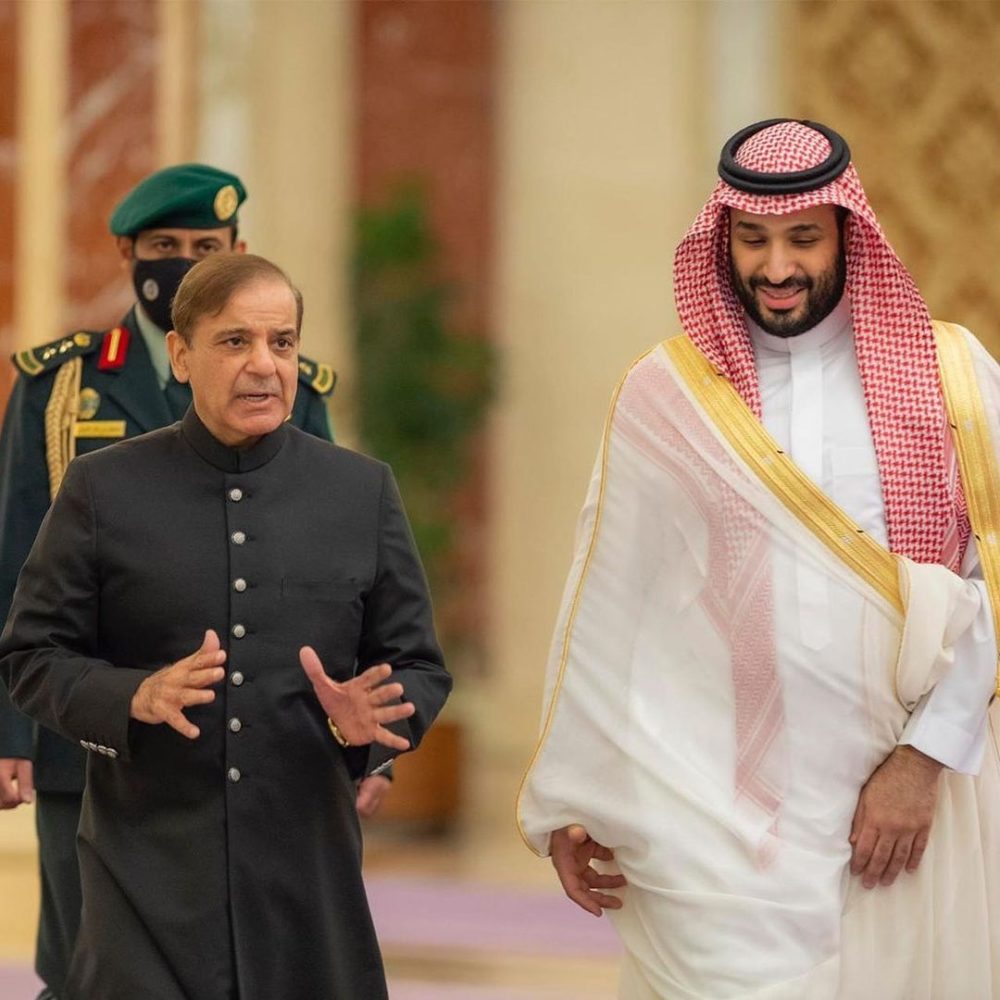
Pakistan’s expanding military role in Saudi Arabia amid the Yemen conflict could strain its defence resources and fragile finances…reports Asian Lite News Desk Pakistan’s military involvement in the war in Yemen may prove unsustainable because of mounting financial pressures and competing security demands, according to a new report. Islamabad’s growing military presence in Saudi Arabia risks stretching its defence resources while exposing the country to greater strategic and economic challenges. An article by Andrew Wilson in One World Outlook describes Pakistan’s involvement as a case of “fiscal and strategic overreach”, arguing that the country lacks the financial flexibility to sustain an expanded military commitment. Pakistan’s external finances depend heavily on an International Monetary Fund (IMF) programme, financial support from Gulf countries and remittances from Pakistani workers in the region. The report argues that deeper military involvement in the conflict could place additional pressure on these sources of financial stability. It also warns that deploying troops and military equipment abroad could weaken Pakistan’s capacity to address security challenges along its eastern border and deal with two domestic insurgencies. The move could also draw Islamabad into a conflict it has sought to approach cautiously. A Reuters report in May, citing Pakistani security and government sources, said Islamabad had deployed around 8,000 troops, a squadron of approximately 16 aircraft, mostly JF-17 fighter jets, two drone squadrons and a Chinese HQ-9 air-defence battery to Saudi Arabia. According to those sources, Riyadh was financing the deployment, with Pakistani personnel operating the equipment. The sources also said a confidential agreement contemplated the possibility of deploying up to 80,000 troops. Islamabad has not confirmed those figures, although it has acknowledged its military presence in Saudi Arabia, including the deployment of fighter jets at King Abdulaziz Air Base from April. The One World Outlook article argues that Saudi financial support can cover allowances and operating expenses but cannot easily replace military equipment needed elsewhere or resolve the political and strategic challenges of participating in the Yemen conflict. Pakistan’s defence budget is another concern. For the 2026-27 financial year, the federal government allocated PKR 3 trillion, or approximately $10.8 billion, to defence services. The allocation represents an 18 per cent increase from the original PKR 2.55 trillion provision and amounts to around 2.1 per cent of projected gross domestic product (GDP). Defence spending accounts for approximately 16 per cent of the federal government’s PKR 18.8 trillion expenditure. Military pensions are budgeted separately at PKR 822 billion, while debt servicing costs stand at approximately PKR 8 trillion, more than two-and-a-half times the defence allocation. The report argues that these competing financial obligations leave little room for additional military expenditure without placing further pressure on public finances. Pakistan’s reliance on IMF assistance also limits its fiscal flexibility. The country must meet the conditions attached to the programme, including a primary budget surplus target of 2 per cent of GDP and continued restraint on development spending. According to the article, these requirements make it difficult for Islamabad to finance an additional military commitment without compromising other budgetary priorities. Pakistan’s economic indicators offer limited reassurance. Economic growth for the 2025-26 financial year is estimated at between 3.6 and 3.7 per cent, while inflation reached approximately 10.3 per cent in September following an energy price shock. Foreign exchange reserves stood at around $21.5 billion at the end of September. Although this marks an improvement from the low levels recorded in 2023, the report notes that the reserves cover only a few months of imports. Financial assistance from Gulf partners remains central to Pakistan’s external stability. The article says Islamabad holds approximately $8 billion in Saudi deposits at its central bank. In July, the State Bank of Pakistan said Riyadh had extended the maturity of $5 billion in deposits to December 2028, easing the country’s immediate external financing requirements. A further $3 billion deposit was also extended in the spring. However, the article argues that these arrangements provide temporary relief rather than long-term financial independence, particularly as regional conflict threatens the stability of the Gulf economies on which Pakistan relies. The report concludes that Pakistan faces a difficult balance between supporting Saudi Arabia militarily and preserving the financial and military resources needed to address its domestic and regional challenges.

UK and Germany Ratify Kensington Treaty

Britain and Germany ratify the Kensington Treaty, agreeing new cooperation on AI, quantum research, defence and security while targeting investment, jobs and Russian hybrid threats…reports Asian Lite News Desk Britain and Germany

Economic tide is turning in Bangladesh

If there is one thing that can bring some comfort to the struggling Bangladeshi economy, it is good relations with India. Bangladesh should remember that Delhi’s backing, through easy supplies of essentials
Go toTop

Don't Miss

Kashmir celebrates R-Day in style

J&K is targeting to achieve 100 per cent compliance with

Indian Republic Day celebrations by IIW– Connecting British Indian Kids to their roots

IIW Inspiring Indian Women ‘Hum aur Hamara Desh’ – was