Arab League condemns Israel’s recognition of Somaliland, backing Somalia’s sovereignty and warning the move could destabilise the Red Sea and Horn of Africa region…reports Asian Lite News
The Arab League has issued a sharp rebuke to Israel’s decision to recognise Somaliland as an independent state, warning that the move threatens Somalia’s sovereignty and risks destabilising an already fragile region stretching from the Red Sea to the Horn of Africa.
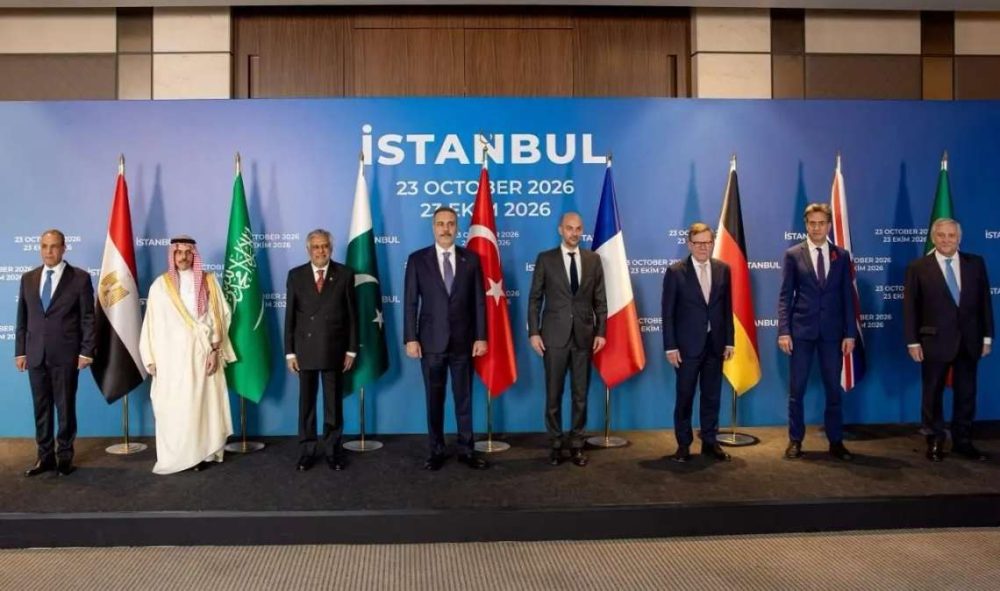
Meeting in an extraordinary session at the level of permanent representatives, the Council of the League of Arab States unanimously condemned Israel’s recognition of Somaliland, announced on December 26. The emergency meeting was chaired by Ambassador Hamad Obaid Al Zaabi, the United Arab Emirates’ Permanent Representative to the Arab League, underscoring the seriousness with which Arab states view the development.
The Council’s deliberations followed a detailed briefing by Somalia’s Permanent Representative to the Arab League, Ambassador Ali Abdi Awrai, who outlined Mogadishu’s objections and the broader regional implications of Israel’s decision. After hearing the presentation, the Council reaffirmed that Somaliland remains an integral part of the Federal Republic of Somalia under both the Charter of the League of Arab States and the United Nations Charter.
In its formal statement, the Council described Israel’s recognition as “invalid” and rejected it in its entirety, citing political, security and legal repercussions. It stressed that the step constituted a direct assault on Somalia’s sovereignty and territorial unity, and warned that it could undermine regional and international peace.
Arab League representatives went further, characterising the recognition as a threat to Arab national security and an attempt to redraw political realities through unilateral action. The Council called for coordinated legal, political and diplomatic measures to confront the move, while reiterating its full support for Somalia’s unity, independence and right to legitimate self-defence in accordance with international law.
Particular concern was expressed about the wider regional fallout. The Council warned that the decision could inflame tensions across the Red Sea corridor, the Gulf of Aden and the Horn of Africa — waterways critical to global trade and maritime security. It also rejected what it described as any attempt to use Somali territory as a platform for “aggressive plans” or to advance broader geopolitical agendas.
The Council reaffirmed its complete solidarity with the Somali government and rejected any action that interferes in Somalia’s internal affairs or undermines its territorial integrity. It urged the international community, as well as regional and global organisations, to refrain from any official or semi-official engagement with Somaliland authorities outside the framework of Somali sovereignty.
To that end, the Council tasked the Arab League’s General Secretariat with coordinating closely with the Somali government, the African Union and the United Nations to develop practical mechanisms aimed at preserving security and stability in the region. A comprehensive report on the issue is expected to be submitted at the League’s next ministerial-level session.
Israel, however, has defended its decision. On Friday, it formally recognised Somaliland as an independent country, becoming the first state to do so more than three decades after the territory declared independence from Somalia. The announcement was first reported by Israeli media and quickly drew international attention due to Somaliland’s strategic location along the Red Sea.
The declaration of mutual recognition was signed by Israeli Prime Minister Benjamin Netanyahu and Foreign Minister Gideon Sa’ar on behalf of Israel, and by Somaliland President Abdirahman Mohamed Abdullahi for the breakaway region.
Speaking by phone to President Abdullahi, Netanyahu described the recognition as a “historic moment” and signalled Israel’s intention to deepen ties across a range of sectors. He said the two sides would work together in economic development, agriculture and social development, and praised Somaliland’s leadership for promoting stability.
In a post on social media, Netanyahu confirmed that he had invited President Abdullahi to pay an official visit to Israel, an invitation the Somaliland leader reportedly accepted. Netanyahu also linked the recognition to Israel’s broader regional outreach, saying it was in keeping with the spirit of the Abraham Accords.
While Somaliland has enjoyed relative stability compared to much of Somalia, its claim to independence has not been recognised by the United Nations or the African Union