Calls for non-interference, long-term cooperation, and bilateral trust-building as region faces new challenges
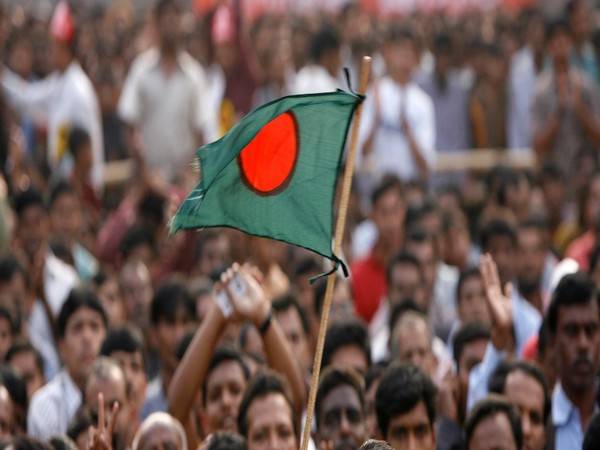
A senior leader of the Bangladesh Nationalist Party (BNP) has emphasised the need for India and Bangladesh to build a “mutually respectful and beneficial” relationship, urging both nations to avoid interference in each other’s internal affairs as they navigate a delicate regional environment.
Amir Khosru Mahmud Chowdhury, a BNP Standing Committee member and former Commerce Minister, made the comments during an interview with Asian News International (ANI) on Monday. He said the party wants bilateral relations with India to be neighbourly, stable and founded on equal respect.
“India is our neighbour. Obviously, we all expect the bilateral relation should be a neighbourly one—mutually respectful, mutually beneficial, and one of non-interference. These are the basis for any relationship. We want it to last and flourish. Both sides should pursue and work towards that,” Chowdhury said.
He acknowledged that both India and Bangladesh have harboured concerns over time but stressed that these should be addressed through open dialogue.
“There have been concerns from both sides. We have to bring them to the table—some short-term, some mid-term, and some long-term. But the foundation must be based on mutual respect and understanding,” he added.
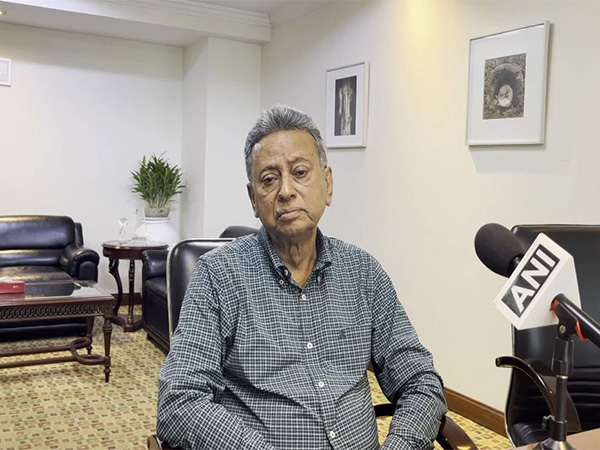
The BNP, currently the principal opposition to the interim government led by Nobel Laureate Muhammad Yunus, has signalled its willingness to engage constructively with India, especially on matters of national security. Chowdhury assured that if BNP were to return to power, Indian security concerns would be addressed seriously.
“Bangladesh’s priority is to become a prosperous, developed country. BNP has made it absolutely clear that our land will never be used as a springboard for insurgents or terrorists. Both sides should maintain this principle. Everything is mutual,” he said.
Responding to Indian concerns about the treatment of minorities in Bangladesh, Chowdhury dismissed the idea that it should be a cross-border issue. He insisted that such matters are internal to Bangladesh and best handled by its own institutions.
“Why should it be an Indian concern, I don’t understand. It is the concern of the Bangladesh government and its people. We are one of the most harmonious societies in the region with a strong record of coexistence across religion, language, and culture,” he said.
He further argued that Bangladeshi nationalism is inclusive, adding, “Whoever lives in the territory of Bangladesh is an equal citizen. We never discriminate. We don’t concern ourselves with India’s internal affairs. Likewise, they should not worry about ours.”
On the issue of anti-India rhetoric that sometimes surfaces in Bangladeshi political discourse, the BNP leader played it down, characterising it as typical political language that appears in both countries.
“In politics, rhetoric is not uncommon. It happens on both sides. Politicians tend to use it to appeal to their own constituency. But policy is what matters. Rhetoric is never good for bilateral trust. Mutual respect and non-interference are key,” Chowdhury said.
He also called for strengthening overall bilateral ties, especially trade, noting that healthy political relations between Dhaka and New Delhi could lead to increased economic cooperation.
“If you have a really good bilateral relationship, it encourages all sorts of positive developments—trade included,” he said.
The interview comes at a time of significant political transition in Bangladesh. Prime Minister Sheikh Hasina was ousted from power last year following a student-led uprising. She fled to India in August 2024, and a caretaker administration, headed by Nobel Peace Prize winner Muhammad Yunus, has since taken over governance.
In a development that has drawn international attention, the interim government recently placed a legal ban on activities linked to Hasina’s Awami League party. Chowdhury declined to comment extensively, stating that the matter is currently under judicial review.
“It is going through a legal process. It’s a sub-judice matter. Let the judiciary decide. We believe in an independent judiciary and will abide by its ruling,” he said.
Looking at the broader picture, Chowdhury underlined the importance of stability in the South Asian region. With global tensions rising and economies under pressure, he called on leaders in the subcontinent to prioritise peace and economic development over conflict.
“Stability in South Asia is very important. It should be the top priority. That’s the only way to lift people out of poverty and bring real change. War is the last thing any of us want. Escalation hurts the entire region. It is not good for any country,” he said.
As Bangladesh navigates a new political era and recalibrates its regional relationships, the BNP’s position reflects a blend of nationalism and diplomatic pragmatism. With elections expected in 2026, the party’s emphasis on sovereignty, judicial independence, and regional peace may serve as key messaging in its attempts to re-establish political relevance and reframe Bangladesh’s foreign policy posture.