March 16, 2025
4 mins read

Ethiopia and Eritrea on path to war, Tigray officials warn 

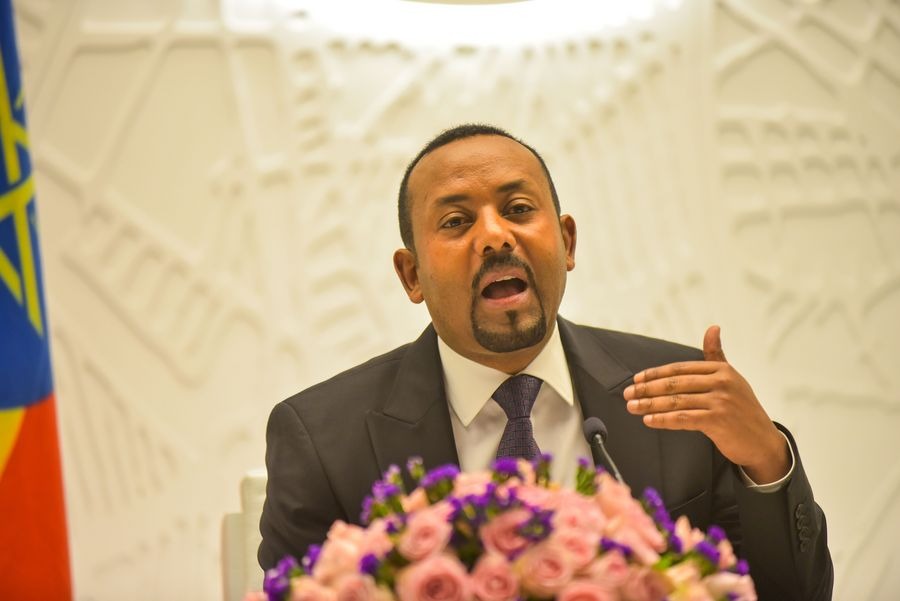
Analysts said that direct clashes between two of Africa’s largest armies would signal the death blow for a historic rapprochement for which Ethiopia’s PM Ahmed won the Nobel Peace Prize in 2019 and could draw in other regional powers  

Ethiopia and Eritrea could be headed toward war, officials in a restive Ethiopian region at the center of the tensions have warned, risking another humanitarian disaster in the Horn of Africa. 

Analysts said that direct clashes between two of Africa’s largest armies would signal the death blow for a historic rapprochement for which Ethiopia’s Prime Minister Abiy Ahmed won the Nobel Peace Prize in 2019 and could draw in other regional powers. 

It would also likely create another crisis in a region where aid cuts have complicated efforts to assist millions affected by internal conflicts in Sudan, Somalia, and Ethiopia. 

“At any moment, war between Ethiopia and Eritrea could break out,” Gen. Tsadkan Gebretensae, a vice president in the interim administration in Ethiopia’s Tigray region, wrote in Africa-focused magazine the Africa Report on Monday. 

A 2020-2022 civil war in Tigray between the Tigray People’s Liberation Front, or TPLF, and Ethiopia’s central government killed hundreds of thousands of people. Fears of a new conflict are linked to the TPLF’s split last year into a faction that now administers Tigray with the blessing of Ethiopia’s federal government and another that opposes it. 

On Tuesday, the dissident faction, which Tsadkan accused of seeking an alliance with Eritrea, seized control of the northern town of Adigrat. Getachew Reda, the head of Tigray’s interim administration, asked the government for support against the dissidents, who deny ties to Eritrea. 

“There is clear antagonism between Ethiopia and Eritrea,” Getachew told a news conference on Monday.  “What concerns me is that the Tigray people may once again become victims of a war they don’t believe in.” Ethiopia’s federal government has not commented on the tensions.  

Eritrea’s information minister dismissed Tsadkan’s warnings as “war-mongering psychosis.” However, according to UK-based Human Rights Concern-Eritrea, Eritrea ordered a nationwide military mobilization in mid-February. 

Two diplomatic sources and two Tigrayan officials said Ethiopia deployed troops toward the Eritrean border this month. Payton Knopf and Alexander Rondos, the former US and EU envoys to the region, say the prospects of a new war are real. 

Meanwhile, Ethiopian Prime Minister Abiy Ahmed has called on African Union (AU) members to intensify their collective support in elevating the Africa Centres for Disease Control and Prevention (Africa CDC) as a premier public health institution.  

Abiy made the remarks in a statement after meeting with Africa CDC Director-General Jean Kaseya on Friday at the headquarters of the AU’s specialised healthcare agency in Addis Ababa, the Ethiopian capital. 

The Prime Minister said the Africa CDC’s advanced laboratory facilities and research capabilities play a crucial role in disease prevention and in coordinating continental responses to epidemics and pandemics. 

Noting that the East African country is “proud to host the Africa CDC”, Abiy called on African countries to bolster their collective commitments toward advancing the Africa CDC as a premier public health agency. 

“It is incumbent upon us to strengthen this institution in collaboration with partners. I call upon fellow African leaders to join efforts in establishing our continental public health agency as a premier institution, fully committed to advancing health across the continent,” he said. 

The Africa CDC, which was established in January 2016 by African leaders and officially launched one year later, has gained acclaim for its contribution to bettering public healthcare in Africa. The Chinese-built Africa CDC headquarters in the southern suburb of Addis Ababa, which is regarded as a flagship project in China-Africa public health cooperation, was officially inaugurated in January 2023, Xinhua news agency reported. 

In November 2023, the Africa CDC unveiled a China-aided reference laboratory at its headquarters. The agency said the completion of the laboratory marks a milestone in its pursuit of a strong continental public health institution that will support AU members in improving disease diagnosis, surveillance, and outbreak response. 

After meeting with the Ethiopian Prime Minister, Kaseya underscored the agency’s resolve to drive sustainable solutions for a healthier Africa. 

“At the Africa CDC, we look forward to continuing to work closely with Ethiopia to tackle major health challenges, fortify systems, and drive sustainable solutions for a healthier Africa. Together, we are building resilience and safeguarding the future,” Kaseya said. 

As the African continent battles various disease outbreaks and public health challenges, including the ongoing mpox outbreak, the Africa CDC has emerged as a major public health agency supporting public health initiatives on the continent and strengthening Africa’s capacity to detect, prevent, control, and respond quickly and effectively to disease threats. 
Previous Story

Southern African bloc ends military mission in DR Congo 

Next Story

EU announces a $5 bn investment in South Africa  

Previous Story

Southern African bloc ends military mission in DR Congo 

Next Story

EU announces a $5 bn investment in South Africa  

Latest from -Top News

Pakistan Risks Overstretching Itself in Yemen War

Pakistan’s expanding military role in Saudi Arabia amid the Yemen conflict could strain its defence resources and fragile finances…reports Asian Lite News Desk Pakistan’s military involvement in the war in Yemen may prove unsustainable because of mounting financial pressures and competing security demands, according to a new report. Islamabad’s growing military presence in Saudi Arabia risks stretching its defence resources while exposing the country to greater strategic and economic challenges. An article by Andrew Wilson in One World Outlook describes Pakistan’s involvement as a case of “fiscal and strategic overreach”, arguing that the country lacks the financial flexibility to sustain an expanded military commitment. Pakistan’s external finances depend heavily on an International Monetary Fund (IMF) programme, financial support from Gulf countries and remittances from Pakistani workers in the region. The report argues that deeper military involvement in the conflict could place additional pressure on these sources of financial stability. It also warns that deploying troops and military equipment abroad could weaken Pakistan’s capacity to address security challenges along its eastern border and deal with two domestic insurgencies. The move could also draw Islamabad into a conflict it has sought to approach cautiously. A Reuters report in May, citing Pakistani security and government sources, said Islamabad had deployed around 8,000 troops, a squadron of approximately 16 aircraft, mostly JF-17 fighter jets, two drone squadrons and a Chinese HQ-9 air-defence battery to Saudi Arabia. According to those sources, Riyadh was financing the deployment, with Pakistani personnel operating the equipment. The sources also said a confidential agreement contemplated the possibility of deploying up to 80,000 troops. Islamabad has not confirmed those figures, although it has acknowledged its military presence in Saudi Arabia, including the deployment of fighter jets at King Abdulaziz Air Base from April. The One World Outlook article argues that Saudi financial support can cover allowances and operating expenses but cannot easily replace military equipment needed elsewhere or resolve the political and strategic challenges of participating in the Yemen conflict. Pakistan’s defence budget is another concern. For the 2026-27 financial year, the federal government allocated PKR 3 trillion, or approximately $10.8 billion, to defence services. The allocation represents an 18 per cent increase from the original PKR 2.55 trillion provision and amounts to around 2.1 per cent of projected gross domestic product (GDP). Defence spending accounts for approximately 16 per cent of the federal government’s PKR 18.8 trillion expenditure. Military pensions are budgeted separately at PKR 822 billion, while debt servicing costs stand at approximately PKR 8 trillion, more than two-and-a-half times the defence allocation. The report argues that these competing financial obligations leave little room for additional military expenditure without placing further pressure on public finances. Pakistan’s reliance on IMF assistance also limits its fiscal flexibility. The country must meet the conditions attached to the programme, including a primary budget surplus target of 2 per cent of GDP and continued restraint on development spending. According to the article, these requirements make it difficult for Islamabad to finance an additional military commitment without compromising other budgetary priorities. Pakistan’s economic indicators offer limited reassurance. Economic growth for the 2025-26 financial year is estimated at between 3.6 and 3.7 per cent, while inflation reached approximately 10.3 per cent in September following an energy price shock. Foreign exchange reserves stood at around $21.5 billion at the end of September. Although this marks an improvement from the low levels recorded in 2023, the report notes that the reserves cover only a few months of imports. Financial assistance from Gulf partners remains central to Pakistan’s external stability. The article says Islamabad holds approximately $8 billion in Saudi deposits at its central bank. In July, the State Bank of Pakistan said Riyadh had extended the maturity of $5 billion in deposits to December 2028, easing the country’s immediate external financing requirements. A further $3 billion deposit was also extended in the spring. However, the article argues that these arrangements provide temporary relief rather than long-term financial independence, particularly as regional conflict threatens the stability of the Gulf economies on which Pakistan relies. The report concludes that Pakistan faces a difficult balance between supporting Saudi Arabia militarily and preserving the financial and military resources needed to address its domestic and regional challenges.

UK and Germany Ratify Kensington Treaty

Britain and Germany ratify the Kensington Treaty, agreeing new cooperation on AI, quantum research, defence and security while targeting investment, jobs and Russian hybrid threats…reports Asian Lite News Desk Britain and Germany
Go toTop

Don't Miss

Humanitarian aid remains priority in Ethiopia

The UN body also said although humanitarian actors are now

Ethiopian govt to send funds to conflict-affected Tigray region

Ahmed met leaders of the Tigray People’s Liberation Front (TPLF)