By Soniya Kirpalani
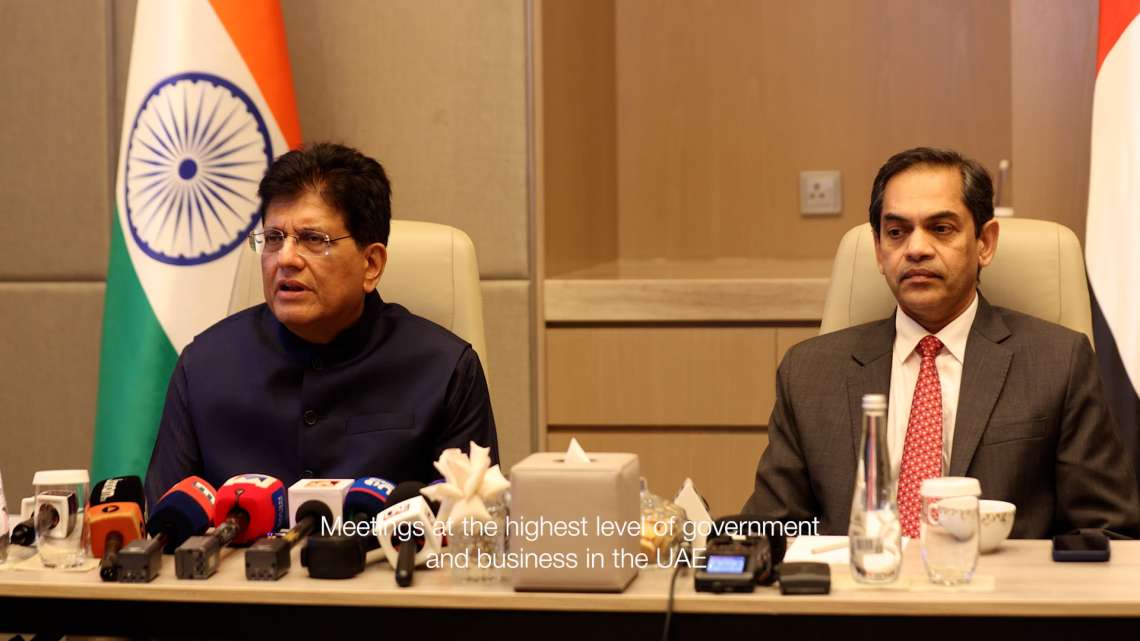
Shri Piyush Goyal’s recent two-day whirlwind visit to the United Arab Emirates was not just another trade mission. It was a signal – that India and the UAE are reshaping their partnership in ways that go far beyond traditional commerce. In the minister’s words – “We have reset our targets… convinced that the relationship is poised for another big leap” – offer a roadmap to how India and the Gulf could redefine economic ties in an era of shifting global alignments.

It has been a while that India-UAE corridor was established and both partners have already proven that when political will and business pragmatism converge, results follow quickly. The Comprehensive Economic Partnership Agreement (CEPA), signed in 2022, nearly doubled bilateral merchandise trade within two years. Now, Goyal has placed a bolder marker: $100 billion in non-oil, non-gold trade within 3–4 years. This is more than a trade statistic; it reflects the UAE’s growing confidence in India as the world’s fastest-growing large economy, and India’s trust in the UAE’s role as a capital-rich, globally connected hub.
So, what makes this target credible is the structural shift both economies are undergoing. India needs massive foreign investment in infrastructure, technology, and green energy. The UAE needs secure food corridors, skilled human capital, and reliable trade partners beyond hydrocarbons. Together, the pieces fit.

Bharat Mart and the MSME Revolution:
Perhaps the most transformative initiative unveiled is Bharat Mart, a permanent exhibition and warehousing hub for Indian goods in Dubai’s Jebel Ali Free Zone. It is, in effect, a Dragon Mart for India. Over 9,000 companies have already expressed interest, and once operational by 2027, it will give Indian MSMEs – from textile weavers to fintech startups – a launchpad to Africa, the Middle East, and Europe. For decades, India’s small enterprises struggled to internationalize. Bharat Mart promises to change that, turning the UAE into India’s extended marketplace. This isn’t charity – it is strategic. The UAE gains diversified supply chains and a stronger role as a re-export hub; India gains scale for its MSMEs and a chance to turn small exporters into global brands.
Technology: Where AI Meets Oil Wealth:
In a world obsessed with artificial intelligence, the UAE has quietly positioned itself as a serious contender – not just a consumer of technology, but as an investor and incubator. Piyush Goyal’s meeting with Mr. Peng Xiao of G42, the Abu Dhabi-based AI powerhouse, underscores this. “We could be looking at serious collaborations in technology sectors,” the minister said, pointing to genomics, AI, and data centers.
This matters because India produces talent, but often loses it to the West. The UAE has capital and vision, but needs scale and skill. Together, they could create a new AI corridor – one where Bangalore engineers and Abu Dhabi investors co-develop the tools of tomorrow. In many ways, it’s a partnership designed to fill the vacuum left by a more inward-looking Silicon Valley.
Bilateral Talent Share Opportunity:
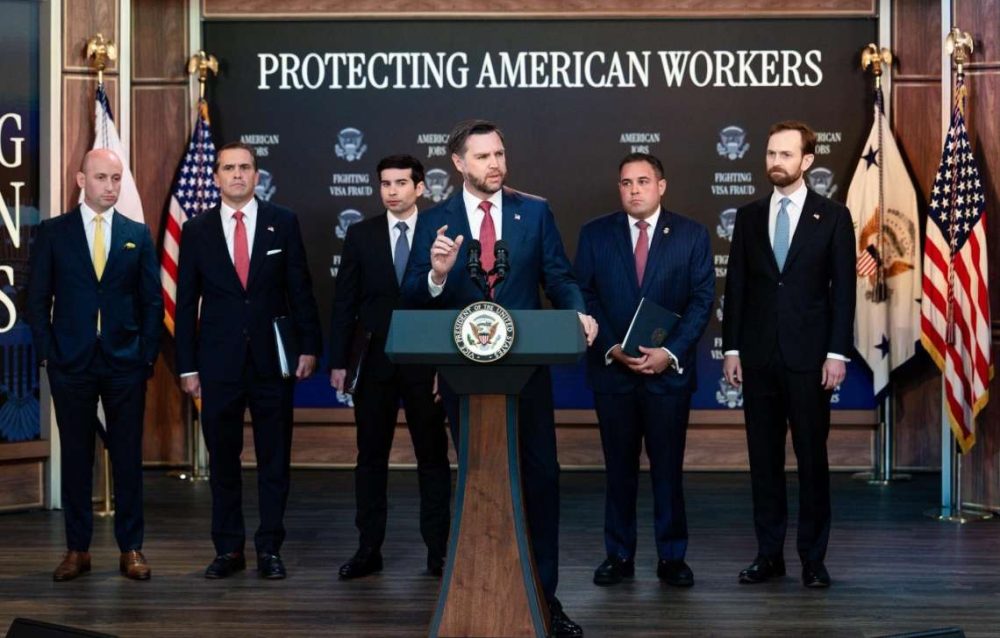
The tightening of U.S. immigration and the new H1B visa taxation will slow the flow of Indian talent. This creates opportunity in the GCC States, especially UAE, which is already a magnet for Indian skilled workers. UAE is focused in diversification, developing sectors in AI, green energy, fintech, healthcare and logistics. These economies need millions of engineers, data scientists, healthcare professionals, and skilled technicians – exactly the demographic India produces in abundance. By creating bilateral job corridors, talent visas, and co-owned innovation hubs, the Gulf can not only fill its own human capital gap and create talent mobility= a central pillar of the India–UAE growth story.
Food Security and Gujarat’s Food Park:
Food security is another anchor. The UAE imports nearly 90% of its food. India, one of the world’s largest producers, has agreed to develop a food corridor, starting with a food park in Gujarat. Backed by a $2 billion Emirati commitment, this project will secure supplies for the Gulf while creating jobs for Indian farmers and youth. Goyal called it “a mission mode project” – and if implemented well, it will symbolize the shift from transactional trade to symbiotic resilience.
Healthcare: A Hospital for the Diaspora
Perhaps the most human story to emerge from this visit is the India–UAE Friendship Hospital being set up in Dubai. Dedicated to Indian expatriate workers, many of whom cannot afford high-quality care, the hospital is funded by philanthropists with land support from the UAE. “It will provide high-quality healthcare, particularly for workers from humble backgrounds,” Goyal confirmed. In this gesture lies the essence of people-to-people diplomacy: economic growth must trickle down to dignity for workers.
Geopolitics: The IMEC Factor:
Zoom out, and the economic story has geopolitical undertones. The India–Middle East–Europe Economic Corridor (IMEC), launched at the G20 in New Delhi, is more than a transport plan. It is a bet on a multipolar world where Gulf ports, Indian talent, and European markets are seamlessly linked. Goyal admitted that the UAE is already aligning its infrastructure to plug into IMEC. If successful, this corridor could rival other trade blocs and cement India–UAE as co-architects of a new economic geography.

The Road Ahead:
The narrative of India–UAE ties has matured. It is no longer about oil barrels and remittances. It is about AI and MSMEs, food and healthcare, talent and infrastructure. As Goyal put it: “The partnership stands on the pillars of innovation, investment and sustainable development.”
The challenge now is execution. Targets must translate into trade flows, memoranda into manufacturing, and MOUs into jobs. If Bharat Mart opens on schedule, if the Gujarat food park delivers value, if AI collaborations produce real products, then the $100 billion target will look modest.
In a world of fragile supply chains and contested trade routes, India and the UAE are betting on something rare – trust and shared growth. If they succeed, the partnership could well become the template for Asia–Gulf cooperation in the 21st century.