India begins exploratory talks with Israel Weapon Industries for the world’s first computerised rifle system, aligning next-generation firepower with its rapid drive toward infantry modernisation and self-reliance….reports Asian Lite News
India has opened preliminary discussions with Israel Weapon Industries (IWI) to explore the integration of the world’s first computerised rifle-fire control system, marking a potentially significant leap in the country’s small-arms modernisation effort. The move comes at a time when the Ministry of Defence is pushing through major procurement reforms, accelerating indigenous production, and preparing the Indian Army for multi-domain warfare under tighter, technology-driven timelines.
The revolutionary Arbel system—developed by IWI and described as the first fully computerised fire-control system for small arms—is at the centre of these early negotiations. IWI CEO Shuki Schwartz, in an interview with ANI, confirmed that both sides had begun “the first conversations” on integrating the Arbel platform for Indian forces. Though still in exploratory stages, the talks reflect India’s growing interest in next-generation infantry weapons designed to enhance accuracy, lethality, and decision-making on increasingly complex battlefields.
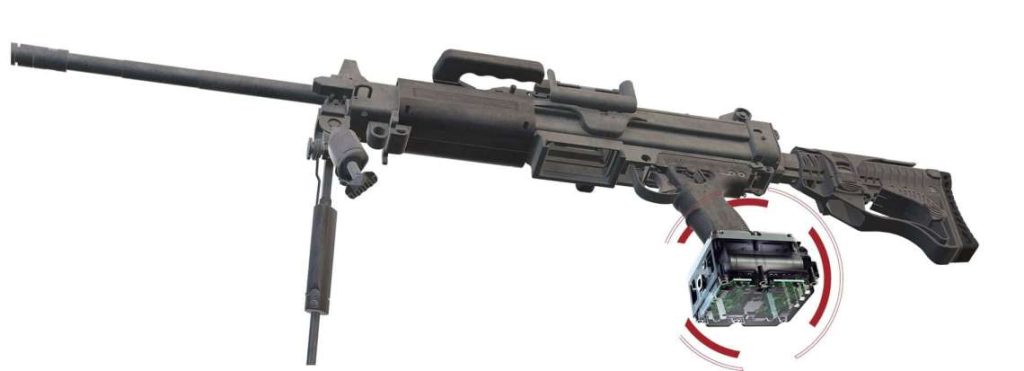
The Arbel system brings together advanced sensors, real-time ballistic computation, and automated target-acquisition capabilities, combining them into a compact onboard suite that analyses the shooter’s behaviour with remarkable speed. Using a Micro Electro Mechanical System (MEMS) algorithm, the platform evaluates weapon movement, trigger pressure, and aiming stability within milliseconds to determine the precise moment when a shot has the highest probability of hitting its mark.
Uniquely, once a soldier fires the first round and continues to hold the trigger, the system takes over, releasing subsequent shots only when accuracy parameters meet its computed threshold. This significantly boosts hit probability in urban combat, close-quarter engagements, and rapidly evolving tactical situations. IWI says the platform can be mounted on any small-arms system and does not require a dedicated optical sight to function, making it potentially flexible for integration across India’s diverse rifle inventory.
India has long been a major user of IWI weapons. From the Tavor TAR-21 and X95 assault rifles to the Galil sniper family and Negev NG-7 light machine guns, Israeli small arms have become standard equipment across multiple Indian armed and paramilitary formations. In recent years, India has signed contracts for thousands of Negev LMGs to reinforce frontline firepower, reflecting the depth and longevity of the Indo-Israeli defence partnership.
Schwartz said the relationship has strengthened significantly over the past two decades, particularly since IWI became one of the earliest foreign manufacturers to embrace the Government of India’s Make in India initiative. This collaboration has expanded through technology transfer, domestic manufacturing, and the establishment of PLR Systems—a joint venture with the Adani Group specialising in light-weapons production for the Ministry of Defence, the Ministry of Home Affairs, and other security agencies.
“We have seen the growth over the years and are proud to be among the first to adopt Make in India,” Schwartz said. “We are already producing barrels in India and remain fully open to deeper technology cooperation as required.” He added that while export potential exists, the company’s immediate focus is on India’s vast domestic defence market, which he described as large enough to accommodate multiple suppliers without competition becoming restrictive.
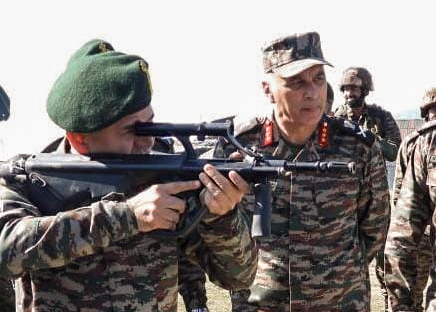
The deepening collaboration comes against the backdrop of a landmark procurement: a ₹27,770-crore contract for 4.25 lakh Close Quarter Battle (CQB) carbines, announced earlier this year. The rifles—intended to replace ageing carbine platforms across infantry units—will begin induction in 2026 under stringent delivery timelines issued by the Indian Army. According to Lieutenant General Ajay Kumar, Director General Infantry, manufacturers have been mandated to deliver the entire consignment within two years, underscoring the urgency driving the Army’s decade-long transformation plan.
The CQB contract has been split between Bharat Forge, which will supply 60 per cent of the order, and PLR Systems, which will deliver the remaining 40 per cent. The procurement aligns with the Atmanirbhar Bharat vision by combining large-scale domestic production with strategic international partnerships—an approach that has increasingly defined India’s small-arms roadmap.
Lt Gen Kumar noted that the Army’s long-term transformation hinges on equipping the infantry with agile, modular, and technologically advanced weapons suited for multi-domain environments. “Wars are not fought with borrowed weapons,” he said, reaffirming the need for self-reliance and modern battlefield readiness.
Against this backdrop, the exploratory discussions around IWI’s computerised Arbel system highlight India’s growing appetite for cutting-edge soldier-centric technologies. If integrated, it would represent one of the most advanced fire-control solutions ever deployed by Indian forces, marking another milestone in the country’s continuing efforts to reshape the future battlefield.