The decision aligns with the broader trajectory of normalisation seen throughout the year…reports Asian Lite News
India has quietly resumed issuing tourist visas to Chinese citizens worldwide, marking one of the most substantial confidence-building steps since the two countries’ ties deteriorated following the deadly Galwan Valley clash in 2020. The move formally ends a five-year suspension and comes amid a broader diplomatic thaw that has gathered momentum through 2025.
According to officials familiar with the development, the resumption follows an internal directive issued in July this year advising missions to restart tourist visa services for Chinese nationals. While New Delhi has not publicly announced the change, multiple sources confirmed that Indian embassies and consulates have begun processing applications globally.
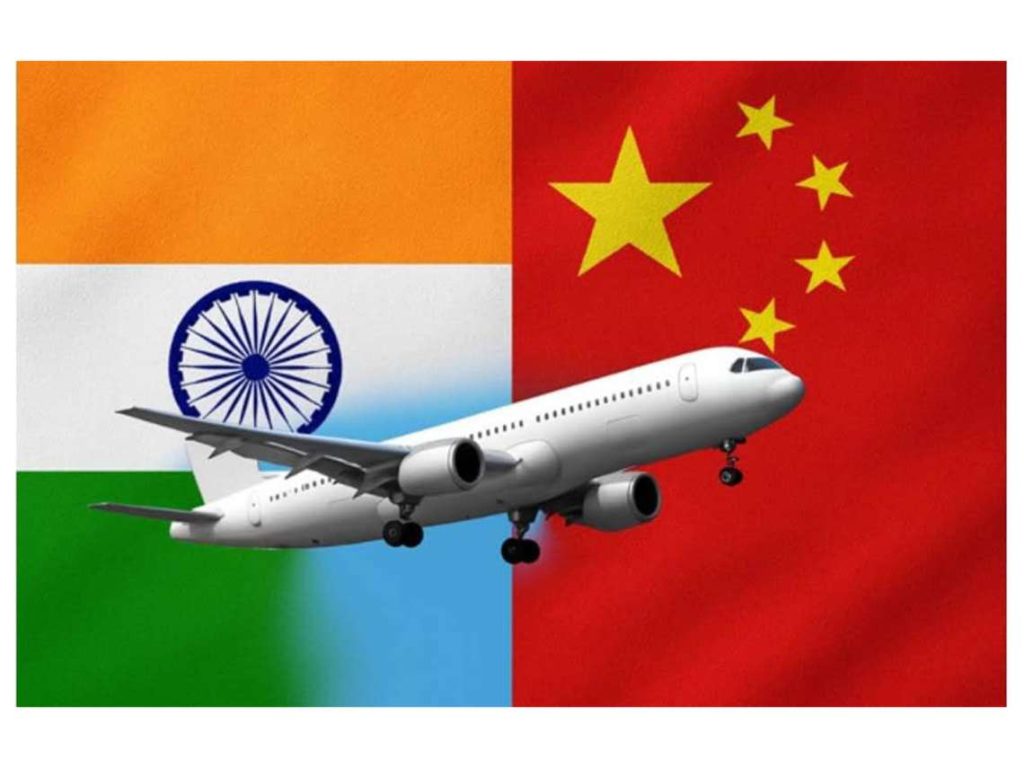
The decision aligns with the broader trajectory of normalisation seen throughout the year. The first major breakthrough came in January 2025, when India and China reached an agreement to restore direct passenger flights, frozen since early 2020. The pact was interpreted as a mutual willingness to rebuild people-to-people links and reduce friction through sustained engagement.
Another symbolic milestone arrived in June 2025, when the Kailash Mansarovar Yatra—a pilgrimage deeply significant to Indians—resumed after a five-year halt. The first group of Indian yatris crossed into Tibet, signalling that Beijing was ready to prioritise cultural and religious exchanges alongside diplomatic processes.
This re-opening occurred against the backdrop of multiple high-level political messages marking the 75th anniversary of diplomatic ties on April 1. President Droupadi Murmu and Prime Minister Narendra Modi exchanged greetings with President Xi Jinping and Premier Li Qiang, reaffirming a joint commitment to stability and constructive engagement. While largely ceremonial, the messages helped set the tone for a more structured diplomatic revival in the months that followed.
Momentum accelerated during External Affairs Minister S Jaishankar’s July visit to Beijing—his first since 2019—where he stated that India-China relations were “gradually moving in a positive direction” and that recent steps created a “fundamental basis for mutual strategic trust.” Discussions focused on restoring equilibrium in bilateral ties, which had been overshadowed by the standoff along the Line of Actual Control.
In August, Chinese Foreign Minister Wang Yi travelled to New Delhi for a two-day trip and met National Security Adviser Ajit Doval and Jaishankar. Talks centred on de-escalation along the border, confidence-building measures, and establishing a roadmap for full normalisation. Officials from both sides described the meetings as constructive and pragmatic, underscoring a shared recognition that prolonged confrontation benefits neither nation.
These exchanges paved the way for Prime Minister Modi’s landmark visit to China on August 31 for the Shanghai Cooperation Organisation Summit in Tianjin—his first in seven years. During a bilateral meeting on the sidelines, Modi and Xi reiterated that India and China must view each other as “partners rather than rivals.” The summit signalled a clear effort to rebuild top-level political trust and reduce the hostility that has defined relations since 2020.
The revival of civil aviation links came soon after. On November 10, the Consul General of India in Shanghai, Pratik Mathur, personally welcomed the first batch of passengers arriving from New Delhi as direct commercial flights officially resumed after five years. The Consulate posted on X: “Fair Winds & Clear Skies! India emerges as a Global Hub as people-to-people ties grow stronger,” marking a celebratory return to normalcy.
The cumulative effect of these steps—resuming visas, restoring flights, reviving the Mansarovar Yatra, and restarting entrenched diplomatic channels—suggests that both nations are working toward steady, incremental normalisation. While structural challenges remain, particularly on the boundary issue, 2025 has seen the most significant progress in India-China ties in half a decade