India argues that the Assembly’s failure to curb the veto demonstrates that a piecemeal approach to Council reform is ineffective….reports Asian Lite News
India says the UN Security Council’s veto monopoly by the five permanent members must change — but the de facto veto stalling reforms should end first.
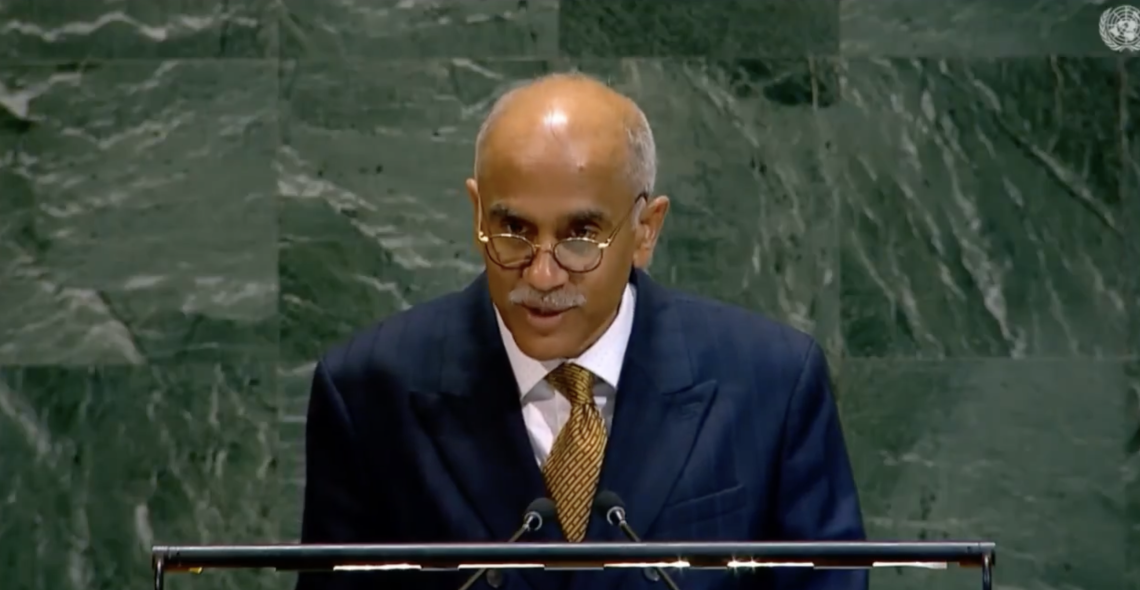
India’s Permanent Representative P Harish said that in the reform process known as the Inter-Governmental Negotiations (IGN), “the consensus argument has effectively become a disguised de facto veto”.
“This approach is blocking progress [and] consequently, no concrete outcomes could be achieved under the IGN framework for Security Council reform”, he told the General Assembly during a meeting on the Council veto.
For 17 years, the negotiations for reforming the Council, from expanding permanent membership to the veto powers, have been blocked by the obstinacy of a small group of members who have used procedural manoeuvres to prevent the adoption of a negotiating text to move the process.
Calling themselves Uniting for Consensus (UfC), the group led by Italy and includes Pakistan, has opposed the adoption of a negotiating text unless there is consensus on reform.
Without a negotiating text setting the agenda and the points for discussion, there can be no way for getting to a consensus in the first place.
Harish pointed out that the resolution setting up the IGN “spelt out that the guiding principle for member states in their endeavours towards a solution is the widest possible political acceptance and not consensus”.
On the use of veto by the permanent members, he referred to the 2022 Assembly resolution on the matter and said it has not stopped permanent members from using their veto powers.
It does not deal comprehensively with veto issue, he added.
In an attempt to curb the use of vetoes, the resolution requires the permanent members casting a veto to come before the Assembly within ten days to explain their action.
Since the resolution was adopted, “the veto has been exercised on 20 occasions”, Harish said.
Because of vetoes in the Council, the UN has not been able to deal with major issues like the Ukraine War so far, and for two years with the Gaza conflict till this week.
Assembly President Annalena Braerbock said, “Inaction, or the use of the veto in the Council, means real people, watching in real time, may question the credibility and legitimacy of not only the Security Council, but of the UN in its entirety”.
Harish said that the failure of the Assembly’s initiative to curb the use of veto shows that a piecemeal approach towards Council reforms won’t work.
“India, therefore, reiterates its call for a comprehensive approach towards Security Council reforms”, he said.