Abu Dhabi pushes to unlock untapped India–UAE trade potential as government and family-business leaders deepen cooperation across technology, clean energy, investment and global expansion….reports Asian Lite News
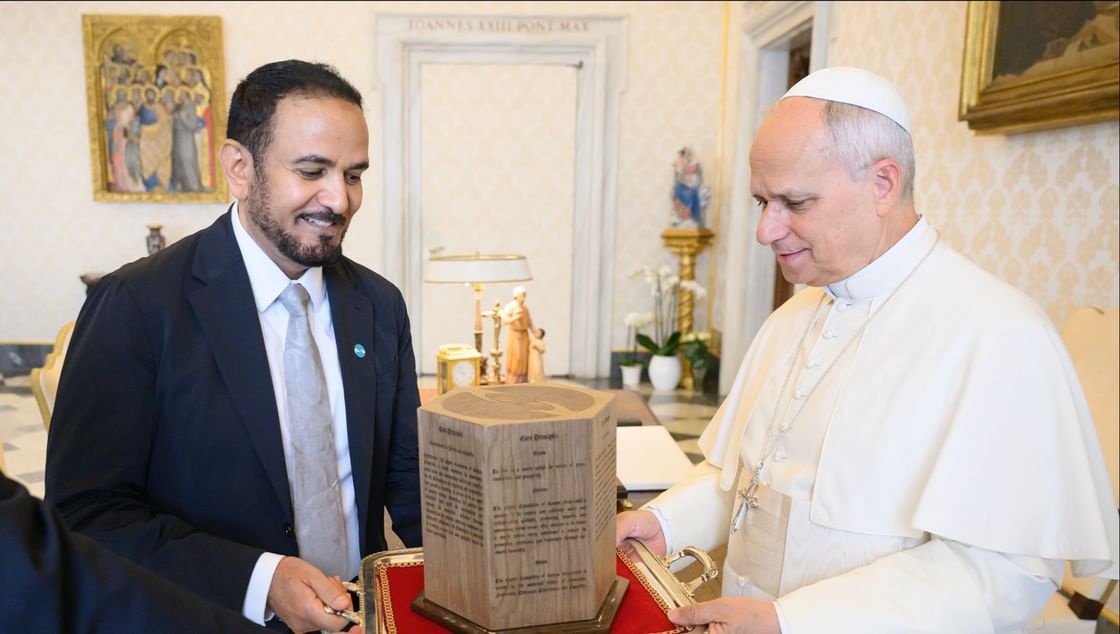
Abu Dhabi officials have said the full potential of India–UAE trade is still far from realised, emphasising that the economic partnership between the two countries is gaining momentum and poised for significant expansion across high-growth sectors. Speaking during a visit to India as part of a wider Abu Dhabi economic delegation, Hamad Sayah Al Mazrouei, Undersecretary of the Abu Dhabi Department of Economic Development (ADDED), said bilateral trade had strengthened rapidly in recent years but “there is room for more”.
Addressing reporters, Al Mazrouei highlighted India’s status as one of the UAE’s most important strategic partners. He noted that Indian investors play an essential role in Abu Dhabi’s economy, with roughly 30 per cent of businesses in the emirate owned or co-owned by Indian nationals. He said Abu Dhabi is committed not only to attracting Indian companies but also to enabling Indian firms to expand globally using the emirate as a launchpad.
Al Mazrouei said bilateral trade crossed USD 65 billion in 2023, doubling within a short period, and predicted further acceleration as both sides focus on priority sectors including food security, agri-technology, health technology, digitalisation, artificial intelligence and infrastructure-driven innovation. “We are doubling down on food tech, agri-tech, health tech and digital transformation. These are areas where collaboration will grow quickly,” he said.

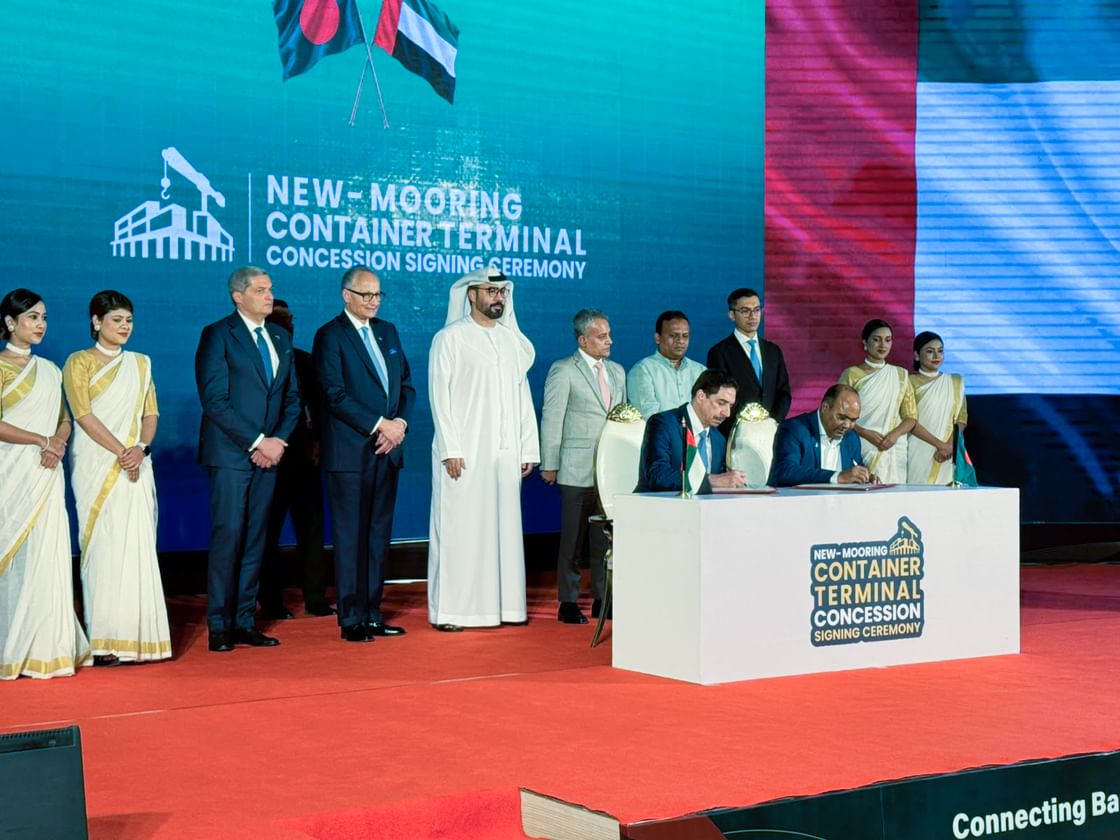
He added that new memoranda of understanding signed during the delegation’s current visit were aimed at simplifying trade flows and easing market access for businesses. Supported by the UAE’s expanding network of more than 20 international economic agreements, the updated frameworks seek to create smoother investment pathways and wider opportunities for joint ventures. Al Mazrouei said Abu Dhabi’s strong infrastructure, business-friendly policies and global connectivity make it an ideal base for companies looking to scale across the Middle East, Africa and beyond.
He pointed to the historic roots of the UAE–India partnership, which stretches back to the early 1950s, and said the emirate’s transformation into a global business hub over the past decade has further strengthened its appeal. “Abu Dhabi is a sandbox and a hub for trade. The relationship with India is old, and the opportunities ahead are even greater,” he said.
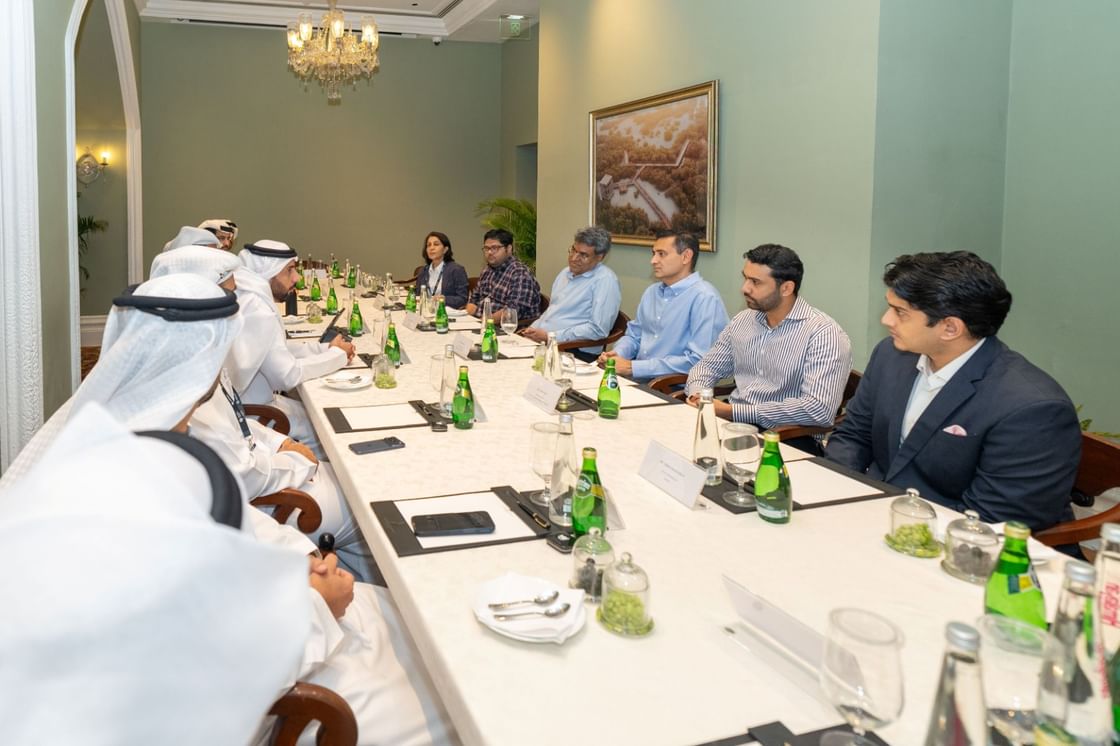
Alongside the government-level engagements, the Abu Dhabi Family Business Council (ADFBC) deepened its outreach to India’s private sector through a closed-door roundtable in Mumbai, held in partnership with Campden Family Connect — the leading network for India’s ultra-high-net-worth community. The session brought together more than 15 of India’s most prominent business families to explore new commercial partnerships with Abu Dhabi.
The roundtable formed a key component of the UAE delegation’s visit and underscored ADFBC’s mission to build long-term partnerships between family enterprises in both countries. Discussions centred on the rising influence of family-owned companies in shaping the future of both economies, as well as opportunities across advanced manufacturing, clean energy, biotechnology, logistics, and financial technology.
The session also highlighted Abu Dhabi’s emergence as a preferred international base for Indian family businesses seeking stable, well-connected markets for global expansion. Campden Family Connect worked closely with ADFBC to create a high-level channel for knowledge exchange on governance, investment strategies, succession planning, and legacy building.
Family businesses play an outsized role in both nations. In the UAE, they constitute approximately 90 per cent of private companies, contribute around 60 per cent of GDP and employ 80 per cent of the private-sector workforce. In India, family-run enterprises account for over 75 per cent of GDP — a share expected to grow to up to 85 per cent by 2047 as sectors such as technology and manufacturing expand.
Khaled Al Fahim, Chairman of ADFBC and Board Member of the Abu Dhabi Chamber of Commerce and Industry, said relations between the UAE and India were entering “a new phase of depth and trust”. He said the Council aims to convert this momentum into long-term projects that reinforce the new economy, from clean energy to innovation-driven industries. “By connecting Emirati families with India’s leading business families, we are strengthening trade links and giving family businesses on both sides the confidence to grow regionally and globally,” he said.
Indian participants expressed strong interest in developing joint investments with Abu Dhabi, praising the emirate’s reputation for stability, innovation and responsible stewardship.
The roundtable was attended by senior UAE officials, including Dr Abdulnasser Jamal Alshaali, UAE Ambassador to India; Shamis Khalfan Al Dhaheri, Second Vice Chairman and Managing Director of the Abu Dhabi Chamber; and Al Mazrouei himself. From the Indian side, leading business families and representatives from sectors ranging from textiles to technology participated.
Together, the government and private-sector engagements signalled a renewed push to elevate India–UAE trade and investment to a new strategic level — one built on shared ambition, economic complementarity and expanding trust.