India closed 2025 with trade and investment negotiations at the centre of its foreign policy, prioritising market access and supply chain security amid rising global tariffs and carbon barriers
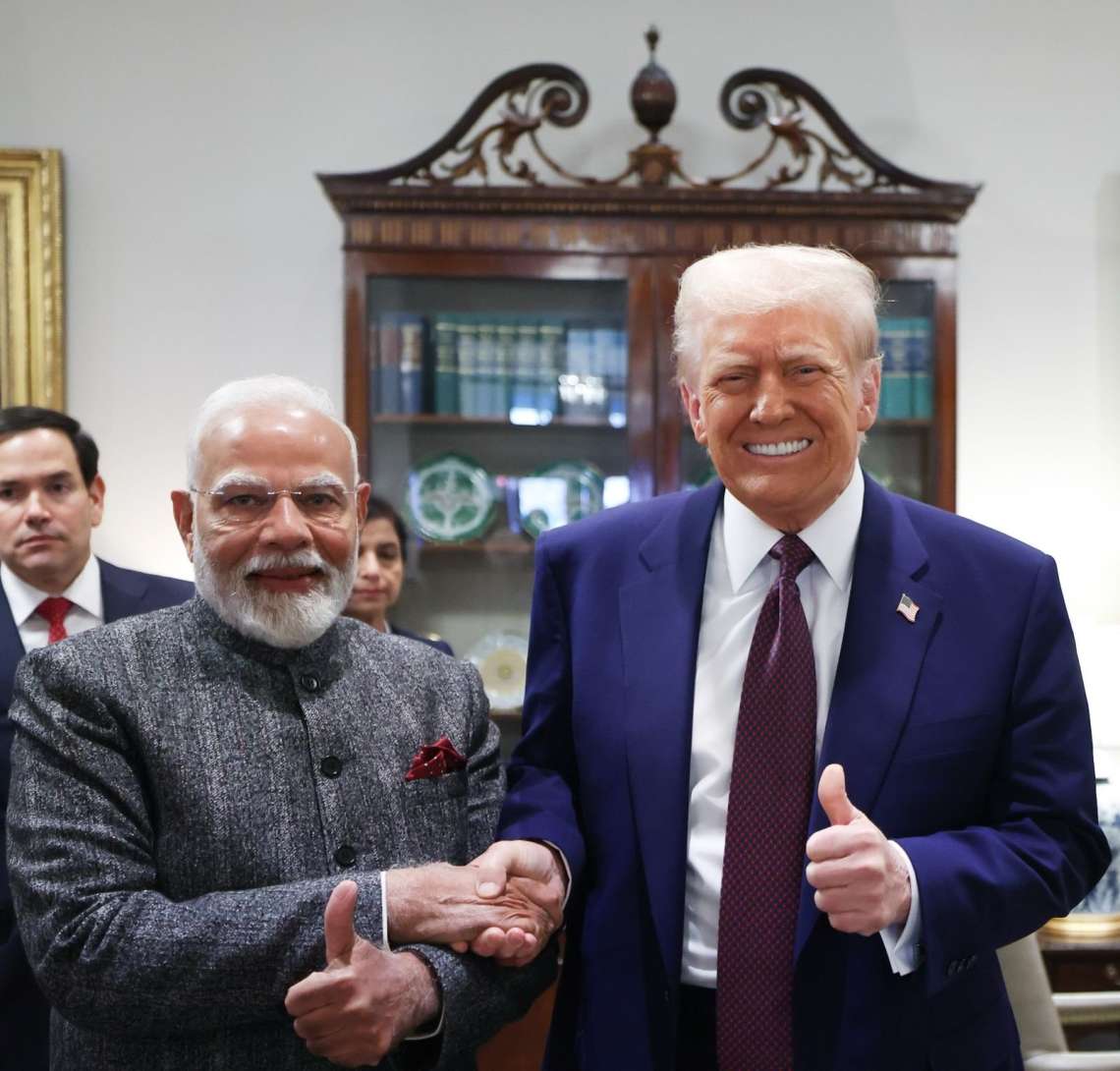
As 2025 draws to a close, India’s foreign policy calendar has been shaped less by summit diplomacy and more by detailed arguments over tariffs, carbon taxes and supply chain rules. Across Washington, Brussels, Riyadh and other capitals, New Delhi spent the year attempting to secure market access, hedge against what officials describe as “weaponised” trade, and position itself as a dependable node in newly configured global supply chains, particularly after the shock of higher tariffs imposed by the administration of Donald Trump.
On November 28, Union Commerce and Industry Minister Piyush Goyal told the FICCI Annual General Meeting that India was in talks with “about 50” partners on free trade agreements or similar arrangements. These include negotiations or exploratory discussions with the United States, the European Union, the Gulf Cooperation Council, the Eurasian bloc, Asean, South Korea, Israel, Canada, South Africa and Mercosur in South America. His warning that trade is increasingly being used as a weapon captured the broader backdrop of the year, marked by new tariffs, carbon border taxes and splintered economic blocs, where India can no longer rely on long-held assumptions.
One of the most significant outcomes of the year was the signing of the India–United Kingdom Comprehensive Economic and Trade Agreement on July 24. The pact provides tariff cuts and wider market access across goods, investment, procurement, services and mobility. Under the agreement, 99 per cent of Indian exports to the UK will face zero duties, covering sectors such as textiles, leather, engineering goods, marine products, gems and jewellery. India has agreed to reduce tariffs on nearly 90 per cent of UK goods. Duties on British whisky and gin will fall from 150 per cent to 75 per cent immediately, reaching 40 per cent over ten years, while import duties on UK-made cars will drop from over 100 per cent to 10 per cent under a quota regime, including provisions for electric and hybrid vehicles. The agreement also includes chapters on services, digital trade, intellectual property, public procurement and investment, alongside mobility rules that include a social security contributions arrangement to avoid dual payments for professionals on temporary assignments.
Another deal that moved from paper to practice in 2025 was the Trade and Economic Partnership Agreement with the European Free Trade Association, which includes Switzerland, Norway, Iceland and Liechtenstein. Signed in March 2024, the agreement came into force on October 1 this year, becoming India’s first free trade pact with four developed European economies. Under the treaty, EFTA members made a binding commitment to mobilise $100 billion in investment in India over 15 years and generate one million direct jobs, the first such written pledge in an Indian trade agreement. EFTA offered tariff concessions on 92.2 per cent of tariff lines, covering 99.6 per cent of India’s exports, while India opened 82.7 per cent of its tariff lines, covering 95.3 per cent of EFTA exports, with phased concessions and exemptions for sectors such as dairy, soya, coal, pharmaceuticals and selected food products. The government has promoted the agreement as a model template, though whether the promised investment and employment materialise will be tested in the years ahead.
In the Asia-Pacific, India and New Zealand concluded negotiations on a free trade agreement on December 22 after around nine months of talks. The deal will slash or eliminate tariffs on about 95 per cent of New Zealand’s exports to India and provide duty-free access for all Indian goods to the New Zealand market, while also opening services, investment and mobility provisions. New Zealand pledged around $20 billion in investment over 15 years, and both sides said the agreement could double bilateral trade over the next five years. However, the pact drew opposition in some political quarters in Wellington. Among the critics was New Zealand Foreign Affairs Minister Winston Peters, who called it a “low-quality” deal, citing the exclusion of dairy and new employment visas for Indians.
The Gulf also featured prominently in India’s trade diplomacy. On December 18, India and Oman signed a Comprehensive Economic Partnership Agreement covering bilateral trade of more than $10 billion. Oman will grant zero-duty access on 98.08 per cent of its tariff lines, covering 99.38 per cent of India’s exports, while India will liberalise 77.79 per cent of its tariff lines, protecting sensitive sectors. The agreement expands services access and significantly boosts skilled mobility provisions. Beyond Oman, India confirmed it is negotiating an FTA with the Gulf Cooperation Council and exploring a similar pact with Qatar, with officials aiming to conclude a framework by mid-2026.
Taken together, 2025 revealed a shift in how India approaches trade diplomacy. Agreements are increasingly treated as instruments of foreign policy rather than narrow technical exercises. While several deals remain unfinished and domestic political sensitivities persist, the year underscored India’s determination to remain at the table as global trade rules are rewritten.