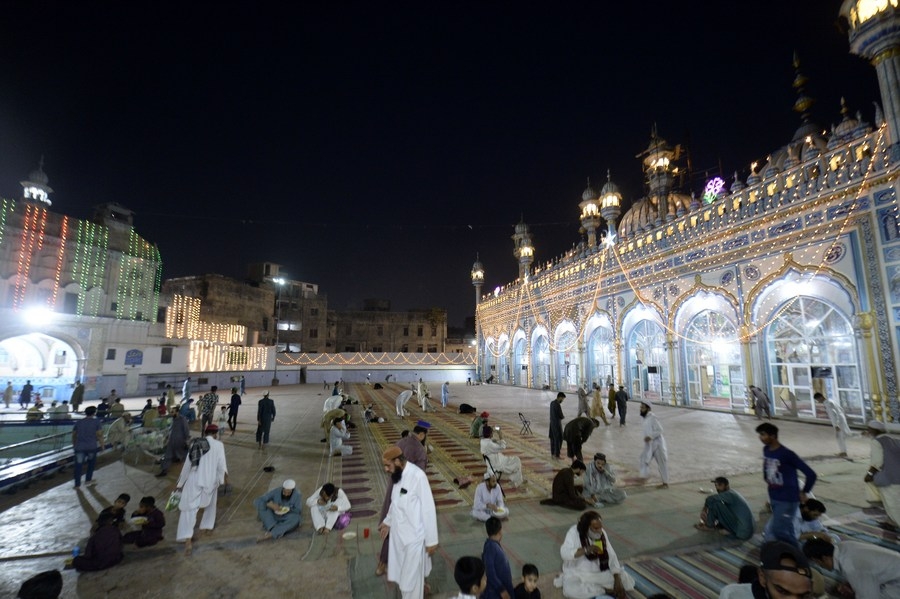
The census shows that there are over 600,000 mosques and 36,000 religious seminaries, compared to just 269,000 schools…reports Asian Lite News
Pakistan’s first Economic Census since independence in 1947 has laid bare a stark reality: the country has more than twice as many mosques as schools, while factories and hospitals remain scarce for its 250 million citizens, the majority of whom live below the poverty line.
The census shows that there are over 600,000 mosques and 36,000 religious seminaries, compared to just 269,000 schools and 119,000 hospitals. This imbalance reflects deeper systemic issues that hinder educational access, strain healthcare services, and limit the country’s economic potential.
The lack of higher educational institutions is equally stark at the higher level, with only 11,568 colleges and 214 universities across the country, which in turn reflects the poor quality of human capital.
The healthcare sector, too, is woefully inadequate, with just one hospital available for every 2,083 people in a country struggling with malnutrition and disease.
The census shows 10.9 million individuals engaged in sectors like livestock rearing, tailoring, food packaging, and online services, reflecting the lack of formal employment opportunities. Among these, 5.6 million people rear livestock, 419,000 are involved in clothing stitching, and 93,000 offer online services, indicating a population that is industrious but underserved.
The census reveals 7.143 million businesses employing 25.344 million people. Yet, only 250,000 of these are formally registered with the Securities and Exchange Commission of Pakistan, which bares the informal nature of the underdeveloped economy. Micro and small enterprises dominate the business ecosystem, with 95 per cent of establishments employing fewer than ten people. The services sector alone accounts for nearly 58 per cent of the workforce, while production and manufacturing lag far behind.
The census also exposes regional disparities in Pakistan, with Punjab and Sindh ahead of Khyber Pakhtunkhwa and Balochistan in the number of economic establishments and social infrastructure.
The findings were released by Planning Minister Ahsan Iqbal, who, while remarking that this was the first census, pointed out that neighbouring countries have conducted multiple economic censuses over the decades.
Pakistan’s lack of action is also seen as a reflection of the strong sway that the military has over the governance of the country, with its focus on prioritising defence expenditure to ensure its own survival.