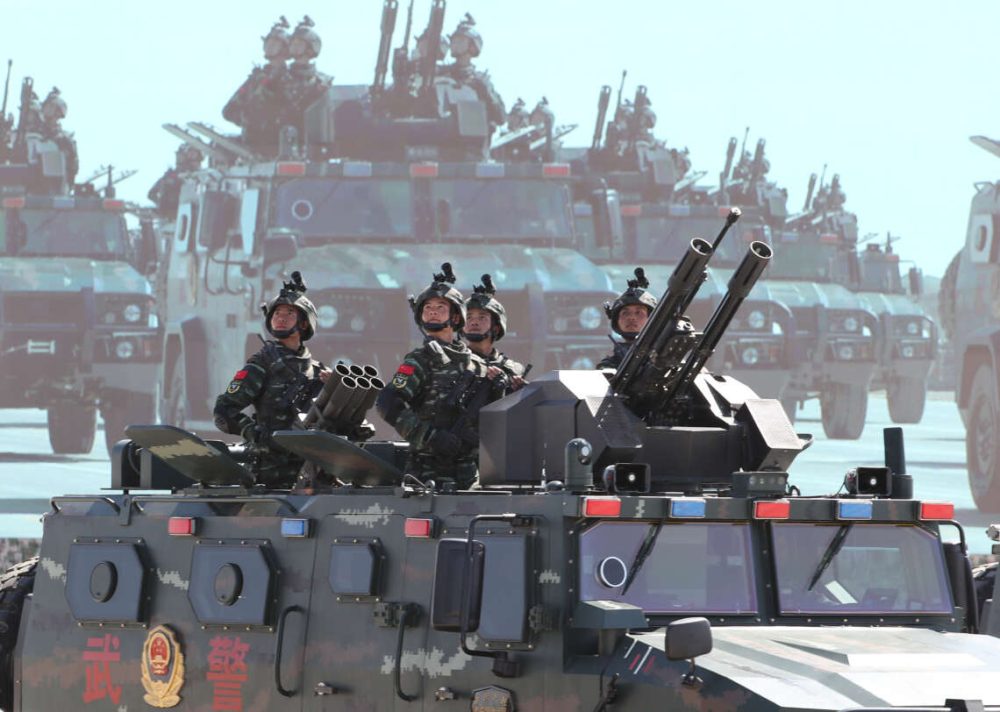
Munir, who became army chief in November 2022, will now oversee not just the army but the navy and air force as well, effectively consolidating command of the country’s entire military apparatus.
Pakistan’s parliament has passed a sweeping constitutional amendment granting Army Chief Field Marshal Asim Munir expanded authority, lifelong legal immunity, and a permanent role in national public life — a move critics warn accelerates the country’s slide toward authoritarianism. The 27th constitutional amendment, signed into law on Thursday, dramatically reshapes Pakistan’s power structure and alters how key judicial institutions will operate.
Munir, who became army chief in November 2022, will now oversee not just the army but the navy and air force as well, effectively consolidating command of the country’s entire military apparatus. His field marshal rank and uniform are now lifelong, and he will continue to hold “responsibilities and duties” after retirement, as determined jointly by the president and prime minister. Many observers say the amendment guarantees him a dominant role in national affairs indefinitely.
Supporters argue the reform clarifies military hierarchy and strengthens Pakistan’s ability to respond to modern defence challenges. Prime Minister Shehbaz Sharif has described it as part of a broader effort to modernise governance and the armed forces. But critics say it cements military supremacy at the expense of Pakistan’s elected institutions.
Pakistan has spent decades oscillating between democratic civilian rule and direct or indirect military control. Leaders like General Pervez Musharraf and General Zia-ul-Haq headed explicit military regimes, while at other times the army shaped politics from behind the scenes. Analysts often describe this arrangement as “hybrid rule.” But Michael Kugelman, former director of the Wilson Center’s South Asia Institute, says the new amendment signals a post-hybrid era. The civil-military imbalance, he argues, is now “as imbalanced as it could possibly be.”
Journalist and rights activist Munizae Jahangir echoes this view. “There is no balance between the military and the civilians. They have tilted the power dynamic again toward the military at a time when the military needed to be reined in,” she says.
Judiciary Under Pressure
Equally contentious are the judiciary-related reforms embedded in the amendment. A new Federal Constitutional Court (FCC) will be created to exclusively handle constitutional cases, replacing the Supreme Court’s long-standing role. The FCC’s chief justice and judges will be appointed by the president, giving the executive significant influence over the court’s makeup.
Jahangir warns the changes “forever alter the nature of the right to a fair trial,” arguing that executive control over bench formation compromises judicial independence. Journalist Arifa Noor agrees: “The judiciary is now quite subservient to the executive. It does not really have independent space to operate.”
Supporters of the amendment say it will ease backlogs in the Supreme Court by separating constitutional matters from civil and criminal cases. But some legal experts dismiss this justification as misleading. Salahuddin Ahmed, a Supreme Court lawyer in Karachi, says most of Pakistan’s judicial backlog lies in lower courts, not at the Supreme Court. “If you were genuinely worried about speeding up litigation, you would focus reforms where the majority of delays actually occur,” he argues.
The fallout was immediate. Hours after the amendment became law, two Supreme Court judges — Justice Athar Minallah and Justice Mansoor Ali Shah — resigned in protest. Minallah wrote, “The constitution that I swore an oath to uphold and defend is no more.” Shah said the judiciary had been brought “under the control of the government,” and that the amendment had “torn the Supreme Court to pieces.”
Defence Minister Khawaja Asif dismissed the resignations as “a matter of conscience” only after judges realised their “monopoly” had been curbed.
A further provision allows judges to be transferred between courts without their consent. If they resist, they may appeal, but refusal could lead to forced retirement. Critics fear this will become a tool to pressure judges into compliance. Ahmed warns that relocating judges away from their home provinces will “place them under further pressure to toe the government’s line,” shifting the judicial balance decisively.
Kugelman says the deepening crackdown on institutional autonomy reflects a troubling trend. “Bottled-up grievances don’t bode well for social stability,” he warns. Noor sees the change as part of a broader authoritarian trajectory, following last year’s 26th amendment, which gave lawmakers the power to pick the chief justice. With talk already circulating about a future 28th amendment, she says the balance of power is “heavily tilted in favour of the establishment.”
The 27th amendment, critics say, solidifies the military’s supremacy not just over politics, but now over the judicial system as well — reshaping Pakistan’s governance in ways likely to reverberate for years to come.