Dr Barai was particularly critical of the additional 25 per cent duty imposed as a penalty linked to India’s continued imports of Russian oil. While condemning Russia’s actions in Ukraine, he said India had become “an innocent bystander casualty” of a policy that lacked consistency and fairness
Eminent Indian American physician and community leader Dr Bharat Barai has warned that India–US relations could remain strained unless Washington reverses recent tariff measures, arguing that New Delhi has been unfairly targeted amid complex global trade and energy dynamics.
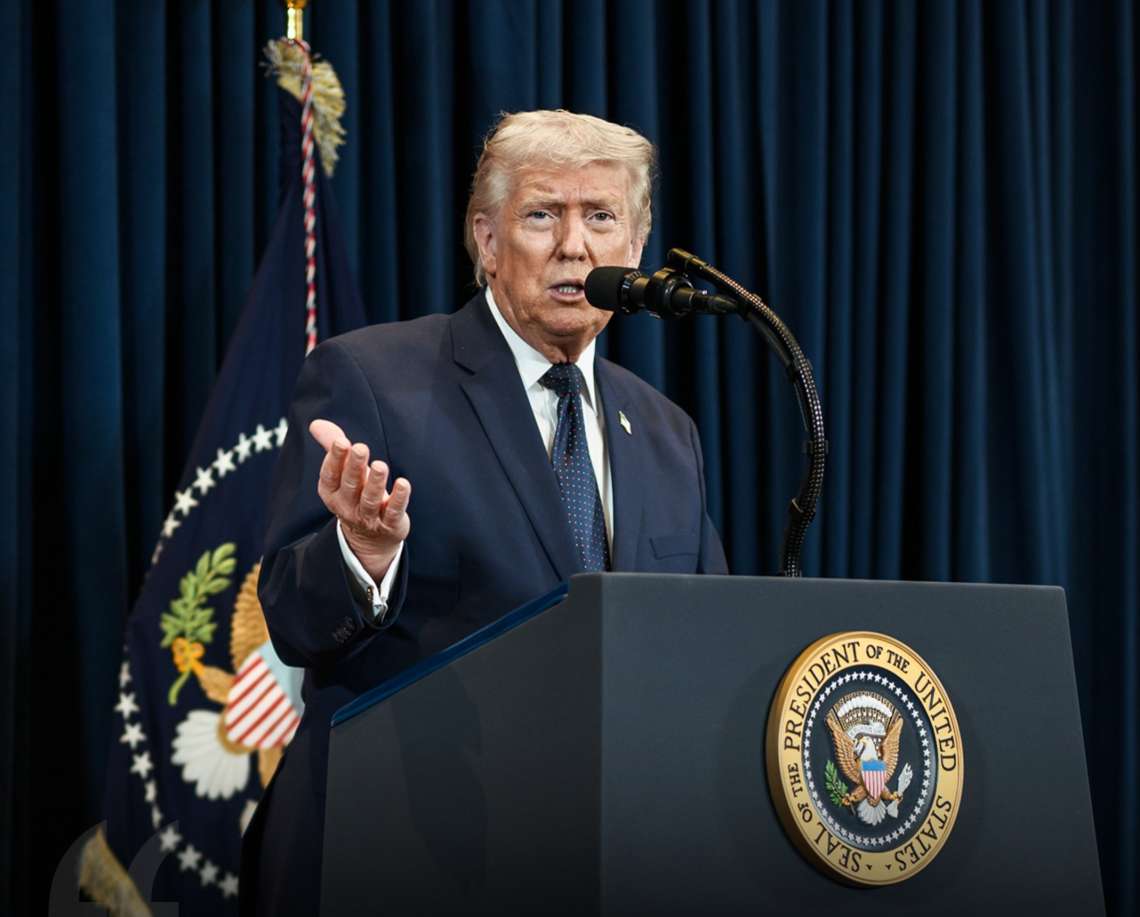
In an interview with us, Dr Barai said the steady momentum built in bilateral ties over successive US administrations had suffered a setback following President Donald Trump’s return to the White House. He attributed the strain largely to trade actions that he described as politically motivated rather than grounded in sound economic reasoning.
While acknowledging that the United States does run a trade deficit with India, Dr Barai said addressing the imbalance should have followed a calibrated and proportionate approach. “Doing X amount of tariffs purely on economic grounds to remove the trade deficit will be one thing,” he said. “But they impose a 25 per cent so-called reciprocal duty to wipe out the trade deficit.” He argued that a lower rate, closer to 15 per cent, would have been more reasonable and less disruptive.
Dr Barai was particularly critical of the additional 25 per cent duty imposed as a penalty linked to India’s continued imports of Russian oil. While condemning Russia’s actions in Ukraine, he said India had become “an innocent bystander casualty” of a policy that lacked consistency and fairness.
“China is importing more oil than India, but China has a Trump card, and their Trump card is rare earth metals,” he said, pointing to the heavy dependence of the US and Europe on China for rare earths essential to electric vehicles, defence systems and advanced aircraft. He also noted that several European countries continue to import Russian energy without facing comparable punitive tariffs.
“So why single out India with a 25 per cent additional import duty when China is only at 47 per cent? Most European countries are around 15 per cent,” Dr Barai asked. “There is no extra duty on Hungary or Slovenia for continuing to import Russian oil.”
He attributed the tariff decisions to a small group within the US administration, naming President Trump, immigration hardliner Stephen Miller and trade adviser Peter Navarro as the principal drivers of the policy. According to Dr Barai, many members of Congress privately disagree with the approach but are reluctant to speak out publicly.
“Many congressmen and senators are very unhappy about it in private conversations. They do admit that this is wrong, but they are afraid that President Trump will try to take revenge on them,” he said, adding that fears of political retaliation and primary challenges have effectively silenced dissent.
Dr Barai pointed to recent electoral outcomes in states such as New Jersey and Virginia, as well as a mayoral election in Miami, as signs of growing public discontent. He described the tariff decisions as “totally arbitrary”, arguing that they were made by a handful of individuals in the Oval Office rather than through Congress, which constitutionally holds authority over trade policy. He expressed hope that the Supreme Court would eventually clarify and reaffirm Congress’s role.
On the outlook for bilateral relations, Dr Barai said ties could remain effectively frozen unless a trade agreement removes the additional duties. He noted that some Indian companies, including Reliance, had reduced Russian oil imports following sanctions on specific Russian firms, but stressed that India could not completely abandon a major energy supplier.
“For India, serving a population of 1.4 billion, wherever they can find a reliable and cheaper source of energy, it is important,” he said. He added that India sources only about 35 per cent of its oil from Russia, with the rest diversified across the Middle East, Africa and Latin America.
Dr Barai praised Prime Minister Narendra Modi’s handling of US pressure, describing his approach as “very diplomatic, very polite and very gentlemanly”. “He is doing what is best for the people of India,” he said.
He also argued that India’s global standing has strengthened over the past year, citing closer engagement with Europe, a free trade agreement with the UK, expanding ties with Africa and a recent defence pact with Australia. “India is respected more than before,” he said, “except maybe in the United States.”