Thailand faces fresh turmoil as Pheu Thai seeks parliament dissolution after Paetongtarn Shinawatra’s ousting, while the People’s Party backs rival Bhumjaithai, raising fears of instability and fragile governance….reports Asian Lite News
Thailand’s political landscape plunged into further uncertainty as the ruling Pheu Thai Party, reeling from a recent court order that ousted Prime Minister Paetongtarn Shinawatra, formally sought royal approval to dissolve the House of Representatives and call for early elections. The petition comes at a critical juncture after the People’s Party, the largest bloc holding nearly one-third of lower house seats, declared its support for Bhumjaithai Party leader Anutin Charnvirakul to form the next government—intensifying the standoff.
A dynastic disruption
Paetongtarn, granddaughter of exiled billionaire and former Prime Minister Thaksin Shinawatra, was removed from office by Thailand’s Constitutional Court last Friday following an ethics ruling connected to a leaked phone call with Cambodia’s Hun Sen, in which she referred to him as “uncle” during a tense border conflict. The court ruled 6–3 that the call breached ethical standards—even though she maintained it was meant as calm de-escalation.
Her dismissal marks the latest blow to the Shinawatra political dynasty, becoming the sixth leader linked to the family to be toppled by judicial or military action in the past two decades, including her father and aunt. It is also the second such removal within the year for Pheu Thai.
Scramble for power
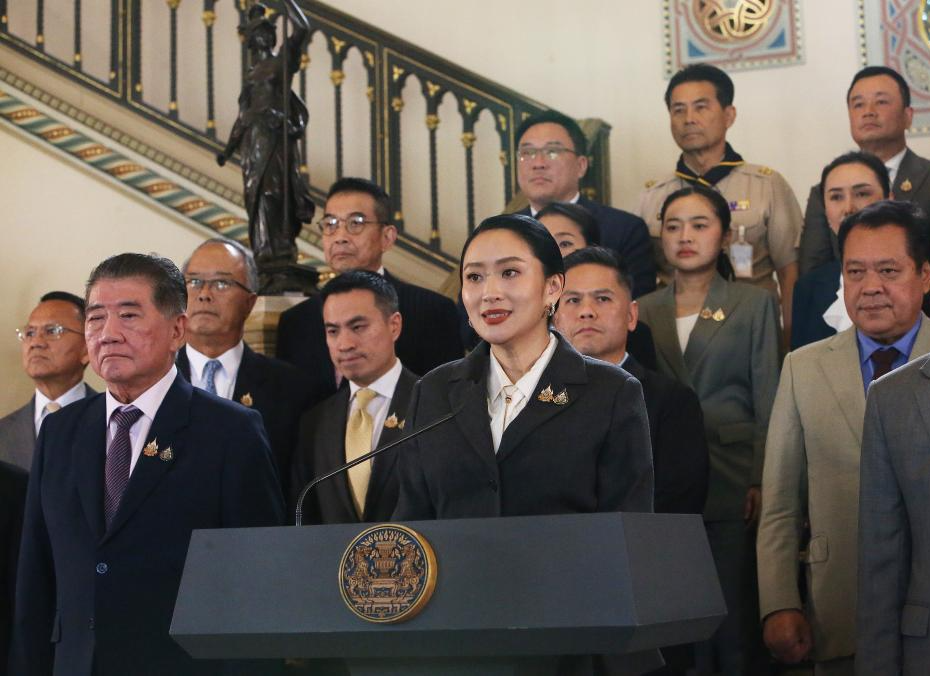
In the ensuing political scramble, caretaker Prime Minister Phumtham Wechayachai, Pheu Thai’s acting head, submitted a draft royal decree to dissolve the House—seeking King Vajiralongkorn’s endorsement. The party presented dissolution as the only viable route forward after its fragile coalition unraveled. Pheu Thai Secretary-General Sorawong Thienthong explained: “The People’s Party announced support for Anutin as prime minister but would not join the coalition… A minority government with only 130 MPs cannot move the country forward.”
Constitutional experts remain divided over whether a caretaker government has the power to dissolve parliament, casting legal ambiguity over the move.
The kingmaker moves
Meanwhile, the People’s Party emerged as the decisive powerbroker. Although it chose not to join any government, its endorsement of Anutin Charnvirakul could pivot the balance in favor of Bhumjaithai, subject to parliamentary approval. The People’s Party’s leader, Natthaphong Ruengpanyawut, justified the decision as preventing the return of “an old coalition which has failed to run the country” or even the comeback of ex-coup leader Prayuth Chan-ocha, who remains eligible for premiership. A vote is expected as early as Friday.
The People’s Party has also conditioned its support on a key demand—any new government must call for elections within four months. This policy ensures their influence remains central even outside formal coalition membership.
Crisis drains stability, tests democracy
Thailand’s political crises have escalated anxiety over governance continuity. Since June, instability deepened when Paetongtarn’s leaked call sparked border conflict and caused the Bhumjaithai Party to withdraw from the coalition, eroding Pheu Thai’s majority.
Economists and political analysts warn the uncertainty could stall economic recovery, deter foreign investment, and exacerbate social tensions. Observers also view this judicial interference as weakening democratic institutions, where courts continue to play decisive—and contested—roles in removing elected leaders.
What’s next?
As of now, Pheu Thai awaits royal approval. If granted, a general election must be held within 60 days, potentially triggering Thailand’s third vote in four years. Alternatively, if Bhumjaithai succeeds in forming a coalition via People’s Party backing, Ajutin could be appointed PM—albeit in a fragile, transitional setup committed to snap elections.
Thailand stands at a crossroads—balancing political legitimacy, institutional integrity, and public demand for transparency. The weeks ahead will determine whether snap elections restore stability or deepened institutional conflict drives democratic erosion.