Lockheed Martin and the UAE enter a new phase of partnership focused on innovation, semiconductor capability, talent development and sovereign defence strength, marking 50 years of deepening strategic cooperation…reports Asian Lite News
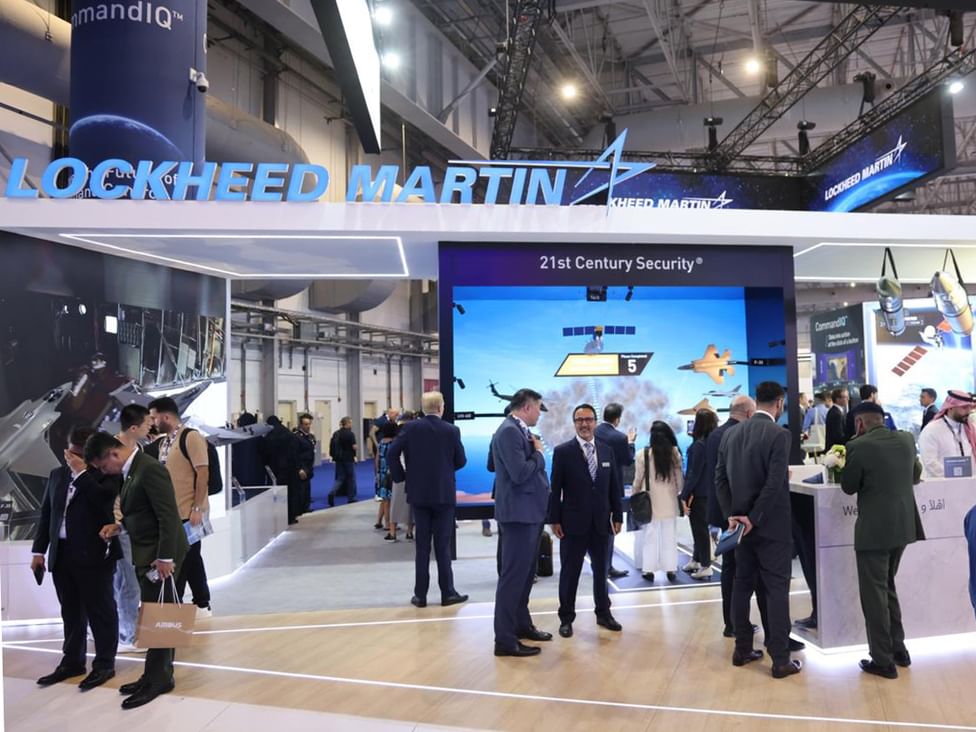
The UAE’s long-standing partnership with Lockheed Martin is entering a new stage of strategic expansion, with a deeper focus on innovation, technology transfer and talent development, according to General John Nicholson, Chief Executive for Lockheed Martin in the Middle East. Speaking to the Emirates News Agency (WAM) on the sidelines of Dubai Airshow 2025, he said the renewed phase reflects both sides’ shared ambition to accelerate sovereign capability-building and strengthen the UAE’s advanced technology ecosystem. The comments come as the company marks the 50th anniversary of its cooperation with the Emirates, a relationship that began in 1975 with the delivery of the first C-130 Hercules and has since evolved into a comprehensive defence and innovation partnership.
Nicholson described this half-century milestone as a foundation for a future defined by deeper collaboration in fields critical to the UAE’s economic and strategic priorities. Central to this evolution is the Center for Innovation and Security Solutions (CISS) in Abu Dhabi, which he said has become one of the partnership’s most important pillars. The centre now operates as a hub for advanced research, hands-on technical training and the development of Emirati talent in artificial intelligence, space systems and next-generation defence technologies. This year, the centre welcomed its largest-ever training cohort, underscoring Lockheed Martin’s long-term commitment to equipping Emirati engineers and scientists with the skills required to lead the UAE’s future technological trajectory.
A major highlight at Dubai Airshow 2025 was the signing of Letters of Intent between Lockheed Martin, the Tawazun Council for Defence Enablement, EDGE Group and Khalifa University. Together, they aim to build an integrated national ecosystem for microelectronics design and production in Abu Dhabi, using advanced chiplet technology. Nicholson emphasised that this initiative represents a pivotal step towards establishing a comprehensive research and development infrastructure for semiconductors in the UAE. It supports the country’s wider objectives of innovation, knowledge transfer and the development of advanced sovereign capabilities that reduce reliance on global supply chains.
The company’s chief executive Jack Nicholson highlighted that the Center for Innovation and Security Solutions (CISS) in Abu Dhabi has become a cornerstone of the partnership, serving as a hub for advanced research, hands-on training, and the development of Emirati talent.
An essential component of this initiative is a specialised 16-month semiconductor training programme, developed in partnership with Arizona State University. The programme will prepare more than 60 Emirati nationals, while a newly established Centre of Excellence for semiconductor research at Khalifa University will anchor long-term innovation, ensuring the UAE has a sustained pipeline of talent and research output to strengthen its technological competitiveness.
Nicholson said the broad set of agreements announced at the airshow illustrates Lockheed Martin’s wider strategy to deepen cooperation with the UAE. He noted new Letters of Intent with EDGE and EPI to expand high-tech manufacturing, along with an agreement with AMMROC to advance maintenance, repair and overhaul capabilities within the country. These efforts, he said, are designed to support higher force readiness, accelerate sustainment and create specialised career pathways for Emirati professionals. By embedding these capabilities locally, the UAE is steadily building a world-class defence industrial base that can support both national security and economic diversification.
He stressed that Lockheed Martin’s decades-long commitment to talent development remains a central pillar of its partnership with the UAE. The ongoing expansion of CISS and continued collaboration with Khalifa University will help drive forward research and innovation in artificial intelligence, space technologies and modern defence systems. Nicholson said these efforts reflect a shared ambition to build sovereign capability and contribute meaningfully to the UAE’s long-term defence and economic vision.