Organisers said the Berlin dialogue seeks to challenge China’s attempts to downplay genocide claims and build a stronger global coalition in support of Uyghur women…reports Asian Lite News
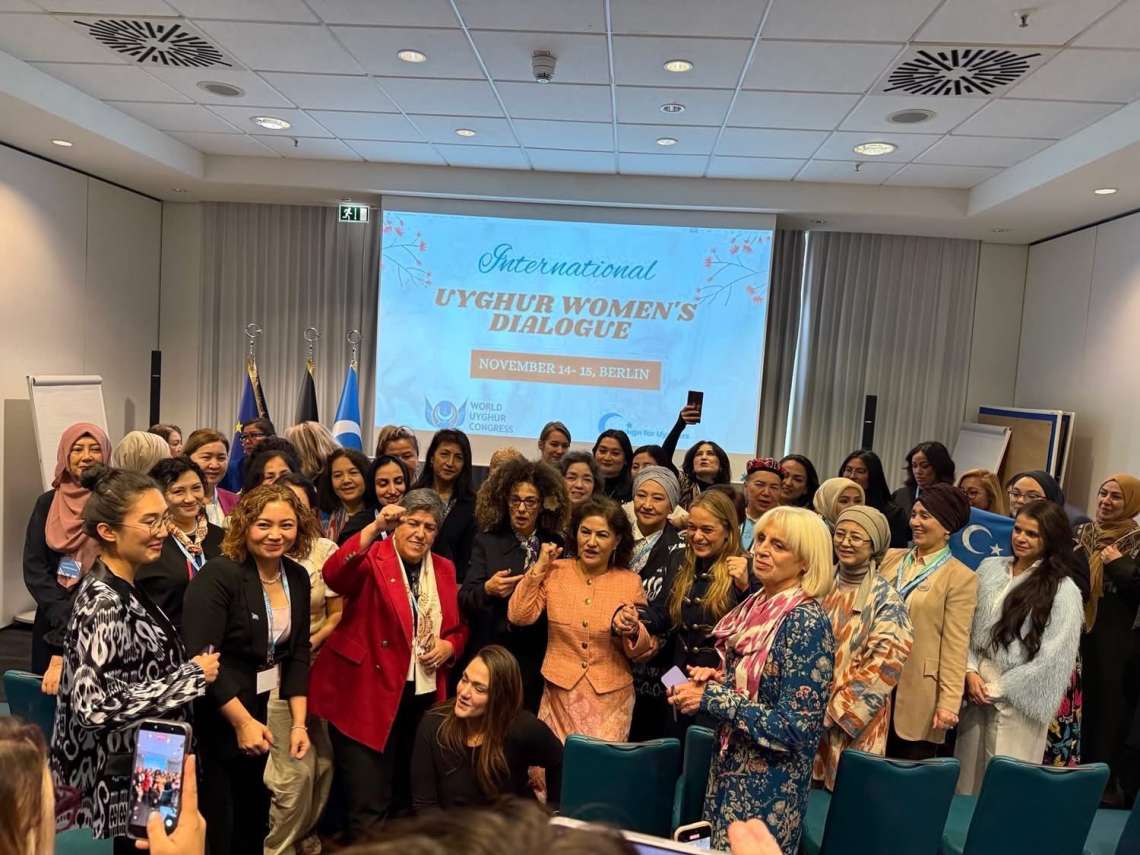
Campaign for Uyghurs (CFU), in collaboration with the World Uyghur Congress (WUC), opened the International Uyghur Women’s Dialogue in Berlin this week, bringing global attention to the ongoing persecution of Uyghur women in China’s Xinjiang region.
The gathering concluded with the adoption of the “Berlin Declaration Platform for Action on Uyghur Women’s Rights,” a document calling for accountability and coordinated international measures to safeguard Uyghur women’s rights, culture and identity.
The event coincides with the 30th anniversary of the 1995 Beijing Declaration and Platform for Action, a landmark agreement on women’s equality adopted at the UN’s Fourth World Conference on Women.
While China hosted that conference and endorsed the declaration, CFU and WUC organisers said the Chinese Communist Party (CCP) has since violated its core principles, citing allegations of forced sterilisation, sexual violence, forced marriage and enforced labour targeting Uyghur women.
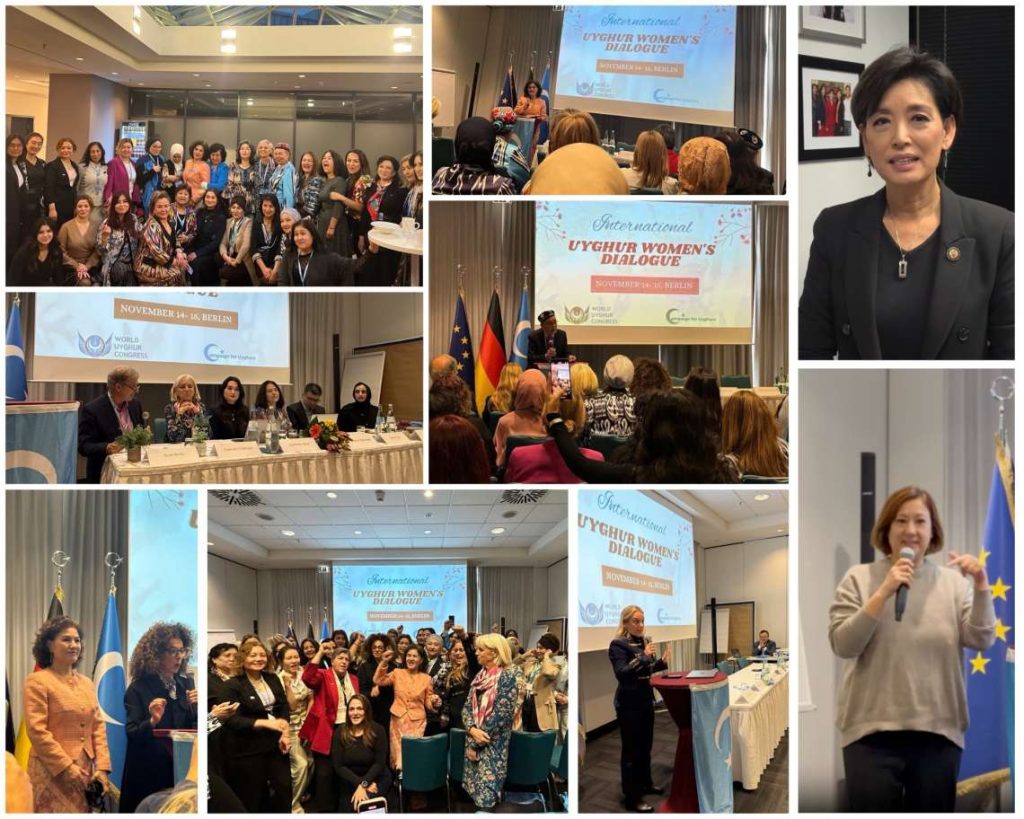
Opening remarks were delivered by CFU Executive Director Rushan Abbas, who also chairs the WUC Executive Committee, and by Erkin Alptekin, the first president of the WUC. Abbas told delegates that abuses against Uyghur women reflect a wider global challenge, warning that “what happens in East Turkistan will not stay there” as tools of digital authoritarianism expand.
The conference included keynote addresses from U.S. Congresswoman Young Kim and German Bundestag member Norbert Altenkamp, a co-founder of the Uyghur Friendship Group. Women’s rights advocates Masih Alinejad of the World Liberty Congress and Venezuelan activist Lilian Tintori also delivered solidarity messages.
Four thematic panel discussions brought together policymakers, researchers, civil society representatives and Uyghur leaders. Speakers included former U.S. State Department official Scott Busby; Paris City Council member Geneviève Garrigos; forced-labour researcher Daniel Murphy; Iveta Vancáková of the Forum for Human Rights; Antje Schippmann of the Axel Springer Freedom Foundation; and Lenya van Genni from Germany’s Federal Foreign Office. Topics ranged from the CCP’s treatment of women and gendered repression to advocacy leadership and the global impact of forced-labour supply chains.
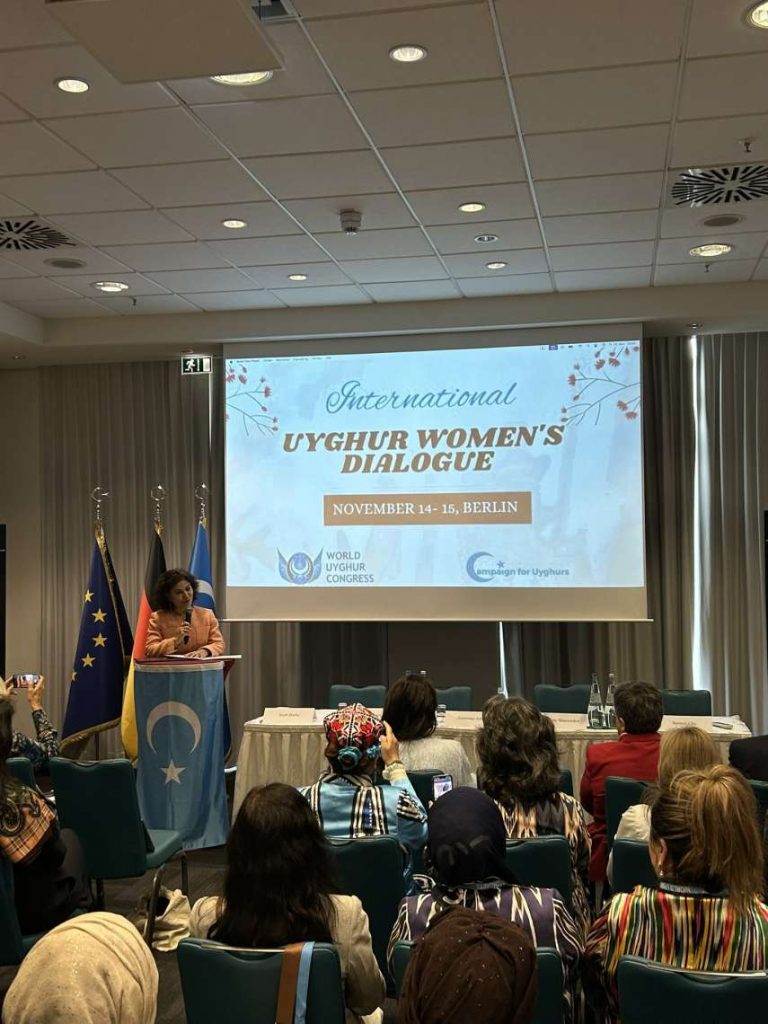
The key outcome of the dialogue was the unanimous adoption of the Berlin Declaration, which urges governments, international institutions and rights organisations to strengthen accountability mechanisms, expand survivor-support systems and prioritise the protection of Uyghur cultural and family structures. The declaration has been translated into 20 languages and has secured signatures from more than 80 organisations and about 150 individuals.
Organisers said the International Uyghur Women’s Dialogue aims to counter what they described as China’s efforts to downplay accusations of genocide, while building a stronger international coalition to support Uyghur women. They emphasised that the declaration is intended to reinforce global awareness of ongoing rights violations and to ensure Uyghur women play a central role in advocacy efforts moving forward.