The 7/7 bombings changed London forever. The Victorian-era Tube system still struggles with outages and emergencies. A minor fire or power failure still sends people scrambling in fear. I saw the same fear in Bombay after the 1993 blasts. Late-night journalists who used to gather at Marine Drive or at the Taj promenade for kulfi or chana vanished. The city went quiet under curfew. No more post-work prowls. Life was curtailed—but it went on. Whether in Bombay or London, whether it’s blasts, bullets, floods, or fires—the show goes on. It always does … writes Anasudhin Azeez
Journalists make mistakes. The most common are typos—misspelled names, caption errors, photo mismatches. These happen often. But the biggest mistake of my career had nothing to do with a typo or a caption. It was a failure to follow proper protocol—and the fallout was far worse than any editorial error. It happened during the London Tube blasts. The day London changed forever. As the city marks the 20th anniversary of the 7/7 attacks, I find myself revisiting those haunting days.
On the morning of July 7, 2005, four terrorists—Mohammad Sidique Khan, Shehzad Tanweer, Hasib Hussain, and Germaine Lindsay—carried out a coordinated suicide bombing on London’s public transport system. Trained and radicalised by Al-Qaeda, they had spent months preparing in Leeds, assembling bombs filled with nails and screws to inflict maximum damage. After meeting in Luton, they travelled by train to King’s Cross, where CCTV captured them just before they split to reach their targets. At 8:49 a.m., three bombs exploded almost simultaneously on Underground trains at Russell Square, Aldgate, and Edgware Road. The fourth attacker, Hasib Hussain, initially failed to detonate his device. Later, he boarded the No. 30 bus, which exploded at Tavistock Square, killing 12 people. In total, 52 innocent lives were lost, and hundreds were injured.
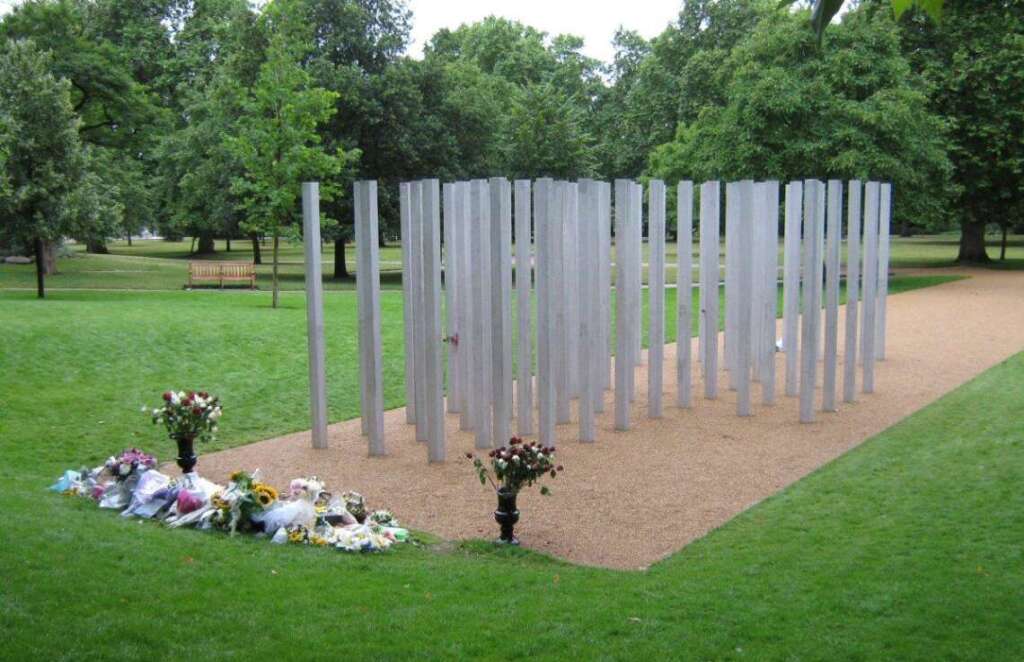
The London Tube network came to a standstill. Early confusion led authorities to blame “power surges.” Emergency response efforts were delayed due to deep tunnels, poor coordination, and bureaucratic hurdles. By noon, a website linked to al-Qaeda claimed responsibility, calling it a “blessed raid.” The 7/7 attacks remain the deadliest terrorist act on British soil.
I was working as Dubai-based Khaleej Times correspondent in London. I filed stories on time and continued to update the newsroom. Bad news, unfortunately, is good news for the newsdesk—and they splashed my reports across front pages. This was my second experience with serial bombings. The first was in Mumbai.
On Friday, March 12, 1993, a series of 13 coordinated bomb blasts ripped through Bombay (now Mumbai), marking India’s worst terrorist attack at the time. Over two hours, explosions hit prominent commercial and public places, killing more than 257 people and injuring over 1,400. The city descended into chaos. Hospitals were overwhelmed, public transport was suspended, and fear took hold. I was just a 25-year-old reporter then. I visited most of the blast sites that same day and stood in a long queue outside Sion Hospital at night to donate blood.
I am seasoned reporter now. Two riots, a seral bomb blasts, a war and now another serial blasts. Khaleej Times was asking for UAE-specific coverage of the London bombings. I assumed there would be Emirati casualties, as some blast sites were frequented by Arab students and tourists. I contacted hospitals and police officials for updates but found nothing. Hate crimes against Muslims were being reported sporadically, but I avoided chasing sensationalism.
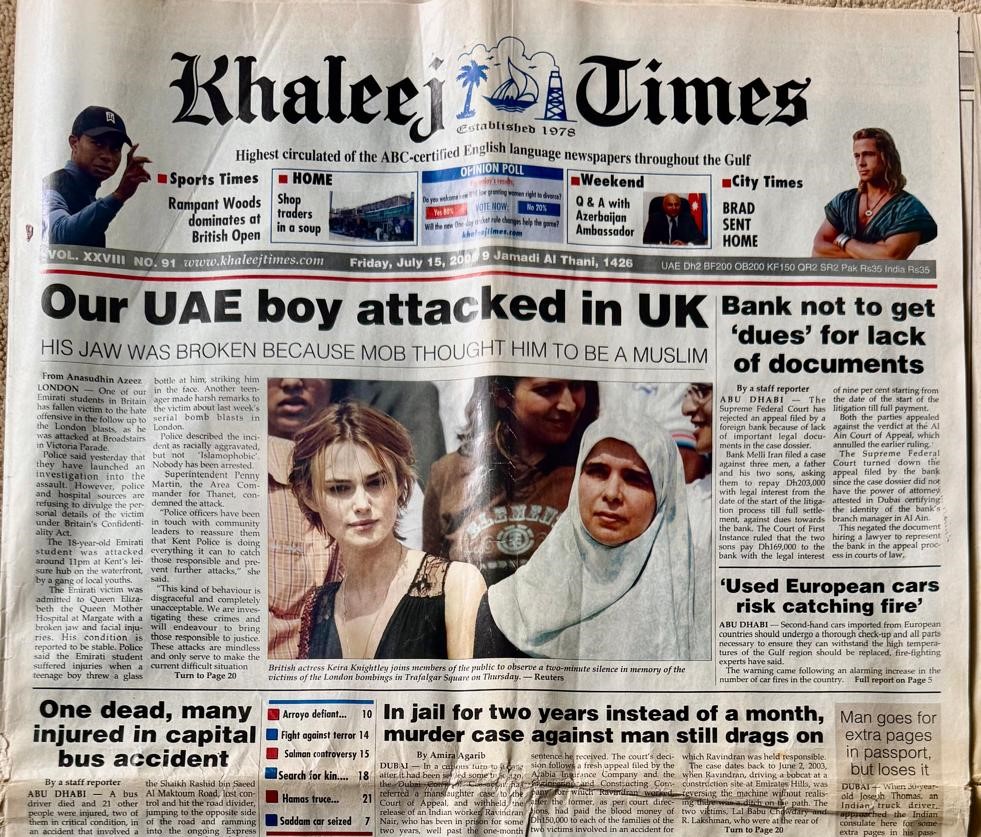
A week later, a contact told me an Arab boy was admitted to Queen Elizabeth Queen Mother Hospital in Margate with a broken jaw and facial injuries after being attacked with a glass bottle. His condition was stable. I confirmed the incident with police and the hospital, and found out he was indeed an Emirati. However, due to patient confidentiality, we couldn’t obtain his name.
I informed our Dubai office. They got excited—this was a potential scoop. But the details were incomplete. No name, no official confirmation. I tried everything to gather more, but hit a wall. Despite this, the desk decided to go ahead with the story. They wanted the scoop. The article ran as the lead story on Page 1—just below the masthead—with my byline. Then came the fallout.
Hundreds of Emirati students were studying in London. Their parents were terrified. Who was the boy? My phone rang non-stop—from the newsroom, the embassy, Dubai contacts. The UAE ambassador was under immense pressure. Ministers were demanding answers, but both the police and hospital refused to share any details.
Kamal Shah, the Managing Editor of Khaleej Times, called me. His job was on the line unless the situation was resolved within 24 hours. Kamal was not just a colleague—he was a close friend (and still is). I had to fix it. He also helped me to land in the London job when I resigned from KT’s City Times as news editor.
When official channels failed, I turned to my instincts. I dressed formally, carried a bouquet of flowers, and walked into the hospital’s casualty ward looking like a diplomat. I was allowed to sit in the waiting room. Visitors came and went. Eventually, I struck up a conversation with an Asian staff. Through him, I finally got the boy’s name.
We never published his name in the paper—but we shared it with everyone who needed to know. That saved Kamal’s job, my face, and a diplomatic headache.
Still, it was a grave error. A story based on half-baked information had caused chaos. The desk could have waited one more day for details. I could have insisted on holding the piece. Did I give in to the thrill of a scoop? Was I trying to outdo my rivals at Gulf News? Maybe. But I took responsibility and resolved the mess I helped create—within 24 hours.
That experience taught me something I still believe today: every problem has a solution—but someone must take the initiative.
Now, I’m back in London. Each morning between 8:30 and 9:00 a.m., I take the Circle or District Line to Fleet Street. I usually get off at Blackfriars and walk five minutes to the office at The Fleot—following the same route Shakespeare once took on his way to establish a theatre in Blackfriars. On other days, I alight at Mansion House and stroll past St. Paul’s Cathedral, retracing the steps Charles Dickens walked during his News of the World days. Every step along that route is my quiet tribute to the maestros of English language, literature, and journalism.
The 7/7 bombings changed London forever. The Victorian-era Tube system still struggles with outages and emergencies. A minor fire or power failure still sends people scrambling in fear. I saw the same fear in Bombay after the 1993 blasts. Late-night journalists who used to gather at Marine Drive or at the Taj promenade for kulfi or chana vanished. The city went quiet under curfew. No more post-work prowls. Life was curtailed—but it went on. Whether in Bombay or London, whether it’s blasts, bullets, floods, or fires—the show goes on. It always does.