The situation McDonnell has highlighted is neither sudden nor isolated. For years, Baloch activists, journalists, and human rights organisations have tried to draw attention to what they describe as a campaign of state repression: enforced disappearances, custodial killings, targeted abductions, and punitive operations, writes Dr Sakariya Kareem
The warning now echoes from Westminster to Quetta: the human rights crisis unfolding in Balochistan has breached international attention once again, this time carried by the voice of British MP John McDonnell.
His intervention, delivered through formal parliamentary mechanisms in the UK House of Commons, is not merely a symbolic gesture.
It is an indictment of a state’s escalating violence against its own population, a violence so entrenched and so systematic that even distant legislators—far removed from Pakistan’s domestic politics—feel compelled to record their alarm.

The situation McDonnell has highlighted is neither sudden nor isolated. For years, Baloch activists, journalists, and human rights organisations have tried to draw attention to what they describe as a campaign of state repression: enforced disappearances, custodial killings, targeted abductions, and punitive operations.
Yet the recent developments, which prompted McDonnell to table an Early Day Motion (EDM) and submit written questions to the UK government, suggest an escalation so sharp that the old vocabulary of crisis no longer seems adequate.
The reports coming out of Balochistan point not only to a failure of governance but to a pattern of militarised coercion that has begun to blur the line between counterinsurgency and collective punishment.
Drone warfare in an internal conflict
At the centre of McDonnell’s alarm lies a chilling development: the alleged use of drone strikes in Balochistan’s internal security operations.
The drone attack in Khuzdar’s Zehri area on October 5, which killed six people—including four children—marks an extraordinarily dangerous turn in Pakistan’s handling of the Baloch conflict.
Drone warfare, typically reserved for cross-border counterterrorism operations or zones of declared war, is now reportedly being used by Pakistan on Pakistani soil, against its own citizens.

The implications are stark. It suggests not only a militarisation of the conflict to unprecedented levels, but a dehumanisation of the population in targeted regions.
Drone operations are characteristically opaque, unaccountable, and devastating.
Their deployment against communities already struggling under heavy militarisation sends an unambiguous message: dissent, or even mere suspicion of dissent, is being treated as a targetable offence.
Despite Islamabad’s insistence that such operations are aimed at neutralising militants, the fact remains that children were among the casualties.
The state’s narrative, already under strain due to years of unaddressed allegations, now faces the added weight of collateral damage that is impossible to justify or erase.
Women targeted amid a culture of impunity
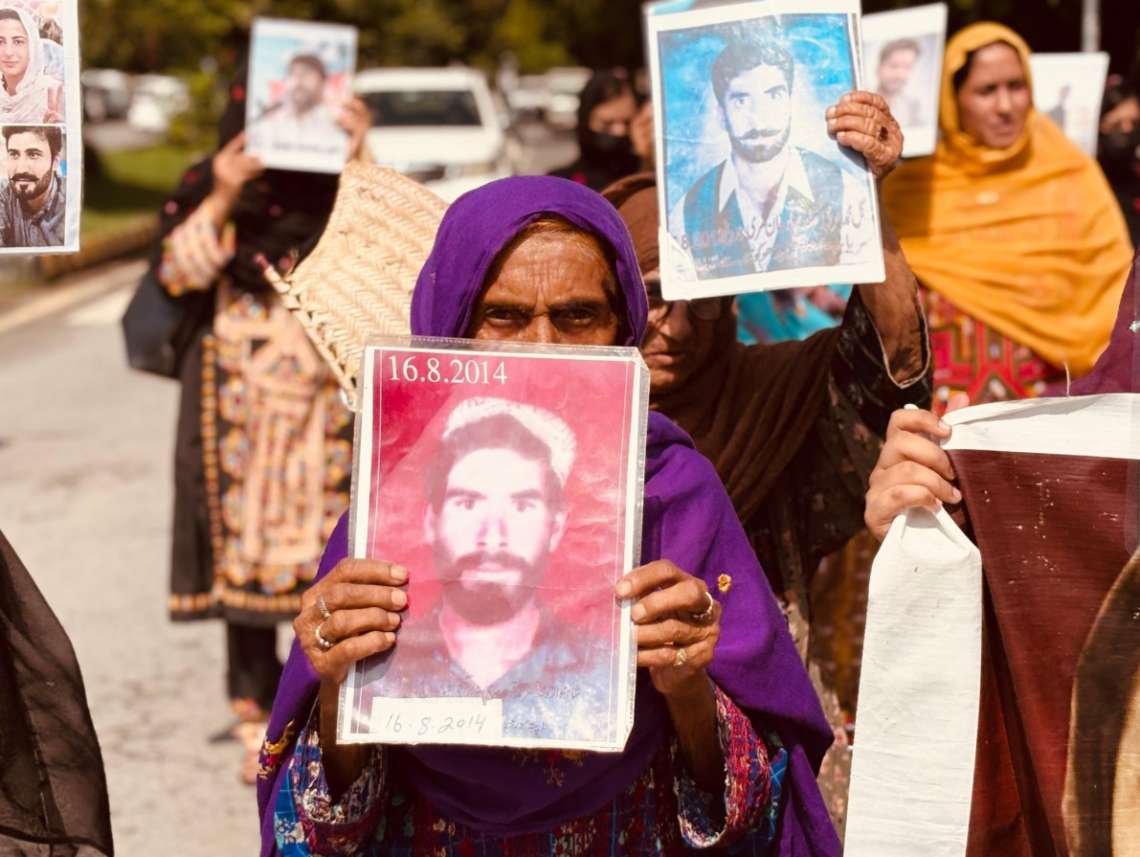
McDonnell’s concerns extend beyond the drone strike. His motion draws urgent attention to the disturbing pattern of enforced disappearances—particularly those involving Baloch women.
The case of Mahjabeen Baloch, a specially-abled student missing since May 29, embodies the vulnerability of women caught within Balochistan’s expanding shadow of repression.

Her disappearance has received little attention from Pakistani authorities, despite sustained pressure from activists.
Similarly, the abduction of teenager Nasreena Baloch on November 22 reinforces what Baloch organisations describe as a climate of relentless fear.
These are not isolated cases; they form part of a broader trend documented by human rights groups.
The Baloch Yakjehti Committee (BYC) recently recorded 168 enforced disappearances in September and October alone. Of these individuals, 17 were reportedly killed in custody, and 140 remain missing.
These numbers, stark and uncompromising, point to an apparatus operating with impunity and little concern for accountability.
The arrest of five Baloch women on November 17—actions described by activists as a form of collective punishment—adds another layer of severity.

The targeting of women in politically turbulent regions often signals a deeper breakdown of norms and constraints. It is an escalation intended not merely to detain individuals but to demoralise communities.
A crisis Pakistan refuses to confront
For Pakistan, the problem is not merely that a foreign legislator has taken notice. It is that the reports emerging from Balochistan contradict the official narrative of progress, stability, and development.
Islamabad has long insisted that unrest in Balochistan is externally funded, externally instigated, and externally sustained.
Yet this explanation does little to account for the persistent testimonies of locals, the growing body of documentation from rights organisations, or the mounting international concern.
The Pakistani state’s refusal to acknowledge the gravity of the situation has created a vacuum where its own narrative no longer holds credibility even within its borders.
Each new report of a disappearance, each unclaimed body that surfaces, and each child killed in a security operation fractures the state’s story further.
The silence surrounding these incidents from major political parties and national institutions is equally telling. It is a silence that signals acceptance, if not endorsement, of the status quo.
This political emptiness has forced activists to seek attention abroad, relying on international institutions and foreign lawmakers to register the urgency their own state refuses to recognise.
The UK’s uneasy role
While McDonnell’s intervention does not commit the UK government to any concrete consequences, it does place the issue squarely within the domain of international scrutiny.
His parliamentary questions require ministers to respond—on record—to allegations that Pakistan is violating fundamental human rights norms.

For the UK, this poses an uncomfortable dilemma. Pakistan remains a strategic partner, a member of the Commonwealth, and a country with deep diasporic ties to Britain.
Yet its treatment of Baloch citizens sits in tension with the human rights standards the UK claims to uphold internationally. McDonnell’s move forces Parliament to acknowledge this contradiction, even if the government would prefer diplomatic quietude.
The EDM itself is unlikely to lead to immediate action, but that is not its purpose. Its value lies in documentation: a formal, parliamentary acknowledgement that atrocities have been reported, that concerns have been raised, and that the crisis in Balochistan cannot be dismissed as a fringe issue.
An unfolding tragedy without oversight
The real tragedy of Balochistan’s human rights crisis lies in its invisibility.
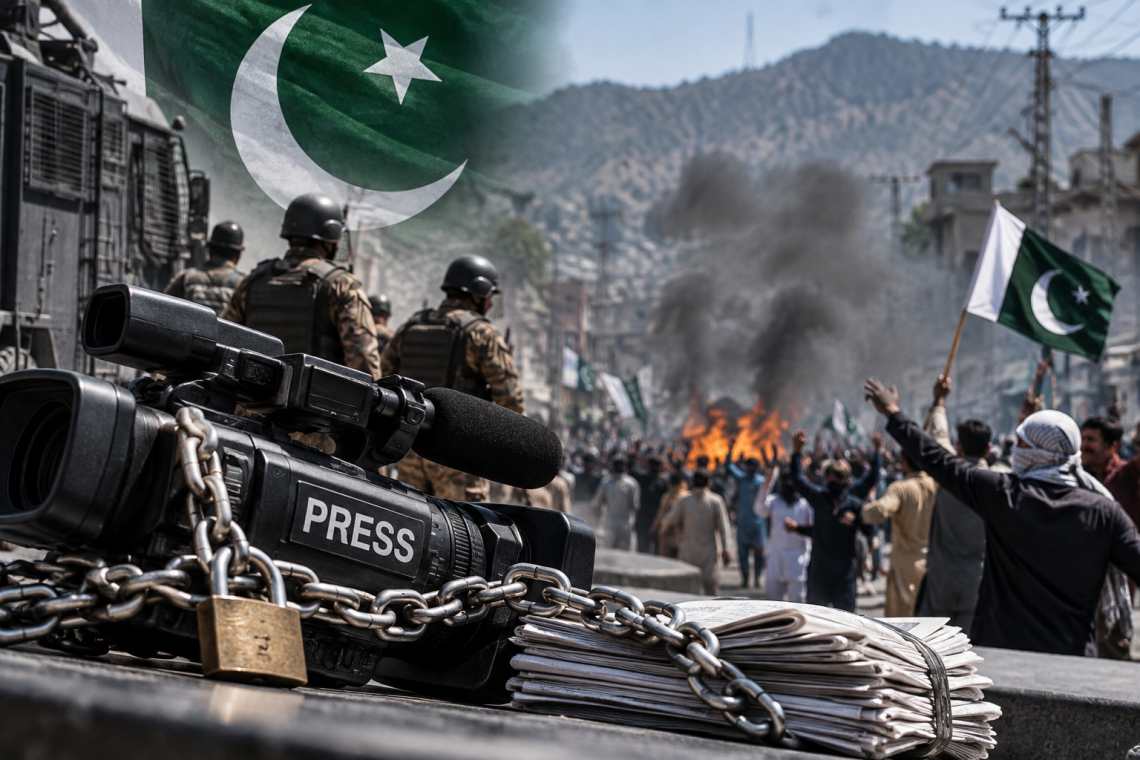
Blocked from mainstream Pakistani media, overshadowed by national political melodrama, and distant from the nation’s centres of power, the suffering in Balochistan exists in a near-vacuum.
Reports emerge in fragments: an abducted student here, a drone strike there, another body discovered under mysterious circumstances. But the systematic nature of the violence becomes clear only when pieced together—something local organisations like the BYC have been risking their safety to attempt.
With 168 disappearances recorded in just two months, Balochistan stands at the edge of a humanitarian abyss. There is no indication that the state intends to de-escalate its operations. If anything, the increased use of drones and expanding arrest campaigns suggest the opposite.
John McDonnell’s intervention may not shift policy in Islamabad, but it forces the world to look—however briefly—at a crisis Pakistan has long kept in the shadows.
Whether this international scrutiny continues or evaporates will determine whether Balochistan’s tragedy remains a footnote in global politics or finally becomes recognised as one of South Asia’s most pressing human rights disasters.