October 5, 2025
5 mins read

Church of England names first female Archbishop of Canterbury

Her appointment marks a milestone for the Church of England but exposes deepening global rifts over women priests and same-sex blessings…reports Asian Lite News

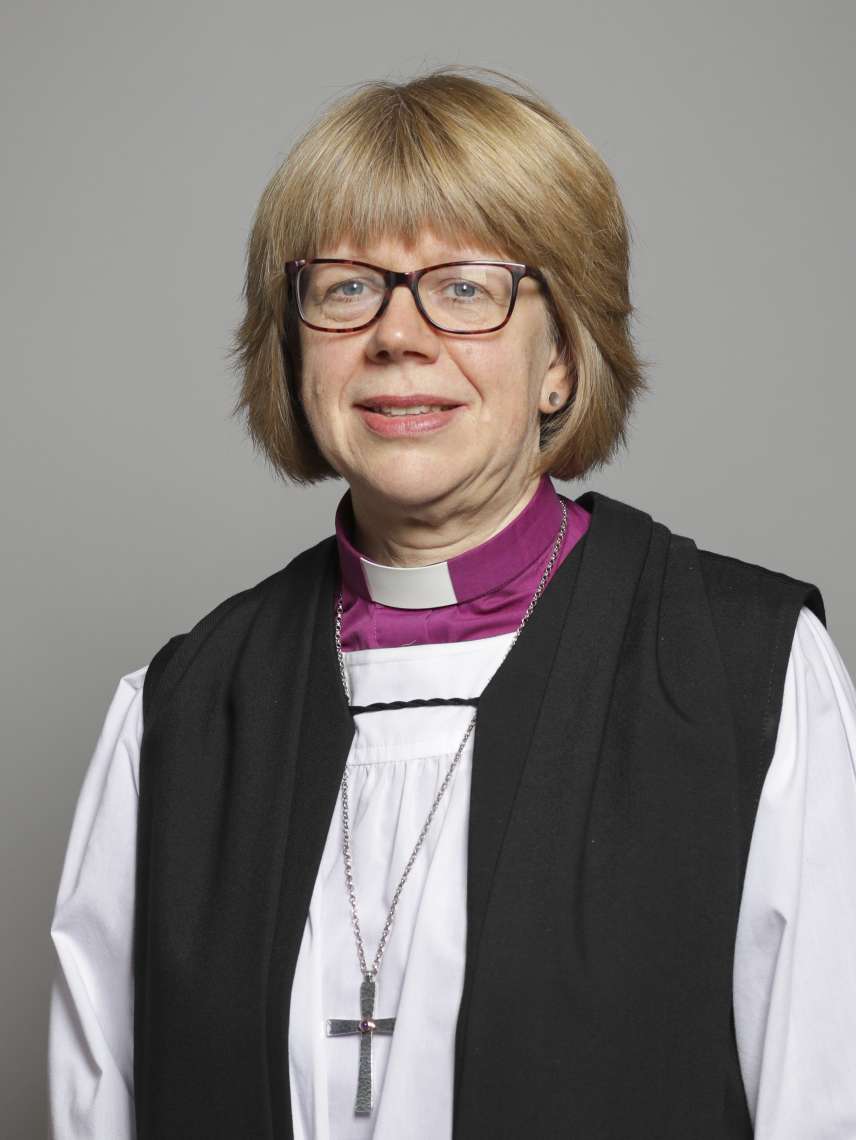
The Church of England has named Sarah Mullally as the next Archbishop of Canterbury, making her the first woman to hold the post in its nearly 500-year history. The announcement, confirmed by Downing Street on Friday with formal assent from King Charles, was hailed in Britain as a milestone for gender equality but immediately sparked opposition from conservative Anglican leaders abroad.

Mullally, 63, the current Bishop of London and a former Chief Nursing Officer for England, will succeed Justin Welby, who resigned amid criticism over his handling of safeguarding scandals and his outspoken interventions on political issues. As Archbishop, she becomes the ceremonial head of the worldwide Anglican Communion, representing around 85 million Christians in more than 165 countries.

Her elevation breaks one of the last glass ceilings in the Church of England, which has ordained women priests for more than three decades and consecrated women bishops since 2014. Yet the move risks further alienating large parts of the Communion in Africa and Asia, where women clergy remain unrecognised and opposition to liberal reforms is fierce.

Within hours of the announcement, senior conservative figures voiced dismay. Laurent Mbanda, Archbishop of Rwanda and chairman of GAFCON, a coalition of traditionalist Anglican churches, warned Mullally would not unify the Communion.

In Nigeria, Bishop Funkuro Godrules Victor Amgbare declared the appointment “very dangerous”, insisting that “Christ is the head of the Church, man is the head of the family, and from creation God has never handed over the position of leadership to woman.”

The Church of England’s own evangelical wing also expressed unease, warning against what it called “a drift away from scripture.”

The issue of same-sex relationships is expected to remain another major fault line. Mullally has supported blessings for same-sex couples, a reform strongly opposed in countries where homosexuality is illegal and where Anglican leaders argue such moves betray biblical teaching.

Speaking at Canterbury Cathedral on Friday, Mullally struck a conciliatory tone. “I will seek to help every ministry to flourish, whatever our tradition,” she said. In an interview with Reuters, she acknowledged that debates over sexuality were unlikely to be resolved quickly. “The Church of England and the broader Communion have long wrestled with difficult issues. It may not be resolved quickly,” she admitted.

She also pledged to confront abuses of power after years of damaging revelations about sexual misconduct and safeguarding failures, and she condemned the surge in antisemitism after Thursday’s deadly attack on a synagogue in Manchester, which left two worshippers dead.

Mullally’s journey to the highest office in the Church has been unusual. Trained as a cancer nurse, she rose to become England’s most senior nurse in the early 2000s before leaving the NHS to pursue ordination. She became a priest in 2002, one of the first women consecrated as a bishop in 2015, and was appointed Bishop of London in 2018 — the second most senior position in the Church.

Married with two grown-up children, she has often said that nursing and ministry share a common calling. “It’s all about people, and sitting with people during the most difficult times in their lives,” she once reflected.

Linda Woodhead, professor of theology and religious studies at King’s College London, said Mullally’s professional background would serve her well. “The Church needs her strong management skills. Her emphasis on unity, gentleness and strength is exactly what the Church, and nation, needs right now,” she said.

Mullally steps into office at a time when the Church is struggling with falling attendance, questions over its relevance in modern Britain, and fierce internal divisions over doctrine. As Archbishop, she will also hold a seat in the House of Lords, giving her a voice in national debates. She has already made clear her opposition to proposed assisted dying legislation currently before Parliament.

In her cathedral address, she warned against the polarisation of public life. “We live in an age that craves certainty and tribalism,” she said, adding that Britain is “wrestling with complex moral and political questions.”

Her predecessor, Justin Welby, was criticised by some Anglicans for taking strong stances on climate change, Brexit, and economic justice. While Mullally has promised to listen carefully to all wings of the Church, her progressive record on women and LGBT+ inclusion ensures her tenure will not be without controversy.

The Archbishop of Canterbury is both a spiritual figurehead and a symbol of England’s established faith. The role dates back nearly 1,400 years, but since the reign of Henry VIII, the Archbishop has served under the monarch as Supreme Governor of the Church of England.

The Vatican, which does not ordain women priests, issued a carefully worded statement welcoming Mullally’s appointment, while noting that the challenges facing the Anglican Communion were “considerable.”

On the streets of Canterbury, some welcomed the news with enthusiasm. David Pestell, 74, who leads a local tourist guide group, said: “Some archbishops have been very good, some pretty bad. Some have been very contentious, and some ended up murdered. I hope it doesn’t happen to this one. It’s delightful.”

For Mullally, the historic weight of her appointment will sit alongside immediate practical demands — healing divisions within her church, defending its place in public life, and carrying its voice into a fractured world. “It is all about people,” she has often said. As the first woman to lead the Anglican Communion, that philosophy may now define her legacy.


Previous Story

Reeves urged to break manifesto pledges

Next Story

Tories pledge £1.6bn ICE-style ‘removals force’

Previous Story

Reeves urged to break manifesto pledges

Next Story

Tories pledge £1.6bn ICE-style ‘removals force’

Latest from -Top News

Pakistan Risks Overstretching Itself in Yemen War

Pakistan’s expanding military role in Saudi Arabia amid the Yemen conflict could strain its defence resources and fragile finances…reports Asian Lite News Desk Pakistan’s military involvement in the war in Yemen may prove unsustainable because of mounting financial pressures and competing security demands, according to a new report. Islamabad’s growing military presence in Saudi Arabia risks stretching its defence resources while exposing the country to greater strategic and economic challenges. An article by Andrew Wilson in One World Outlook describes Pakistan’s involvement as a case of “fiscal and strategic overreach”, arguing that the country lacks the financial flexibility to sustain an expanded military commitment. Pakistan’s external finances depend heavily on an International Monetary Fund (IMF) programme, financial support from Gulf countries and remittances from Pakistani workers in the region. The report argues that deeper military involvement in the conflict could place additional pressure on these sources of financial stability. It also warns that deploying troops and military equipment abroad could weaken Pakistan’s capacity to address security challenges along its eastern border and deal with two domestic insurgencies. The move could also draw Islamabad into a conflict it has sought to approach cautiously. A Reuters report in May, citing Pakistani security and government sources, said Islamabad had deployed around 8,000 troops, a squadron of approximately 16 aircraft, mostly JF-17 fighter jets, two drone squadrons and a Chinese HQ-9 air-defence battery to Saudi Arabia. According to those sources, Riyadh was financing the deployment, with Pakistani personnel operating the equipment. The sources also said a confidential agreement contemplated the possibility of deploying up to 80,000 troops. Islamabad has not confirmed those figures, although it has acknowledged its military presence in Saudi Arabia, including the deployment of fighter jets at King Abdulaziz Air Base from April. The One World Outlook article argues that Saudi financial support can cover allowances and operating expenses but cannot easily replace military equipment needed elsewhere or resolve the political and strategic challenges of participating in the Yemen conflict. Pakistan’s defence budget is another concern. For the 2026-27 financial year, the federal government allocated PKR 3 trillion, or approximately $10.8 billion, to defence services. The allocation represents an 18 per cent increase from the original PKR 2.55 trillion provision and amounts to around 2.1 per cent of projected gross domestic product (GDP). Defence spending accounts for approximately 16 per cent of the federal government’s PKR 18.8 trillion expenditure. Military pensions are budgeted separately at PKR 822 billion, while debt servicing costs stand at approximately PKR 8 trillion, more than two-and-a-half times the defence allocation. The report argues that these competing financial obligations leave little room for additional military expenditure without placing further pressure on public finances. Pakistan’s reliance on IMF assistance also limits its fiscal flexibility. The country must meet the conditions attached to the programme, including a primary budget surplus target of 2 per cent of GDP and continued restraint on development spending. According to the article, these requirements make it difficult for Islamabad to finance an additional military commitment without compromising other budgetary priorities. Pakistan’s economic indicators offer limited reassurance. Economic growth for the 2025-26 financial year is estimated at between 3.6 and 3.7 per cent, while inflation reached approximately 10.3 per cent in September following an energy price shock. Foreign exchange reserves stood at around $21.5 billion at the end of September. Although this marks an improvement from the low levels recorded in 2023, the report notes that the reserves cover only a few months of imports. Financial assistance from Gulf partners remains central to Pakistan’s external stability. The article says Islamabad holds approximately $8 billion in Saudi deposits at its central bank. In July, the State Bank of Pakistan said Riyadh had extended the maturity of $5 billion in deposits to December 2028, easing the country’s immediate external financing requirements. A further $3 billion deposit was also extended in the spring. However, the article argues that these arrangements provide temporary relief rather than long-term financial independence, particularly as regional conflict threatens the stability of the Gulf economies on which Pakistan relies. The report concludes that Pakistan faces a difficult balance between supporting Saudi Arabia militarily and preserving the financial and military resources needed to address its domestic and regional challenges.

UK and Germany Ratify Kensington Treaty

Britain and Germany ratify the Kensington Treaty, agreeing new cooperation on AI, quantum research, defence and security while targeting investment, jobs and Russian hybrid threats…reports Asian Lite News Desk Britain and Germany

Economic tide is turning in Bangladesh

If there is one thing that can bring some comfort to the struggling Bangladeshi economy, it is good relations with India. Bangladesh should remember that Delhi’s backing, through easy supplies of essentials
Go toTop

Don't Miss

Whistleblower Haugen tears apart FB’s transparency claim

Haugen simplified the math pointing to how “what they (Facebook)

Junior doctors accept 22% pay rise to end strikes

The offer was made by Health Secretary Wes Streeting in