October 27, 2021
3 mins read

Whistleblower Haugen tears apart FB’s transparency claim

Haugen simplified the math pointing to how “what they (Facebook) can find” is the trick phrase…reports Nikhila Natarajan

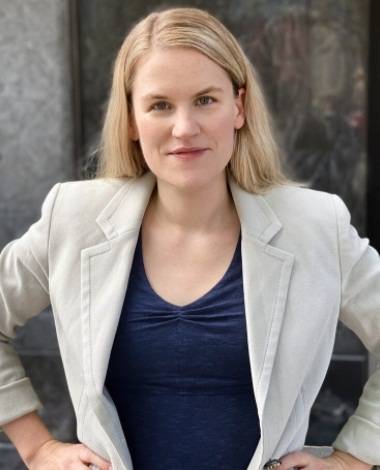
Whistleblower Frances Haugen began her 158-minute testimony before British parliamentarians on Monday stating that the Facebook transparency report inflates, multiple times over, hate speech it actually takes down.

The chair began by drawing Haugen, former product manager and Harvard Business School alum, into the behemoth’s transparency claim that 97 per cent of hate speech they can find is taken down.

Haugen simplified the math pointing to how “what they (Facebook) can find” is the trick phrase here.

The actual hate speech brought down as a percentage of total hate speech on the platform is 3-5 per cent, she said.
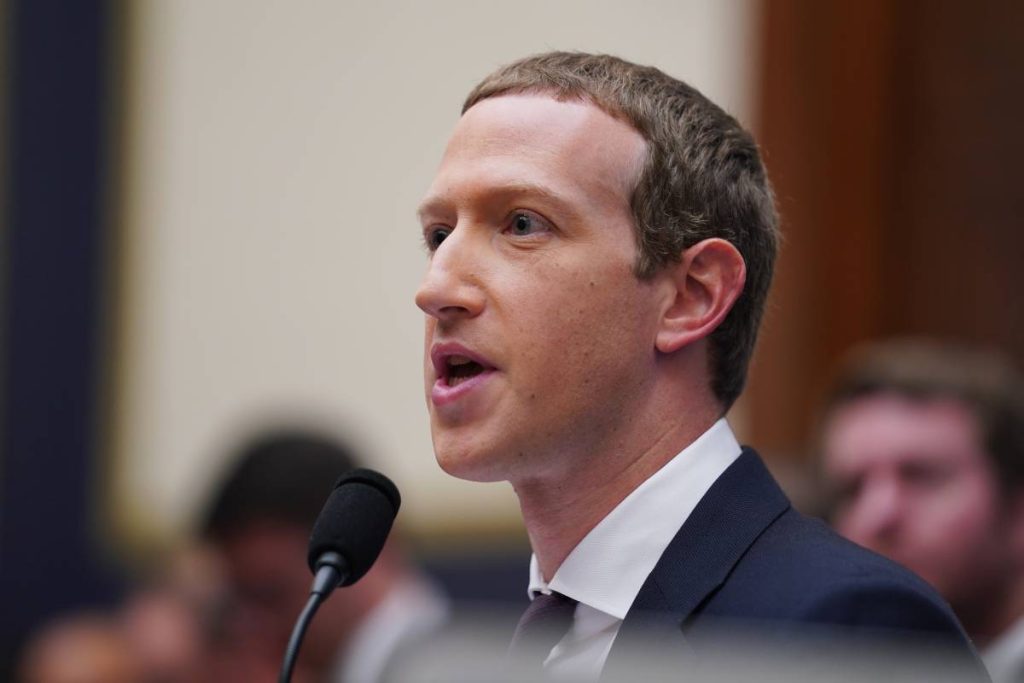
“The (97 per cent) stuff they (Facebook) talk about is (hate) stuff that robots got divided by the stuff that robots got plus the stuff that humans reported! That’s not the number we want. The fraction we expect to hear is total hate speech caught divided by total hate speech.”

Though most of Haugen’s testimony repeated what she said before US lawmakers earlier, the British are all ears because they are toying with the idea of an online regulator who can splice through the chaff and ask these kinds of ‘right’ questions.

A global barrage of scrutiny, basis some 10,000 pieces of internal documentation, is being called, The Facebook Project. A collective of 17 competing media platforms have been creeding in sync.

This on the day Facebook’s Q3 is expected at the end of market hours.

“Facebook is expected to report earnings on 10/25/2021 after market close. The report will be for the fiscal Quarter ending Sep 2021. According to Zacks Investment Research, based on 13 analysts’ forecasts, the consensus EPS forecast for the quarter is $3.2. The reported EPS for the same quarter last year was $2.71,” a Nasdaq notice said.

As analysts wait for the investor call, the trickiest bits may not be about financials, but the whistleblower who warned that Facebook, despite having thousands of decent folks on its staff, will fuel more episodes of violent unrest around the world because of the way its algorithms are designed to promote divisive content.

The former product manager on the civic misinformation team claimed that the social network saw safety as a cost centre, lionised a start-up culture where cutting corners was a good thing, and was “unquestionably” making hatred.

“The events we’re seeing around the world, things like Myanmar and Ethiopia, those are the opening chapters because engagement-based ranking does two things: one, it prioritizes and amplifies divisive and polarizing extreme content and two it concentrates it,” Haugen said.

Haugen argued that the algorithms pushed users towards the extreme. “So someone center left, they’ll be pushed to radical left, someone centre right will be pushed to radical right.”

Likewise, children being pushed into the pit via accounts that authority figures can’t find out.

Facebook CEO Mark Zuckerberg has contested such accusations earlier this month. “The argument that we deliberately push content that makes people angry for profit is deeply illogical,” Zuckerberg – ranked 7th in the Forbes real time list of billionaires at $116 billion as of Monday – had said.

Documents cited indicate that Facebook had known that it hadn’t hired enough workers who possessed both the language skills and knowledge of local events needed to identify objectionable posts from users in a number of developing countries.

The Facebook Papers project is a unique collaboration among 17 American news organizations, including The Associated Press and Reuters.

A separate consortium of European news outlets had access to the same set of documents, and members of both groups began publishing content at 7 a.m. EDT on Monday, Oct. 25.

That date and time was set by the partner news organizations to give everyone in the consortium an opportunity to fully analyze the documents, report out relevant details, and to give Facebook’s public relations staff time to respond to questions and inquiries raised by that reporting.

ALSO READ: How Facebook becomes an ‘atom bomb’? Nobel laurate opens up

ALSO READ: How Facebook outage wreaked havoc on the global ad empire

Previous Story

China draws fire for breaking trade rules

Next Story

Global Village Opens With Unique Experiences

Previous Story

China draws fire for breaking trade rules

Next Story

Global Village Opens With Unique Experiences

Latest from -Top News

Pakistan Risks Overstretching Itself in Yemen War

Pakistan’s expanding military role in Saudi Arabia amid the Yemen conflict could strain its defence resources and fragile finances…reports Asian Lite News Desk Pakistan’s military involvement in the war in Yemen may prove unsustainable because of mounting financial pressures and competing security demands, according to a new report. Islamabad’s growing military presence in Saudi Arabia risks stretching its defence resources while exposing the country to greater strategic and economic challenges. An article by Andrew Wilson in One World Outlook describes Pakistan’s involvement as a case of “fiscal and strategic overreach”, arguing that the country lacks the financial flexibility to sustain an expanded military commitment. Pakistan’s external finances depend heavily on an International Monetary Fund (IMF) programme, financial support from Gulf countries and remittances from Pakistani workers in the region. The report argues that deeper military involvement in the conflict could place additional pressure on these sources of financial stability. It also warns that deploying troops and military equipment abroad could weaken Pakistan’s capacity to address security challenges along its eastern border and deal with two domestic insurgencies. The move could also draw Islamabad into a conflict it has sought to approach cautiously. A Reuters report in May, citing Pakistani security and government sources, said Islamabad had deployed around 8,000 troops, a squadron of approximately 16 aircraft, mostly JF-17 fighter jets, two drone squadrons and a Chinese HQ-9 air-defence battery to Saudi Arabia. According to those sources, Riyadh was financing the deployment, with Pakistani personnel operating the equipment. The sources also said a confidential agreement contemplated the possibility of deploying up to 80,000 troops. Islamabad has not confirmed those figures, although it has acknowledged its military presence in Saudi Arabia, including the deployment of fighter jets at King Abdulaziz Air Base from April. The One World Outlook article argues that Saudi financial support can cover allowances and operating expenses but cannot easily replace military equipment needed elsewhere or resolve the political and strategic challenges of participating in the Yemen conflict. Pakistan’s defence budget is another concern. For the 2026-27 financial year, the federal government allocated PKR 3 trillion, or approximately $10.8 billion, to defence services. The allocation represents an 18 per cent increase from the original PKR 2.55 trillion provision and amounts to around 2.1 per cent of projected gross domestic product (GDP). Defence spending accounts for approximately 16 per cent of the federal government’s PKR 18.8 trillion expenditure. Military pensions are budgeted separately at PKR 822 billion, while debt servicing costs stand at approximately PKR 8 trillion, more than two-and-a-half times the defence allocation. The report argues that these competing financial obligations leave little room for additional military expenditure without placing further pressure on public finances. Pakistan’s reliance on IMF assistance also limits its fiscal flexibility. The country must meet the conditions attached to the programme, including a primary budget surplus target of 2 per cent of GDP and continued restraint on development spending. According to the article, these requirements make it difficult for Islamabad to finance an additional military commitment without compromising other budgetary priorities. Pakistan’s economic indicators offer limited reassurance. Economic growth for the 2025-26 financial year is estimated at between 3.6 and 3.7 per cent, while inflation reached approximately 10.3 per cent in September following an energy price shock. Foreign exchange reserves stood at around $21.5 billion at the end of September. Although this marks an improvement from the low levels recorded in 2023, the report notes that the reserves cover only a few months of imports. Financial assistance from Gulf partners remains central to Pakistan’s external stability. The article says Islamabad holds approximately $8 billion in Saudi deposits at its central bank. In July, the State Bank of Pakistan said Riyadh had extended the maturity of $5 billion in deposits to December 2028, easing the country’s immediate external financing requirements. A further $3 billion deposit was also extended in the spring. However, the article argues that these arrangements provide temporary relief rather than long-term financial independence, particularly as regional conflict threatens the stability of the Gulf economies on which Pakistan relies. The report concludes that Pakistan faces a difficult balance between supporting Saudi Arabia militarily and preserving the financial and military resources needed to address its domestic and regional challenges.
Go toTop

Don't Miss

Reeves wins over voters

Chancellor hopes extra money for NHS and public services will

UK, Ireland to host Euro 2028

Rome and Istanbul are separated by about 1,400 kilometers (870