June 20, 2025
5 mins read

Over 300 stars join call to ‘end UK complicity’ in Gaza

A further 100 famous actors, activists, musicians and sportspeople have joined hundreds of others calling on Prime Minister Keir Starmer to suspend arms sales to Israel

More than 300 prominent figures from the worlds of film, music, literature, activism and sport, including Dame Judi Dench, Nobel Peace Prize laureate Malala Yousafzai and actor Stanley Tucci, have added their names to an open letter urging Prime Minister Sir Keir Starmer to take immediate action to end what they describe as the United Kingdom’s “complicity” in the ongoing humanitarian crisis in Gaza.

The letter, organised by the refugee charity Choose Love, demands a full suspension of all UK arms sales and export licences to Israel, as well as the urgent facilitation of humanitarian aid into Gaza and a brokered permanent ceasefire.

Among the newly announced signatories are actors Florence Pugh and Russell Tovey, Doctor Who star Ncuti Gatwa, musician Paolo Nutini, author Michael Rosen, singer Paul Weller, Little Mix members Leigh-Anne Pinnock and Jade Thirlwall, broadcaster Fearne Cotton, Game of Thrones actress Carice van Houten, Harry Potter star Bonnie Wright and former England rugby captain Chris Robshaw.

They join a growing list of celebrities, including Dua Lipa, Benedict Cumberbatch and Gary Lineker, who had previously endorsed the call for government action. The campaign has gained momentum as the situation in Gaza continues to worsen, with humanitarian organisations warning of a deepening crisis.

The letter states: “Children are starving while food and medicine sit just minutes away. Seventy-one thousand children under the age of four are acutely malnourished, and those who survive starvation wake up to bombs falling on them. More than 15,000 children have already been killed.”

It continues: “Violence stamped with UK inaction – flown with parts shipped from British factories to Israel – could be obliterating families in seconds. You can’t call it ‘intolerable’, yet do nothing. Every moment this continues is another moment children die on our watch.”

Addressing the Prime Minister directly, the letter declares: “History is written in moments of moral clarity. This is one. The world is watching, and history will not forget. The children of Gaza cannot wait another minute. Prime Minister, what will you choose? Complicity in war crimes, or the courage to act?”

In September 2024, the UK government suspended around 30 arms export licences to Israel. However, export licensing data published in May revealed that between October and December 2024, the UK approved £127.6 million worth of military equipment sales to Israel — more than the total approved between 2020 and 2023 combined.

Although Prime Minister Starmer has described Israel’s military strikes and blockade of aid into Gaza as “appalling and intolerable”, he has yet to announce further steps. Increasing pressure is being applied from within his own party, with some Labour MPs calling for the government to formally acknowledge the conflict as genocide — a term Starmer has so far avoided using.
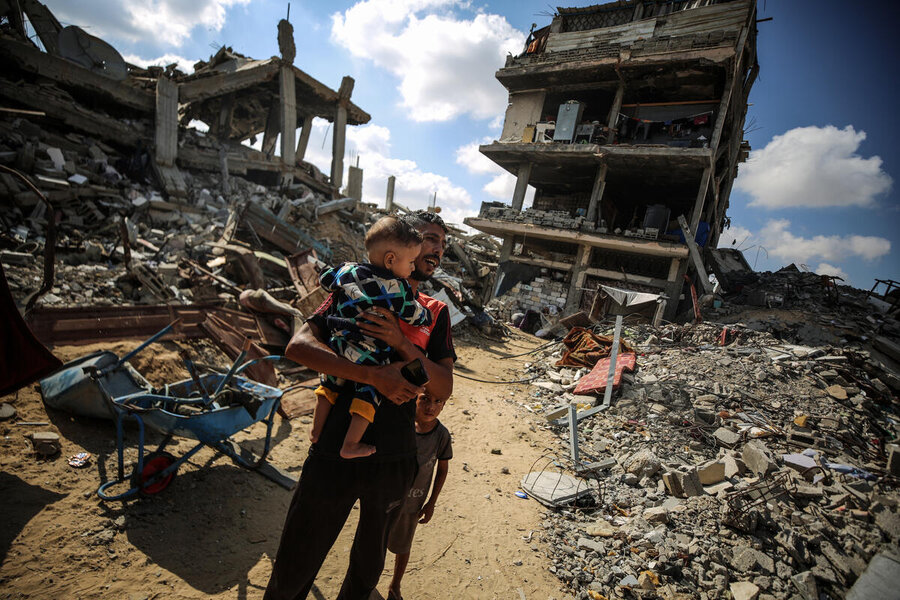
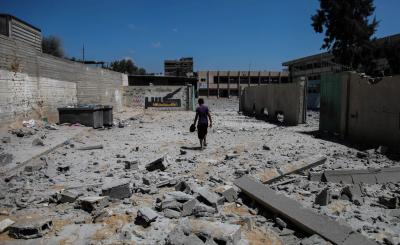
Palestine, Khan Younis, Gaza Strip, 29 September 2024 In the photo: Suliman and Nour Azab, along with their four children, have been displaced more than three times. With no place left to turn, they decided to return to their collapsing home in Khan Younis. It wasn’t just a return to a familiar place; it was a last resort, a quest for shelter when all else had been stripped away.

On 10 June, the UK joined Australia, Canada, New Zealand and Norway in imposing sanctions on far-right Israeli ministers Itamar Ben-Gvir and Bezalel Smotrich. The ministers were sanctioned for repeated incitements of violence against Palestinian civilians and are now subject to UK travel bans, asset freezes and director disqualifications.

Meanwhile, Starmer has announced the deployment of additional Royal Air Force assets, including Typhoon fighter jets and aerial refuelling aircraft, to the Middle East in light of recent clashes between Israel and Iran. On Tuesday, the Prime Minister expressed concern over the escalating regional conflict and its implications for Gaza.

Josie Naughton, co-founder and Chief Executive of Choose Love, said that support for the campaign is growing rapidly. “Since we urged the government to end its complicity in the horrors of Gaza, more people have added their voices to our call,” she said. “We cannot be silent while children are being killed and families are being starved.”

Naughton highlighted a recent public act of remembrance held by campaigners outside Parliament, where all 15,613 names of children killed in Gaza were read aloud over 18 hours.

“Every single one of them was someone’s whole universe,” she said. “Every one of them deserved better. The situation is changing by the second, but until the UK government halts all arms sales and licences to Israel, ensures humanitarian aid can reach people starving inside Gaza, and stops the killing, they will not have done enough.”

She concluded: “History will remember how we acted in this moment. We beg Keir Starmer to end the UK’s complicity in these horrors.”

In response, a government spokesperson reiterated the UK’s stance on the conflict, stating: “We strongly oppose the expansion of military operations in Gaza and call on the Israeli government to cease its offensive and immediately allow for unfettered access to humanitarian aid. The denial of essential humanitarian assistance to the civilian population in Gaza is unacceptable and risks breaching international humanitarian law.”

The spokesperson added: “Last year, we suspended export licences to Israel for items used in military operations in Gaza and continue to refuse licences for military goods that could be used by Israel in the current conflict. We urge all parties to urgently agree a ceasefire agreement and work towards a permanent and sustainable peace.”

As the humanitarian toll in Gaza mounts and international concern escalates, pressure continues to grow on the British government to match its rhetoric with decisive action.

Previous Story

MPs confident of dying bill’s passage

Next Story

Overcrowded jails fuel prisoner violence

Previous Story

MPs confident of dying bill’s passage

Next Story

Overcrowded jails fuel prisoner violence

Latest from -Top News

Pakistan Risks Overstretching Itself in Yemen War

Pakistan’s expanding military role in Saudi Arabia amid the Yemen conflict could strain its defence resources and fragile finances…reports Asian Lite News Desk Pakistan’s military involvement in the war in Yemen may prove unsustainable because of mounting financial pressures and competing security demands, according to a new report. Islamabad’s growing military presence in Saudi Arabia risks stretching its defence resources while exposing the country to greater strategic and economic challenges. An article by Andrew Wilson in One World Outlook describes Pakistan’s involvement as a case of “fiscal and strategic overreach”, arguing that the country lacks the financial flexibility to sustain an expanded military commitment. Pakistan’s external finances depend heavily on an International Monetary Fund (IMF) programme, financial support from Gulf countries and remittances from Pakistani workers in the region. The report argues that deeper military involvement in the conflict could place additional pressure on these sources of financial stability. It also warns that deploying troops and military equipment abroad could weaken Pakistan’s capacity to address security challenges along its eastern border and deal with two domestic insurgencies. The move could also draw Islamabad into a conflict it has sought to approach cautiously. A Reuters report in May, citing Pakistani security and government sources, said Islamabad had deployed around 8,000 troops, a squadron of approximately 16 aircraft, mostly JF-17 fighter jets, two drone squadrons and a Chinese HQ-9 air-defence battery to Saudi Arabia. According to those sources, Riyadh was financing the deployment, with Pakistani personnel operating the equipment. The sources also said a confidential agreement contemplated the possibility of deploying up to 80,000 troops. Islamabad has not confirmed those figures, although it has acknowledged its military presence in Saudi Arabia, including the deployment of fighter jets at King Abdulaziz Air Base from April. The One World Outlook article argues that Saudi financial support can cover allowances and operating expenses but cannot easily replace military equipment needed elsewhere or resolve the political and strategic challenges of participating in the Yemen conflict. Pakistan’s defence budget is another concern. For the 2026-27 financial year, the federal government allocated PKR 3 trillion, or approximately $10.8 billion, to defence services. The allocation represents an 18 per cent increase from the original PKR 2.55 trillion provision and amounts to around 2.1 per cent of projected gross domestic product (GDP). Defence spending accounts for approximately 16 per cent of the federal government’s PKR 18.8 trillion expenditure. Military pensions are budgeted separately at PKR 822 billion, while debt servicing costs stand at approximately PKR 8 trillion, more than two-and-a-half times the defence allocation. The report argues that these competing financial obligations leave little room for additional military expenditure without placing further pressure on public finances. Pakistan’s reliance on IMF assistance also limits its fiscal flexibility. The country must meet the conditions attached to the programme, including a primary budget surplus target of 2 per cent of GDP and continued restraint on development spending. According to the article, these requirements make it difficult for Islamabad to finance an additional military commitment without compromising other budgetary priorities. Pakistan’s economic indicators offer limited reassurance. Economic growth for the 2025-26 financial year is estimated at between 3.6 and 3.7 per cent, while inflation reached approximately 10.3 per cent in September following an energy price shock. Foreign exchange reserves stood at around $21.5 billion at the end of September. Although this marks an improvement from the low levels recorded in 2023, the report notes that the reserves cover only a few months of imports. Financial assistance from Gulf partners remains central to Pakistan’s external stability. The article says Islamabad holds approximately $8 billion in Saudi deposits at its central bank. In July, the State Bank of Pakistan said Riyadh had extended the maturity of $5 billion in deposits to December 2028, easing the country’s immediate external financing requirements. A further $3 billion deposit was also extended in the spring. However, the article argues that these arrangements provide temporary relief rather than long-term financial independence, particularly as regional conflict threatens the stability of the Gulf economies on which Pakistan relies. The report concludes that Pakistan faces a difficult balance between supporting Saudi Arabia militarily and preserving the financial and military resources needed to address its domestic and regional challenges.

UK and Germany Ratify Kensington Treaty

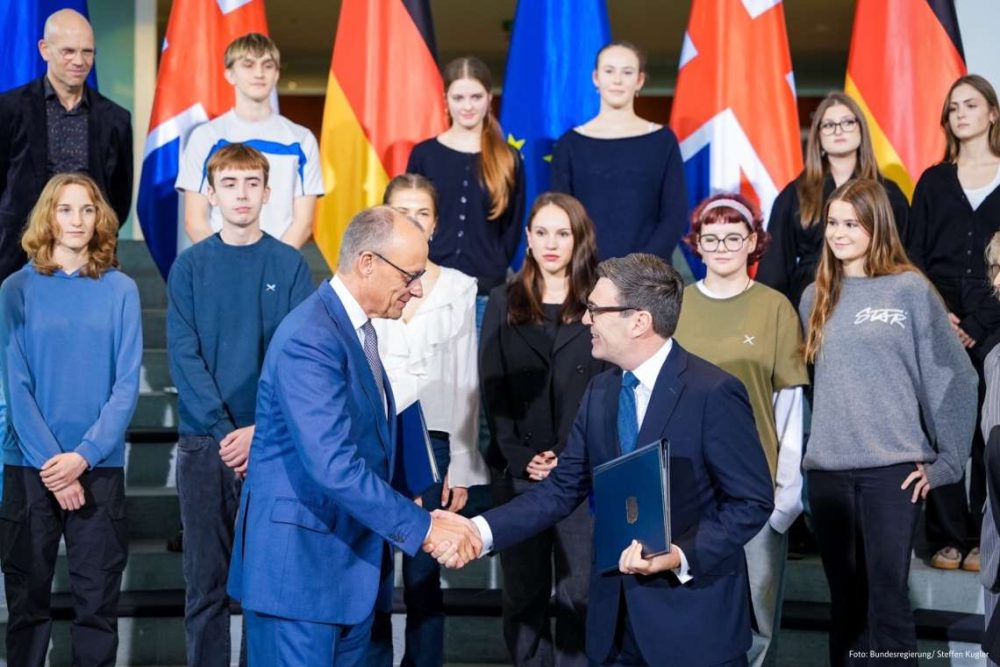
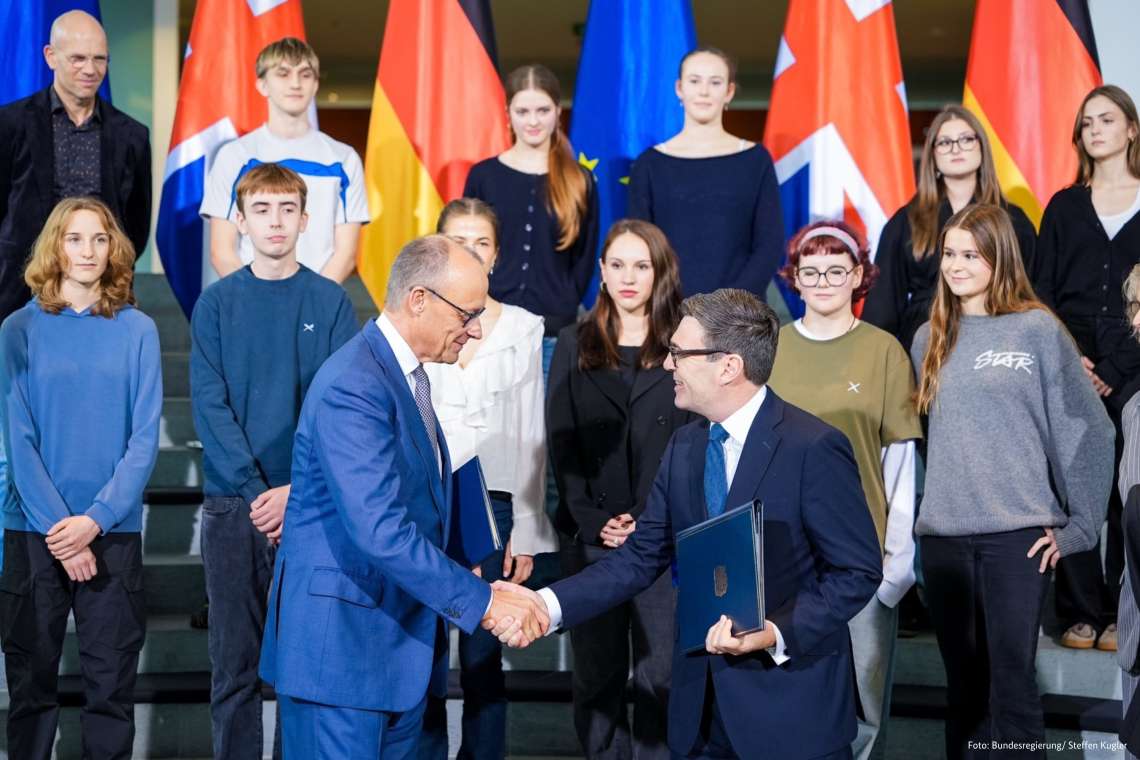
Britain and Germany ratify the Kensington Treaty, agreeing new cooperation on AI, quantum research, defence and security while targeting investment, jobs and Russian hybrid threats…reports Asian Lite News Desk Britain and Germany

Economic tide is turning in Bangladesh

If there is one thing that can bring some comfort to the struggling Bangladeshi economy, it is good relations with India. Bangladesh should remember that Delhi’s backing, through easy supplies of essentials
Go toTop

Don't Miss

US, Saudi Arabia Discuss Gaza Crisis

The top diplomats of US and Saudi Arabia discussed “all

‘Delaying routine care was least bad of awful options’ 

Former health secretary also pressed at Covid inquiry on the