August 10, 2025
4 mins read

UK to donate additional $11.4m for Gaza  

The UK is delivering the funds through the UN Office for the Coordination of Humanitarian Affairs, which has warned of worsening famine among the 2.1 million Palestinians in Gaza

The UK will donate an additional £8.5 million ($11.4 million) for Gaza humanitarian assistance if Israel allows a “flood” of aid to enter the Palestinian enclave, said Development Minister Jenny Chapman. It is part of a £101 million UK package for the Occupied Territories this year.

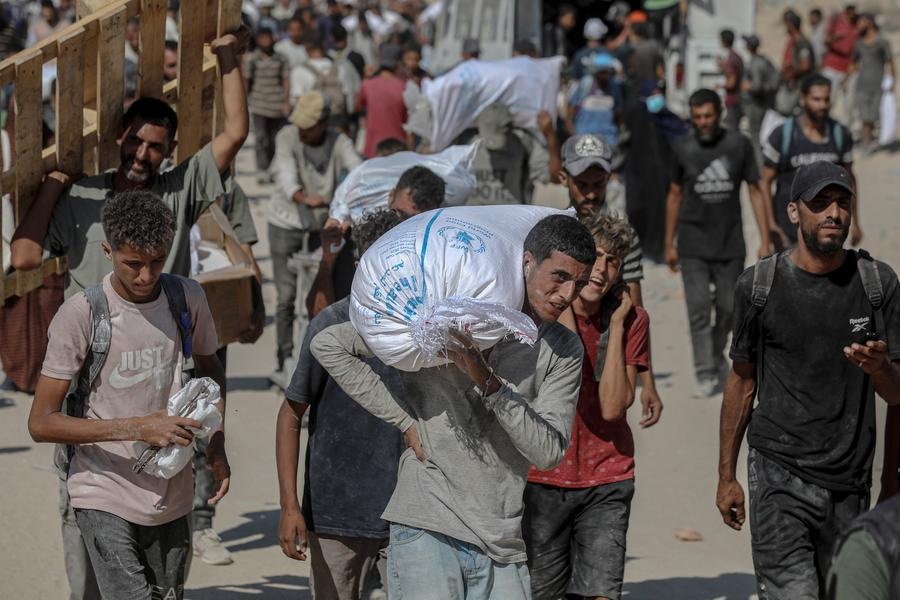
The funds will “help address urgent need” in Gaza, said Chapman. “It is unacceptable that so much aid is waiting at the border — the UK is ready to provide more through our partners, and we demand that the government of Israel allows more aid in safely and securely,” she added.

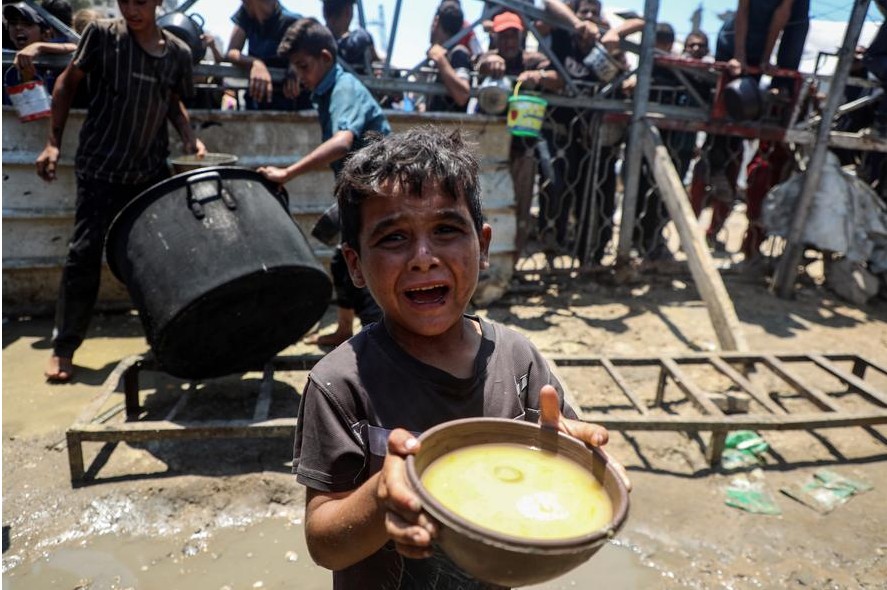
“The insufficient amount of supplies getting through is causing appalling and chaotic scenes as desperate civilians try to access tiny amounts of aid.”

The UK is delivering the funds through the UN Office for the Coordination of Humanitarian Affairs, which has warned of worsening famine among the 2.1 million Palestinians in Gaza.

Meanwhile, Starmer has asked Israel to reconsider its plan to take control of Gaza City, which he branded as “wrong”. “This action will do nothing to bring an end to this conflict or to help secure the release of the hostages,” he said, warning that it “will only bring more bloodshed”.

The condemnation came hours after Israel’s military announced it will “take control” of Gaza City under a plan proposed by Prime Minister Benjamin Netanyahu and approved by his security cabinet. Starmer’s government has become increasingly vocal in its demands for Israel to deescalate its war in the Palestinian territory, citing the humanitarian crisis there.

Last week, he pledged that London would formally recognise a Palestinian state in September unless Israel takes “substantive steps”, including agreeing to a ceasefire in Gaza. In his statement, Starmer said Israel’s “decision to further escalate its offensive in Gaza is wrong, and we urge it to reconsider immediately”.

“Every day the humanitarian crisis in Gaza worsens and hostages taken by Hamas are being held in appalling and inhuman conditions. What we need is a ceasefire, a surge in humanitarian aid, the release of all hostages by Hamas and a negotiated solution.”

Starmed noted that the UK and its allies “are working on a long-term plan to secure peace in the region as part of a two-state solution”. “But without both sides engaging in good faith in negotiations, that prospect is vanishing before our eyes,” he added. “Our message is clear: a diplomatic solution is possible, but both parties must step away from the path of destruction.”

On Saturday, the UK and four allies have criticised Israel’s decision to launch a new large-scale military operation in Gaza – warning it will “aggravate the catastrophic humanitarian situation” in the territory.

The foreign ministers of Britain, Australia, Germany, Italy, France, Canada, Austria, Norway, and New Zealand said in a joint statement that the offensive will “endanger the lives of hostages” and “risk violating international humanitarian law”.

In their joint statement, the UK and its allies said they “strongly reject” the decision, adding: “It will endanger the lives of the hostages and further risk the mass displacement of civilians. “The plans that the government of Israel has announced risk violating international humanitarian law. Any attempts at annexation or of settlement extension violate international law.”

The countries also called for a permanent ceasefire as “the worst-case scenario of famine is unfolding in Gaza”. It comes it was found that airdrops of aid are making little difference to Gaza’s hunger crisis, and pose serious risks to the population – with a father-of-two killed by a falling package.

Meanwhile, France, Canada, Qatar, the United Arab Emirates and the United Nations all criticised Israel’s plan for a full occupation of Gaza. Israeli Prime Minister Benjamin Netanyahu “expressed his disappointment” with German Chancellor Friedrich Merz’s in phone call on Friday after Berlin decided it would stop selling arms to Israel.

In a post on X, the Israeli prime minister’s office added: “Instead of supporting Israel’s just war against Hamas, which carried out the most horrific attack against the Jewish people since the Holocaust, Germany is rewarding Hamas terrorism by embargoing arms to Israel.”

Earlier on Friday, the US Ambassador to Israel, Mike Huckabee, criticised Keir Starmer after he said Israel’s decision to “escalate its offensive” in Gaza is “wrong”. Huckabee wrote on X: “So Israel is expected to surrender to Hamas & feed them even though Israeli hostages are being starved? Did UK surrender to Nazis and drop food to them? Ever heard of Dresden, PM Starmer? That wasn’t food you dropped. If you had been PM then UK would be speaking German!”

Previous Story

Police arrest 474 at Palestine Action ban protest

Next Story

Tel Aviv Demands Gaza Ceasefire

Previous Story

Police arrest 474 at Palestine Action ban protest

Next Story

Tel Aviv Demands Gaza Ceasefire

Latest from -Top News

Pakistan Risks Overstretching Itself in Yemen War

Pakistan’s expanding military role in Saudi Arabia amid the Yemen conflict could strain its defence resources and fragile finances…reports Asian Lite News Desk Pakistan’s military involvement in the war in Yemen may prove unsustainable because of mounting financial pressures and competing security demands, according to a new report. Islamabad’s growing military presence in Saudi Arabia risks stretching its defence resources while exposing the country to greater strategic and economic challenges. An article by Andrew Wilson in One World Outlook describes Pakistan’s involvement as a case of “fiscal and strategic overreach”, arguing that the country lacks the financial flexibility to sustain an expanded military commitment. Pakistan’s external finances depend heavily on an International Monetary Fund (IMF) programme, financial support from Gulf countries and remittances from Pakistani workers in the region. The report argues that deeper military involvement in the conflict could place additional pressure on these sources of financial stability. It also warns that deploying troops and military equipment abroad could weaken Pakistan’s capacity to address security challenges along its eastern border and deal with two domestic insurgencies. The move could also draw Islamabad into a conflict it has sought to approach cautiously. A Reuters report in May, citing Pakistani security and government sources, said Islamabad had deployed around 8,000 troops, a squadron of approximately 16 aircraft, mostly JF-17 fighter jets, two drone squadrons and a Chinese HQ-9 air-defence battery to Saudi Arabia. According to those sources, Riyadh was financing the deployment, with Pakistani personnel operating the equipment. The sources also said a confidential agreement contemplated the possibility of deploying up to 80,000 troops. Islamabad has not confirmed those figures, although it has acknowledged its military presence in Saudi Arabia, including the deployment of fighter jets at King Abdulaziz Air Base from April. The One World Outlook article argues that Saudi financial support can cover allowances and operating expenses but cannot easily replace military equipment needed elsewhere or resolve the political and strategic challenges of participating in the Yemen conflict. Pakistan’s defence budget is another concern. For the 2026-27 financial year, the federal government allocated PKR 3 trillion, or approximately $10.8 billion, to defence services. The allocation represents an 18 per cent increase from the original PKR 2.55 trillion provision and amounts to around 2.1 per cent of projected gross domestic product (GDP). Defence spending accounts for approximately 16 per cent of the federal government’s PKR 18.8 trillion expenditure. Military pensions are budgeted separately at PKR 822 billion, while debt servicing costs stand at approximately PKR 8 trillion, more than two-and-a-half times the defence allocation. The report argues that these competing financial obligations leave little room for additional military expenditure without placing further pressure on public finances. Pakistan’s reliance on IMF assistance also limits its fiscal flexibility. The country must meet the conditions attached to the programme, including a primary budget surplus target of 2 per cent of GDP and continued restraint on development spending. According to the article, these requirements make it difficult for Islamabad to finance an additional military commitment without compromising other budgetary priorities. Pakistan’s economic indicators offer limited reassurance. Economic growth for the 2025-26 financial year is estimated at between 3.6 and 3.7 per cent, while inflation reached approximately 10.3 per cent in September following an energy price shock. Foreign exchange reserves stood at around $21.5 billion at the end of September. Although this marks an improvement from the low levels recorded in 2023, the report notes that the reserves cover only a few months of imports. Financial assistance from Gulf partners remains central to Pakistan’s external stability. The article says Islamabad holds approximately $8 billion in Saudi deposits at its central bank. In July, the State Bank of Pakistan said Riyadh had extended the maturity of $5 billion in deposits to December 2028, easing the country’s immediate external financing requirements. A further $3 billion deposit was also extended in the spring. However, the article argues that these arrangements provide temporary relief rather than long-term financial independence, particularly as regional conflict threatens the stability of the Gulf economies on which Pakistan relies. The report concludes that Pakistan faces a difficult balance between supporting Saudi Arabia militarily and preserving the financial and military resources needed to address its domestic and regional challenges.
Go toTop

Don't Miss

Climate Finance: UK pledges additional 1 bn pounds

The COP26 climate summit comes six years after the Paris

Saudi crown prince Salman invited to visit UK

The Crown Prince would hold high-level discussions with Prime Minister