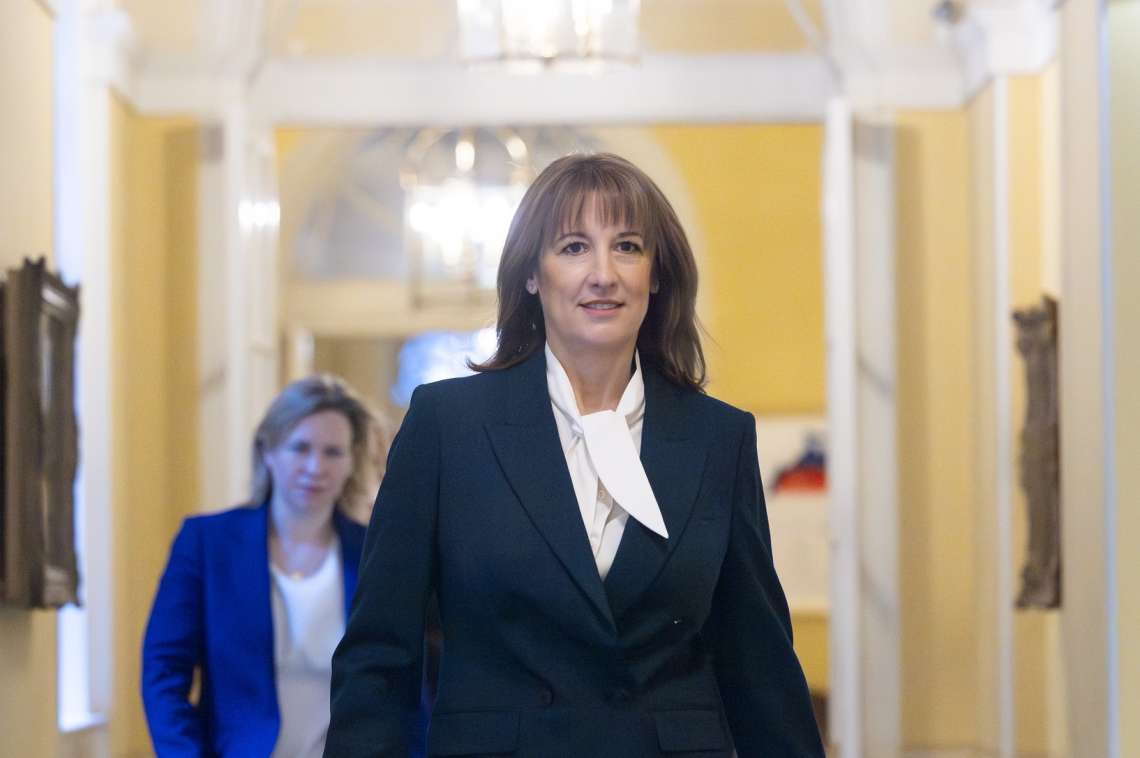
If a government cannot even manage the timing of its own flagship economic statement, you can be fairly sure what follows will not inspire confidence, writes Harmeet Ahuja
The Office for Budget Responsibility told the story before the Chancellor could. Half an hour before Rachel Reeves rose in the Commons, the entire Budget had already been published.
That shambolic rollout was revealing. If a government cannot even manage the timing of its own flagship economic statement, you can be fairly sure what follows will not inspire confidence. And so it proved: £26 billion of tax rises, another three years of frozen thresholds, and a series of welfare expansions that quietly rewrites the basic deal between citizen and state. My first reaction wasn’t to the spreadsheets. It was to the intent. This was a Budget designed to look tough and responsible while doing the opposite. A Budget that tells voters one thing about “stability” and “growth”, while in practice loading higher taxes onto work and pumping more money into a welfare system that makes not working comparatively more attractive. It placates backbenchers and internal factions – and sends the bill to anyone who tries to get on through effort. The politics are obvious. The economics is dangerous.
For years, politicians have spoken about “hard-working families” as if they were the moral centre of our economy. Yet the direction of policy now does more to penalise hard work and success than to reward it.
We are building a system in which the state increasingly steps in not just as a safety net, but as an alternative life strategy. The more you earn, the more the Treasury takes. The less you do, the more generous and complex the web of support becomes. Personal financial responsibility used to be something we expected of ourselves. You budgeted before you made commitments. You didn’t assume that, if things didn’t add up, the state would simply step in indefinitely and make it someone else’s problem. It was a basic link between choice and consequence. Now that link is being eroded. The question is shifting from “can I afford this, and how do I work towards it?” to “why isn’t someone else paying for this?” The more the government leans on the language of compassion, the more it disconnects decisions from their financial reality.
There is an uncomfortable truth at the heart of this debate: unless you can support your household, you should not expect others to shoulder that responsibility indefinitely. The safety net has quietly become a lifestyle option. The moral language has changed, but the bill still lands somewhere. Someone always pays. Right now, it is the working middle – the people getting up early, paying more tax on frozen thresholds, watching their energy bills, mortgages and food costs rise, and then being told they must finance a system that now actively discourages extra work.
Meanwhile, economic inactivity has become a structural problem rather than a temporary post-pandemic blip. Long-term sickness and working-age welfare spending continue to climb. We are asking a shrinking pool of productive workers to fund an ever-growing system of support, while steadily reducing the payoff for joining that productive pool in the first place. That is not sustainable. It is not even particularly compassionate, because it traps people in low expectations and long-term dependency.
This Budget embodies a choice, whether Reeves chooses to admit it or not.
We are choosing to squeeze productivity with higher taxes while simultaneously making welfare more generous at the margin. We are choosing to buy political quiet with policies that dull ambition. We are choosing to talk about “rewarding work” while constructing a system in which work increasingly fails to pay. A system that truly values work must, by definition, reward it decisively more than non-work. That should not be controversial. It is the basic arithmetic of a functioning society. When the difference shrinks to a handful of pounds a week, you have broken that equation. If we carry on down this path, we will pay twice: once in higher taxes today, and again in lower growth, weaker ambition and entrenched dependency tomorrow.
Personal responsibility is not an outdated slogan. It is the foundation of any serious economic model.