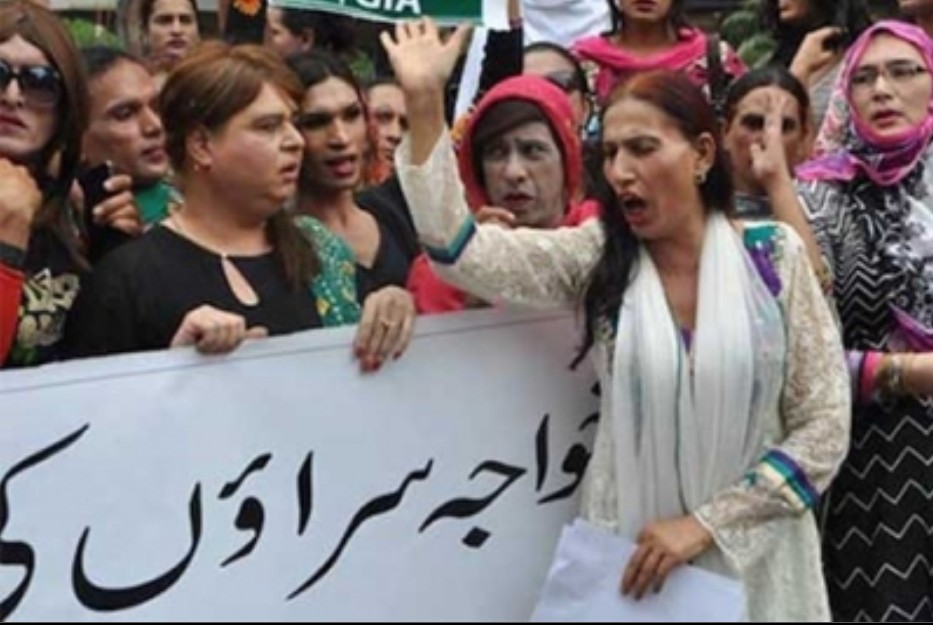
In Khyber Pakhtunkhwa, the pursuit of justice for murdered transgender women remains largely symbolic. The numbers continue to rise, accountability remains absent, and the state’s response is defined more by inertia than intervention, writes Dr Sakariya Kareem
In the narrow streets of Peshawar, the valleys of Swat, and the market towns stretching from Chitral to Dera Ismail Khan, violence against transgender people has become grimly routine in northwest Pakistan.
Each killing follows a familiar arc — a body found, a brief police statement, fleeting outrage, and then silence.
Over the past decade, this cycle has repeated itself with disturbing regularity in Pakistan’s Khyber Pakhtunkhwa province, where transgender women are being murdered at a scale that human rights defenders describe as unprecedented in the country.
Community data cited by local media and advocacy groups indicate that at least 195 transgender individuals have been killed in the province since 2015.
In 2025 alone, more than a dozen brutal attacks were reported within ten months, including shootings, torture and sexual violence. These are not isolated crimes but part of a sustained pattern that exposes deep failures in Pakistan’s governance, policing and justice systems.
Counting the dead, missing the truth
The absence of comprehensive official statistics has forced transgender communities to document their own losses.
According to leaders within the Khwaja Sira community, the actual death toll may be higher, as many cases go unreported or are misclassified by police records. Victims are frequently identified by aliases rather than legal names, complicating investigations and court proceedings.

Official data from National Database and Registration Authority suggests that around 1,300 transgender persons are registered in KP. Community leaders, however, estimate the population to be closer to 75,000.
This disparity highlights a structural invisibility that extends beyond numbers: many transgender people remain undocumented, unprotected and effectively erased from state systems meant to ensure security and justice.
Violence without consequence
The brutality of recent incidents underscores the depth of the crisis.
In Swat, a 20-year-old transgender person, Umair, also known as Shayan, was reportedly tortured by two men, sustaining fractures to the jaw and spine.
In Dera Ismail Khan, another transgender individual was allegedly gang-raped, bound with ropes and assaulted before a complaint was even registered.
In Mardan, two transgender women were killed in their home in October 2024, stabbed to death by assailants who fled without immediate consequence.
Activists point out that despite nearly two hundred killings since 2015, convictions remain virtually non-existent.
Community estimates suggest that none of the earlier cases resulted in final convictions, reinforcing a perception that violence against transgender people carries little legal risk for perpetrators.
Policing, pressure and complicity
Law enforcement responses have drawn sustained criticism. Complaints are often delayed, investigations lack urgency, and families report being pressured into “compromises” with attackers.
In many cases, police treat killings as routine crimes rather than targeted, hate-driven violence, stripping investigations of the context necessary for accountability.
The International Commission of Jurists, along with local partners, has documented repeated failures to register First Information Reports or pursue cases beyond initial arrests.
Even when suspects are detained, prosecutions falter due to weak evidence collection, witness intimidation and prosecutorial inertia. The result is a justice process that appears structurally incapable—or unwilling—of delivering outcomes.
Social stigma as a weapon
Underlying the violence is a social environment that normalises exclusion.
Qualitative studies in KP, including research in the Swat Valley, describe layered discrimination — internalised stigma that breeds shame, perceived stigma that labels transgender people as immoral or unemployable, and enacted stigma that bars them from families, schools, religious spaces and healthcare.
These attitudes translate into vulnerability. With limited access to formal employment, many transgender women are pushed into begging, dancing or sex work, increasing exposure to exploitation and attack. When violence occurs, societal prejudice often blunts public outrage, allowing killings to fade quickly from national consciousness.
Legal protections, hollow promises
Pakistan’s legal framework tells a different story on paper. The Transgender Persons (Protection of Rights) Act, 2018 guarantees the right to self-identify and prohibits discrimination in employment, education and public services.
A Supreme Court ruling in 2012 recognised transgender citizens as a distinct legal category with voting rights.
In KP, however, these protections rarely translate into lived security. Investigations stall, police engagement remains inconsistent, and courts move slowly.
The persistence of killings despite existing laws raises uncomfortable questions about political will and administrative capacity in a province already struggling with militancy, poverty and weak institutions.
Fear as daily reality
Beyond the statistics lies a climate of fear. Transgender community leaders in Peshawar report that members restrict movement, avoid public spaces and live under constant threat.
Protests following killings are met with indifference or, at times, hostility. In Swat, tensions escalated after demonstrations against transgender residents, exposing how quickly social prejudice can harden into collective aggression.
Healthcare initiatives, such as the KP government’s 2024 decision to designate separate hospital rooms for transgender patients, have been acknowledged by activists but remain peripheral in a landscape dominated by lethal violence. The core issue persists — safety and justice remain elusive.
A national blind spot
The killings in KP are part of a broader national pattern. Data compiled by civil society groups indicate that transgender people across Pakistan face rape, blackmail, abduction and so-called “honour” killings.
In 2021 alone, at least 20 transgender individuals were reportedly killed nationwide. Yet these crimes rarely provoke sustained political debate or policy scrutiny.
When nearly two hundred lives are lost in one province over a decade, the implications extend beyond individual tragedies. The scale of violence exposes systemic neglect and a governance failure that places transgender citizens outside the effective protection of the state.
Justice deferred, denial entrenched
Each unresolved case deepens mistrust between the transgender community and the authorities.
Families bury their dead knowing that investigations may never conclude, and perpetrators may never face trial. The message conveyed is stark — legal recognition without enforcement offers little protection.
In Khyber Pakhtunkhwa, the pursuit of justice for murdered transgender women remains largely symbolic. The numbers continue to rise, accountability remains absent, and the state’s response is defined more by inertia than intervention.
As the killings persist, so too does a deadly denial — of responsibility, of urgency, and of the fundamental right to life.