The government has defended the price increase as necessary to manage external pressures….reports Asian Lite News
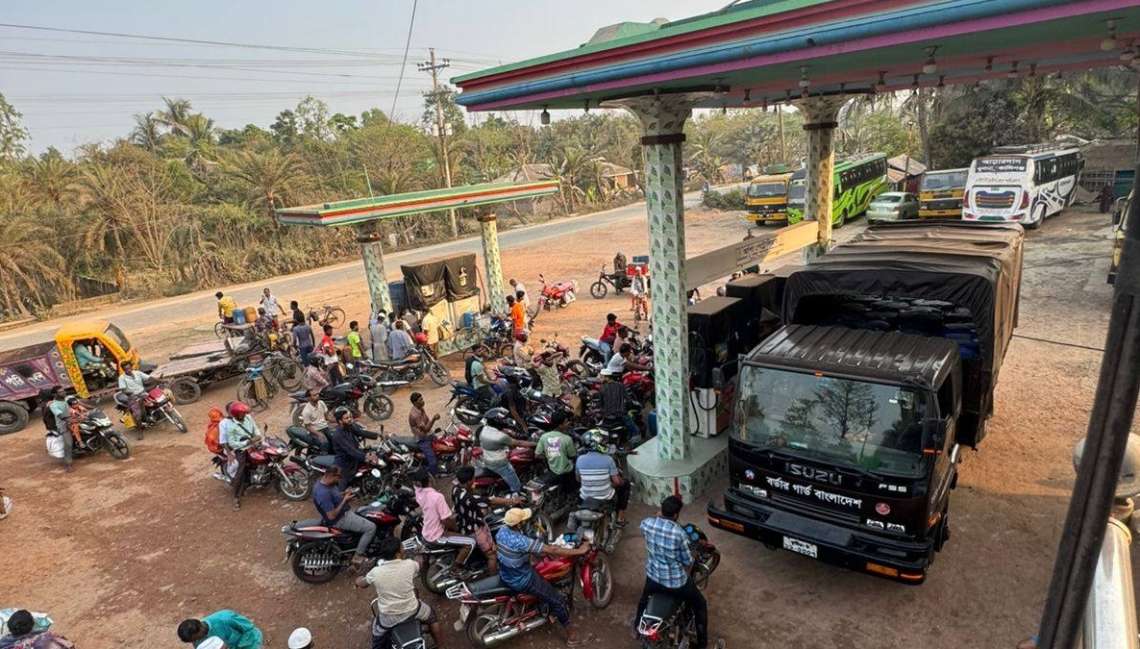
Dhaka has been gripped by long queues at petrol stations as a sharp rise in fuel prices triggers panic buying, disrupting daily life across the Bangladeshi capital.
The latest price hike, announced on April 18 by the Power Division Bangladesh, has pushed up the cost of key fuels, with diesel increasing by Tk 15 per litre, octane by Tk 20, petrol by Tk 19 and kerosene by Tk 18. The revised rates came into effect from Sunday night, following what officials described as pressure from rising global oil prices.
Since then, motorists across Dhaka and other urban centres have been rushing to fill their tanks, leading to long waits at fuel stations. Private car owners, public transport operators and small business workers have all reported spending hours in queues, cutting into working time and income.
Abdul Karim, a ride sharing driver in Mirpur, said the delays have significantly affected his earnings. He told Dhaka Tribune that he now loses up to three hours a day waiting for fuel, reducing his daily income by nearly a third.
Commuters are also feeling the strain. Shahana Begum, a school teacher from Uttara, said she waited more than an hour and a half to refuel, making it difficult to plan her daily routine. She described the situation as increasingly stressful, with no certainty over how long queues might take.
Officials from the Bangladesh Petroleum Corporation have insisted there is no nationwide fuel shortage. A senior official said the current pressure stems from a sudden spike in demand and temporary distribution challenges, including transport scheduling issues that have affected supplies at some stations.
The government has defended the price increase as necessary to manage external pressures. Speaking to reporters, Energy Minister Iqbal Hassan Mahmood Tuku described the situation as comparable to “wartime conditions”, noting that fuel imports require foreign currency and are heavily influenced by global market shifts.
However, critics argue the move has undermined public trust. M. Shamsul Alam of the Consumers Association of Bangladesh said the mid month price revision broke earlier assurances and damaged the government’s credibility.
Despite official reassurances, the persistent queues highlight gaps in distribution and growing public anxiety. Analysts warn that unless supply chains are strengthened and communication improved, similar disruptions could recur, particularly as global energy markets remain volatile.