Bangladesh seeks ASEAN partnership and RCEP entry during Malaysia visit, as Prime Minister Rahman pushes regional integration, trade expansion and stronger economic ties with Southeast Asia, reports India Daily News Desk
Bangladesh has signalled a renewed push to deepen its engagement with Southeast Asia, with Prime Minister Tarique Rahman announcing the country’s aspiration to become a Sectoral Dialogue Partner of the Association of Southeast Asian Nations during his official visit to Malaysia.
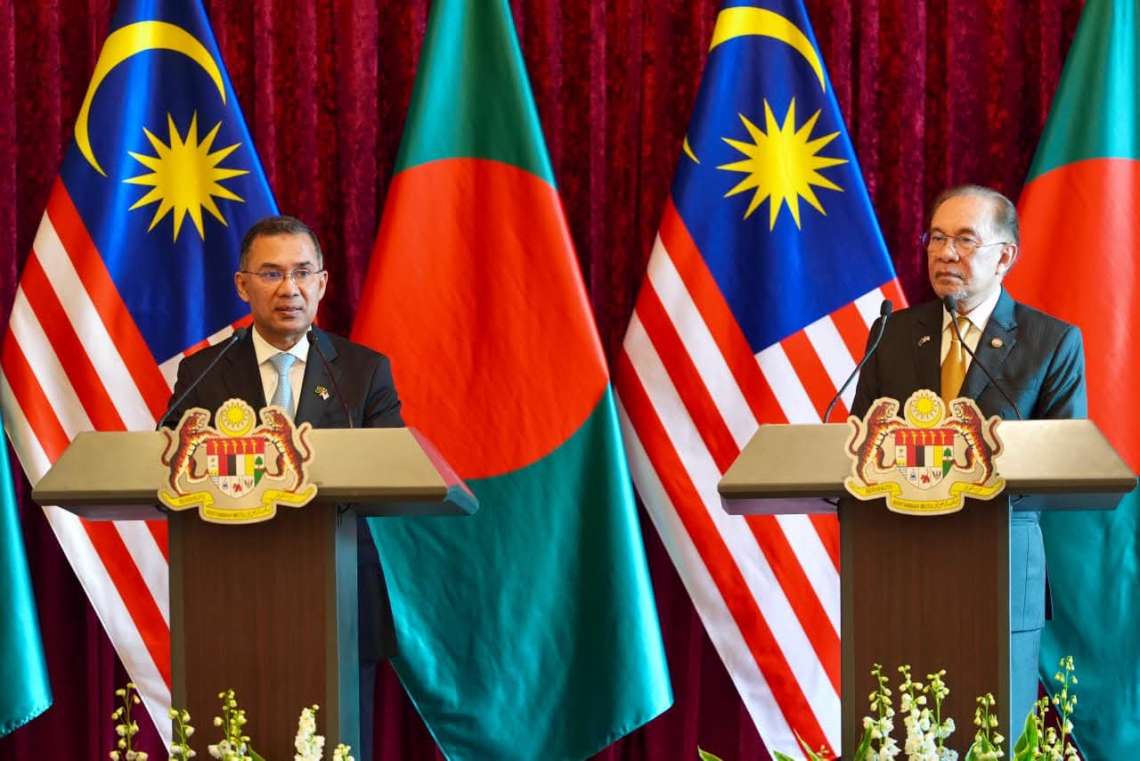
Speaking at a joint press conference in Putrajaya alongside Malaysian Prime Minister Anwar Ibrahim, Rahman outlined Dhaka’s broader strategy of regional integration, emphasising that Bangladesh is seeking closer institutional ties with ASEAN and exploring membership in the Regional Comprehensive Economic Partnership, the world’s largest free trade agreement.
The visit, Rahman’s first official foreign tour since assuming office in February following his party’s electoral victory, underscores Bangladesh’s effort to reposition itself economically and diplomatically within the Indo-Pacific framework. By seeking Sectoral Dialogue Partner status, Bangladesh aims to formalise cooperation with ASEAN in specific areas such as trade, energy, education and technology, rather than across the full spectrum of engagement reserved for comprehensive dialogue partners.

ASEAN currently maintains such sector-specific partnerships with a limited number of countries, making Bangladesh’s bid both strategic and competitive. The proposed engagement is expected to open new avenues for economic collaboration while strengthening Dhaka’s links with one of the fastest-growing regional blocs.
Rahman’s discussions with Anwar Ibrahim began with a one-on-one meeting, followed by delegation-level talks that covered a wide range of sectors. These included information and communication technology, energy, infrastructure, manpower, the halal industry, agro-processing, education, skills development, defence, the digital economy and semiconductors. Both leaders also exchanged views on regional and international developments, reflecting a convergence of interests on broader geopolitical issues.
At the press conference, Rahman said both sides had agreed to strengthen bilateral engagement through existing mechanisms such as the Joint Commission Meeting and consultations between their foreign ministries. He also welcomed the growth in trade between the two countries and confirmed that negotiations on a Bangladesh-Malaysia Free Trade Agreement would move forward.
Trade figures underline the importance of the relationship. According to Malaysian data, total bilateral trade between the two countries reached USD 2.84 billion in 2025. Malaysia’s exports to Bangladesh, largely driven by petroleum products, accounted for USD 2.35 billion, while imports from Bangladesh stood at USD 500 million, primarily consisting of textiles, apparel and footwear. Bangladesh is Malaysia’s 28th largest trading partner globally and its second-largest partner in South Asia after India.
Rahman used the platform to highlight Bangladesh’s domestic priorities, stating that his government is focused on job creation, attracting foreign investment and accelerating economic growth. He emphasised efforts to build a business-friendly environment and invited Malaysian companies to explore opportunities in Bangladesh’s expanding economy.
Labour mobility emerged as another key theme in the discussions. Rahman pointed to the significant role played by Bangladeshi workers, students and professionals in Malaysia, describing them as a vital bridge between the two nations. He urged Malaysia to consider expanding recruitment from Bangladesh and reopening the labour market, while also raising issues related to the regularisation of undocumented workers and the repatriation of detained nationals.
He stressed the need for a transparent, fair and affordable recruitment system, noting that reducing intermediaries and lowering costs for workers would benefit both countries. The issue is particularly significant given the scale of Bangladeshi migration to Malaysia and its contribution to remittance flows.
Humanitarian concerns also featured in the talks, with Rahman expressing gratitude for Malaysia’s continued support for the Rohingya population sheltered in Bangladesh. He reiterated the need for a safe, dignified and sustainable repatriation of Rohingya refugees to Myanmar, a long-standing challenge in the region.
The visit also produced tangible outcomes, with both leaders witnessing the exchange of a Memorandum of Understanding on cultural cooperation and two Exchanges of Notes covering counter-terrorism research and investment promotion. These agreements reflect an effort to institutionalise cooperation across both soft and hard sectors.
Rahman’s trip to Kuala Lumpur is part of a broader diplomatic outreach that includes a planned visit to China, signalling Bangladesh’s intent to engage multiple regional powers as it seeks to expand its economic and strategic footprint.