The Bangladeshi foreign minister will preside over the 81st session of the UN General Assembly beginning in September…reports Asian Lite News Desk
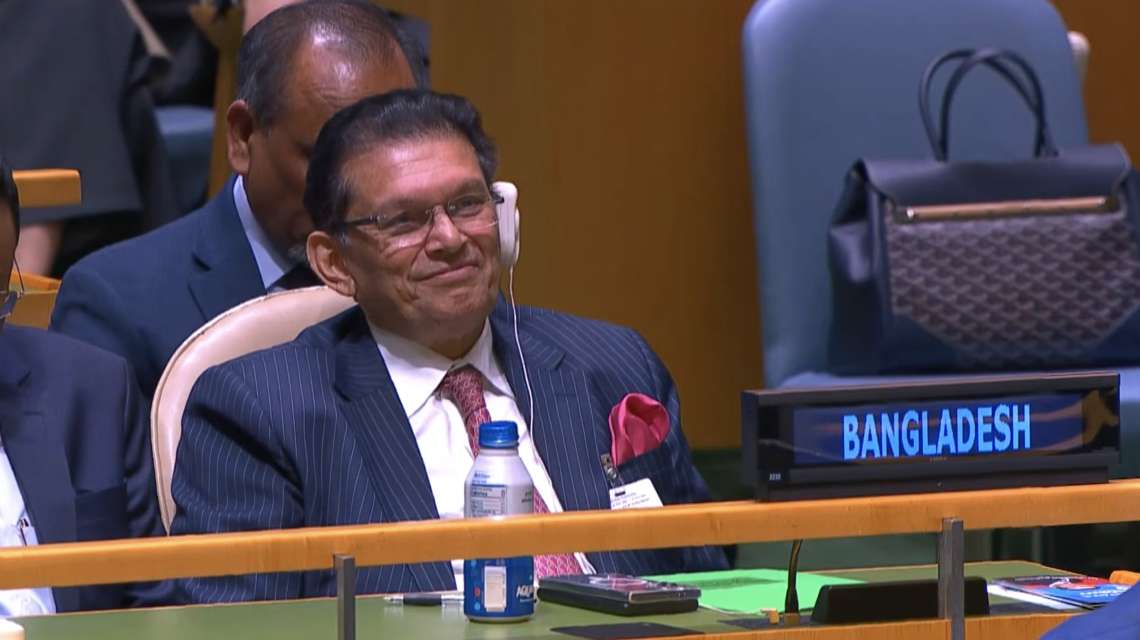
Bangladesh Foreign Minister Khalilur Rahman has been elected president of the 81st session of the United Nations General Assembly (UNGA), securing a narrow victory over Cypriot diplomat Andreas Kakouris in a closely contested vote at the UN headquarters.
Rahman received 99 votes against Kakouris’s 91 from the 190 ballots cast by member states of the 193 nation organisation. He will assume the presidency when the General Assembly’s next session opens in September, succeeding former German foreign minister Annalena Baerbock.
India welcomed Rahman’s election, with External Affairs Minister S. Jaishankar extending congratulations and expressing readiness to work closely with him.

“Congratulations to Foreign Minister Dr Khalilur Rahman of Bangladesh on his election as President of the 81st Session of the United Nations General Assembly,” Jaishankar wrote on X.
“Look forward to working closely with him to advance our shared priorities and strengthen multilateral cooperation,” he added.
Rahman’s election came under the UN’s regional rotation system, which allocated the presidency to the Asia Pacific group for the upcoming session. Two candidates had entered the race for the position.
A career diplomat, Rahman became Bangladesh’s foreign minister in February. He previously served at Bangladesh’s permanent mission to the United Nations, held the post of national security adviser and worked in various capacities within the UN system.
Following his election, Rahman announced that his presidency would be guided by the theme, “Restoring Trust, Managing Transformation: A United Nations that Delivers for All.”

“The eighty first session of the Assembly will open at a historic crossroads,” he said.
Rahman will take charge at a time when the United Nations faces a series of major challenges, including budgetary pressures, ongoing conflicts and growing concerns over global development setbacks.
Among the most significant issues likely to dominate the upcoming session is the process for selecting the next UN secretary general, although the Security Council will retain the decisive role in the appointment.
The Assembly is also expected to confront a deepening financial crisis facing the organisation, while continuing discussions on conflicts and geopolitical tensions affecting global stability and economic development.
Rahman said he would work with member states to prevent “another lost decade” of development resulting from economic difficulties facing many countries.
He also pointed to Bangladesh’s extensive experience in UN peacekeeping operations, saying it would help guide efforts to address international crises through dialogue and multilateral cooperation.
UN Secretary General Antonio Guterres congratulated Rahman and said he would assume the presidency at a moment of both challenge and opportunity for the organisation.

“The hard work of diplomacy, dialogue and collaboration that happens each and every day here at the General Assembly gives me renewed hope that we can transform divisions into determination to work in common purpose,” Guterres said.
Rahman becomes only the second Bangladeshi to hold the prestigious post. The first was former foreign minister Humayun Rasheed Chowdhury, who served as president of the General Assembly during the 1986-87 session.
The election also highlighted geopolitical divisions within the UN, with many members of the Organisation of Islamic Cooperation backing Rahman, while several Western countries supported Kakouris.
US Deputy Permanent Representative Tammy Bruce said the Assembly would rely on Rahman’s impartial leadership and urged him to improve efficiency, reduce costs and focus on delivering practical results during his tenure.